Εμφάνιση αναρτήσεων με ετικέτα kurds. Εμφάνιση όλων των αναρτήσεων

Δευτέρα 29 Αυγούστου 2011

Military renews attacks on Kurds

independent
 Saturday, 20 August 2011
Turkish warplanes and artillery pounded Kurdish rebels in northern Iraq for a second night, hours after the rebels mounted attacks on security forces in south-eastern Turkey....more...
read more: independent

Τετάρτη 6 Απριλίου 2011

Erdogan's visit to Iraq could have lasting effects


se times

5/04/2011 Last week's visit to Iraqi Kurdistan was the first by a Turkish prime minister. Analysts say the impact could be significant. By Alakbar Raufoglu for Southeast European Times -- 05/04/11

While in Iraq last week, Turkish Prime Minister Recep Tayyip Erdogan paid an historic visit to Kurdish regions in the country's north, including the holy city of Arbil. He was accompanied by more than 100 officials and businessmen. ...more...

read more: se times

Πέμπτη 3 Μαρτίου 2011

Turkey: Guerrillas Call Off Cease-Fire


ny times

By REUTERS
Published: February 28, 2011

Kurdish guerrillas called off a six-month cease-fire on Monday, threatening a fragile peace in the mainly Kurdish southeast before a national election in June. The Kurdistan Workers’ Party, which has waged a fight for decades against the Turkish state, will now respond to any attack on its forces, said Ahmet Deniz, a party leader.

read more: ny times

Πέμπτη 30 Δεκεμβρίου 2010

Turkish president seeks to calm Kurdish tensions


deutsche welle


The Turkish president is set to travel to the main city of his country's Kurdish minority on Thursday in a bid to defuse tensions over a recent push by Kurds to assert their culture, language and rights.


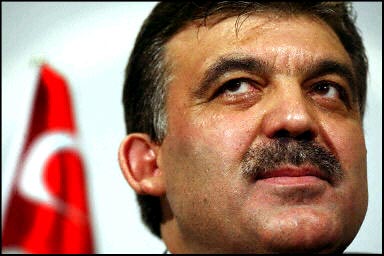
Turkish President Abdullah Gul is set to make a one-day visit to Turkey's main Kurdish city, Diyarbakir, on Thursday. The trip comes as political tensions continue to rise over an initiative launched by the country's main Kurdish party for greater rights.
The presidential visit, which appears to have been hastily arranged, is being seen as crucial to defusing political tensions in Turkey, which have been heightened by the initiative.
"I think he will look for ways to calm things down," political scientist Cengiz Aktar told Deutsche Welle. "As it is, I think we are again going back to this very belligerent rhetoric of the Kurdish issue. So again we are heading towards a period of dialog."
In addition to meeting with local state officials and businessmen, Gul was also expected to meet with the mayor of the Diyarbakir, Osman Baydemir, who is one of the leading figures in the Kurdish initiative launched earlier this month, which calls for democratic autonomy and the right to use the Kurdish language in aspects of public life, including in education.
Forbidden culture
Kurdish officially did not exist in Turkey throughout the 1980s and it still remains under tight regulations, particularly in education. Until recently, the ruling AK Party had positioned itself as a champion for Kurdish rights, but its own initiative has stalled and condemnation for this latest demand for more rights has now come from Prime Minister Recep Tayyip Erdogan.

"I am putting it very clearly, those who want to bring discord to this nation are the enemy of 73 million people," Erdogan said. "The artificial discussion of the last few days is a dirty game and evil plot of the terrorist organization and its extensions. My people will not fall for this plot, they'll spoil the game."
The terrorist organization Erdogan referred to is the Kurdish rebel group the outlawed PKK, which has been fighting the Turkish state for greater Kurdish rights since 1984. For now they've called a unilateral ceasefire. ...more...

read more: deutsche welle

Τετάρτη 17 Νοεμβρίου 2010

PKK denies responsibility for Sunday's Istanbul bomb


reuters

ANKARA Mon Nov 1, 2010 12:09pm GMT

(Reuters) - Kurdish PKK separatists Monday denied responsibility for a bombing in central Istanbul that wounded 32 people Sunday, the guerrilla group said in a statement posted on a pro-PKK news agency.
Turkish officials had said the PKK, branded a terrorist organisation by Washington, the European Union and Ankara, was emerging as the most likely suspect for the bombing in Taksim square. Istanbul has been targeted in the past by Kurdish separatists, al Qaeda and militants from Turkey's far-left.
In the statement, the PKK also said it was extending a month-old cease-fire that expired Sunday until Turkey's next general elections, which are due to take place in June 2011.

reuters

Istanbul governor says bomber separatist from Kurd area


reuters

ISTANBUL Tue Nov 2, 2010 7:13pm GMT

(Reuters) - The suicide bomber who blew himself up on Istanbul's main square, wounding 32 people, came from Turkey's mainly Kurdish southeast and belonged to a separatist rebel group, the Istanbul governor said on Tuesday.
Seven people have been arrested in connection with the attack on Sunday in central Istanbul, Turkey's biggest city and its financial centre, the state Anatolian news agency also said.
The attack was on a police point in Taksim Square and wounded 15 policemen and 17 civilians.
The bomber was identified as Vedat Acar, Anatolian cited the governor's office as saying in a statement. Acar was born in 1986 in Van province near the Iranian border, it said.
The statement did not explicitly say to which organisation Acar belonged, but described it as a "separatist terrorist organisation," a term often used by Turkish officials to describe the Kurdistan Workers Party (PKK).
"It has been established that Acar joined the separatist terrorist organisation in 2004," Anatolian said.
A photograph of the dead bomber was handed out by police on Monday.
The PKK on Monday denied any link with the bombing in Istanbul. It declared it was extending a 2-1/2 month cease-fire on Monday until a general election expected in June 2011.
No organisation has claimed responsibility. Istanbul has been targeted in the past by Kurdish militants and al Qaeda, as well as far-left radicals.
The PKK took up arms in 1984 in a campaign to carve out an ethnic homeland in southeastern Turkey, and more than 40,000 people, mainly Kurds, have died in the conflict.
The PKK has since scaled back its demands to greater cultural and political freedom for Turkey's 14 million Kurds.
Some observers have said that groups connected with the PKK may have been behind the attack, although the PKK leadership, based in northern Iraq, denies the movement is splintering and said none of its units were involved.
The Kurdistan Freedom Hawks (TAK) is one group close to the PKK that has claimed responsibility for attacks in urban centres in the past, including the bombing of a military bus in Istanbul in June that killed five people.
(Writing by Ayla Jean Yackley, editing by Ralph Boulton)

reuters


Δευτέρα 15 Νοεμβρίου 2010

PKK Denies Role in Istanbul Attack


wall street journal

EUROPE NEWS
NOVEMBER 1, 2010, 6:26 P.M. ET


By MARC CHAMPION And AYLA ALBAYRAK
A group representing the Kurdish Workers Party on Monday denied responsibility for a weekend suicide-bomb attack in central Istanbul that wounded 32 people, and said it was extending a unilateral cease-fire until the middle of next year.
Turkish media have fingered the Kurdish Workers Party, or PKK, as a prime suspect for Sunday's bombing, in which the suspected suicide attacker tried to board a police bus in Istanbul's busy Taksim Square and blew himself up next to it when he failed. Fifteen of the wounded were policemen.
But on Monday, the Union of Communities in Kurdistan, a group that shares a common leader with the PKK and often speaks on its behalf, sought to distance itself from the attack, which took place earlier on the day the PKK's four-month unilateral cease-fire had been due to expire.
"On a day when our movement was preparing an historic step to extend our ceasefire decision for peace and a democratic solution, it is impossible for us to have conducted this kind of an action," the statement said. The PKK in recent years has backed away from demanding a separate Kurdish state, focusing instead of obtaining political autonomy and language rights for Turkey's ethnic Kurds. Turkey, the United States and the European Union list the PKK as a terrorist organization.
Turkey's state newswire, Anadolu Ajansi, said Monday that police had determined Sunday's bomb was made from a plastic explosive of Austrian origin that in the past has been used by two radical leftist terror groups in Turkey, as well as by the PKK. Interior Minister Besir Atalay told reporters while visiting the wounded in the hospital that it was too early to draw conclusions about who carried out the bombing.
The statement from the Union of Communities in Kurdistan accused Turkey's government of failing to endorse a democratic solution that would satisfy the country's large ethnic Kurdish minority and end the conflict with the PKK. But it said "the movement" would extend its cease-fire until Turkey's elections, set for June next year.
The statement also set out five demands Turkey's government should fulfill in order to stop the conflict: end military operations against the PKK; release arrested Kurdish politicians; open the way for Abdullah Öcalan, the PKK leader jailed on an island outside Istanbul, to take part in peace negotiations; establish constitutional and truth commissions; and lower the threshold for political parties to enter parliament from the current 10% of votes cast.
So far, the government has shown little sign of meeting those demands. The trial of 151 members of the Union of Communities of Kurdistan, including 12 town mayors and several politicians, arrested on suspicion of working with the PKK among other charges began two weeks ago. The government has been rounding up members of the group since 2009, fearful that it was attempting to set up a parallel state within Turkey. On Monday, Prime Minister Recep Tayyip Erdogan repeated his government's complaint that some European countries aid the PKK by giving them safe harbor.
"Despite all our warnings and demands, and the documents we have issued, some countries continue supporting terror directly or indirectly", he said, speaking to an international audience in Istanbul.
The PKK has been waging a war in Turkey since 1984, with an estimated 40,000 people dying as a result of the conflict on both sides. Up to one-fifth of Turkey's population are ethnic Kurds, with the majority concentrated along the country's eastern borders with Syria, Iraq and Iran.
Write to Marc Champion at marc.champion@wsj.com

wall street journal


Kurdish splinter group issues claim for Istanbul bombing


cnn

From Yesim Comert, CNN
November 4, 2010 -- Updated 1247 GMT (2047 HKT)


Istanbul, Turkey (CNN) -- A splinter nationalist group from the Kurdistan Workers' Party has claimed responsibility for Sunday's suicide bombing in Istanbul, Turkey, according to the group's statement on its website.
The Kurdistan Freedom Falcons, or TAK, said the attack, which injured at least 32 people, was "an act of revenge" and carried out by Vedat Acar, who died in the strike.
"We as TAK claim responsibility for the action carried out against the police force of Turkish fascism at Istanbul's Taksim Square on Oct 31, 2010," the statement said.
Acar is described a member of the group's command from Van, an eastern border province populated by ethnic Kurds who have signed up with the Kurdistan Workers' Party, or PKK.
The PKK has been battling the Turkish government since the early 1980s initially for a separate Kurdish homeland.
Kurdistan Freedom Falcons, or TAK, was labeled a terrorist group by the United States in 2008. It claimed responsibility for the bombing of a bus that carried Turkish military personnel and their families in Istanbul. The attack, which occurred in June, killed five people.

More than 30,000 people, mostly ethnic Kurds, have been killed during the fighting between Kurdish militants and the Turkish military. In recent years, rebels say they have given up their demands for an independent Kurdish state and are instead fighting for more linguistic and cultural freedoms.
The Taksim Square bombing occurred the same day that the PKK cease-fire was expected to end, raising suspicions in the Turkish media.
In a statement Tuesday, Turkish President Abdullah Gul called on citizens to stand "in unity against terrorism."
But he also sounded a conciliatory note toward the PKK's cease-fire announcement, saying, "I hope the decision to lay down arms is permanent."
While the PKK has denied responsibility for Sunday's attack and extended its unilateral cease-fire until Turkey's general elections in summer 2011, the Kurdistan Freedom Falcons declared in their statement that they had nothing to do with the cease-fire and their "actions will continue."
On Monday night, a small group of well-wishers placed candles on the pavement in Taksim Square and held a vigil for victims of the attack.


STORY HIGHLIGHTS

The Kurdistan Freedom Falcons shunned a cease-fire

It claimed responsibility for June bus bombing

The attacker hails from a PKK hotbed


cnn

Σάββατο 13 Νοεμβρίου 2010

Kurdish militant group claims responsibility for Istanbul suicide attack


telegraph

A Kurdish militant group has claimed responsibility for a suicide attack that wounded 32 people in Istanbul over the weekend, a pro-Kurdish news agency has reported.


12:29PM GMT 04 Nov 2010
The Kurdistan Freedom Falcons, an offshoot of the autonomy-seeking Kurdistan Workers Party, or PKK, claimed responsibility for Sunday’s attack, the pro-Kurdish Firat News agency reported on its website.
The PKK had denied any role in the suicide bombing Monday, when it extended a unilateral rebel ceasefire until parliamentary elections next summer in hopes of opening a dialogue with Turkish leaders.
The main Kurdish rebel group has always distanced itself from violent attacks by the Kurdistan Freedom Falcons in Turkish cities. The Falcons operate with some autonomy, and it said on Thursday it had had no involvement in the PKK’s decision to extend the ceasefire and would press ahead with attacks, Firat reported.


Turkish authorities have identified the suicide bomber as 24-year-old Vedat Acar, a Kurd trained in a Kurdish rebel camp in the Hakurk area in northern Iraq, according to Turkish media. The Falcons said Acar was a senior member of their group, according to the Firat agency.
Firat quoted Dogan Baz, a spokesman for the Falcons’ group, which is known by its Kurdish acronym TAK, as saying Acar had “organised the attack and acted on his own initiative.”
“As long as actions aimed against the Kurdish people and its values continue, the TAK will continue with its actions,” the group said.
Baz said Sunday’s attack, in Istanbul’s Taksim square, was aimed at police rather than civilians. It wounded 15 riot police officers and 17 passers-by.
Kurdish rebels have been fighting for autonomy mainly in the Kurdish-dominated southeast since 1984. The Falcons surfaced after the capture of Kurdish rebel chief Abdullah Ocalan in 1999.
The Falcons are known to be recruiting former Kurdish rebels as well as Kurdish youth who have migrated to big cities such as Istanbul, authorities say.

telegraph

Τετάρτη 3 Νοεμβρίου 2010

PKK denies suicide bombing


Reuters


Tuesday, 2 November 2010


The outlawed Kurdistan Workers Party (PKK) yesterday denied responsibility for a suicide bomb attack in Istanbul that wounded 32 people. The group said it was extending a ceasefire until Turkey's general elections in 2011.
"It is not possible for us to carry out such an action at a time when our movement has decided to extend a truce process," the PKK said.
Officials had said that the PKK was the most likely suspect for the attack in Taksim Square, a busy transport hub usually packed with foreign tourists and shoppers.

the independent

Turkey: Separatist Group Denies Link to Bombing Causing Panic in Istanbul


By SEBNEM ARSU
Published: November 1, 2010


The separatist Kurdistan Workers’ Party, known as the P.K.K., denied Monday that it had any connection to Sunday’s bombing in central Istanbul that wounded 32 people and caused widespread panic. The bombing coincided with the end of a two-month cease-fire that the group had declared to clear the way for political talks in an effort to end its conflict with the Turkish government. In two statements to the Firat News Agency, the group disavowed the attacks, and then announced an extension of its unilateral cease-fire until the end of the 2011 general elections.
ny times

Τρίτη 2 Νοεμβρίου 2010

PKK denies role in Turkish blast


Kurdish group distances itself from Sunday's suicide attack and extends truce until 2011 elections.
Last Modified: 01 Nov 2010 18:36 GMT


Kurdish fighters have denied responsibility for a suicide bomb attack in Istanbul that wounded 32 people and announced the extension of a unilateral ceasefire.But Sunday's bombing in Taksim Square coincided with the end of the PKK's previous ceasefire, leading to suspicions that the group may have been behind the attack.

But in a statement through a Kurdish news agency on Monday, the PKK, or Kurdistan Workers' Party, rejected those claims and also said it was extending a truce until Turkey's general elections in 2011.
"There is no way we would be involved in such an attack on a day our organisation was getting ready for a step towards peace and a democratic solution," the PKK said in a statement, carried by the Firat news agency.It also said it was extending a month-old ceasefire that expired on Sunday until parliamentary elections, due to take place in June 2011."Neither us nor any organisation linked to us have carried out or planned such an attack ... We have no connection with the attack in any way," the statement said.The government has said it is too soon to conclude which group was behind the attack.Splinter groupsBesir Atalay, Turkey's interior minister, said no one had been detained in connection with the attack, but police had information on who may have carried it out, which would be disclosed once the authorities were sure who was to blame.The suicide bomber, who has not been identified, blew himself up near riot police stationed at Taksim Square, a popular location in central Istanbul for shoppers, tourists and demonstrators. Most of the seriously wounded were police officers.

Kurdish fighters, al-Qaeda and leftwing extremists have all carried out attacks in Turkey. Small PKK cells have staged attacks in the past without authorisation from PKK headquarters and splinter groups comprised of former members have carried out bombings also.The Kurdistan Freedom Hawks, a group believed to have PKK links, has claimed responsibility for urban bomb attacks in recent years.A high-ranking security officer in western Turkey told the Reuters news agency that techniques used in Sunday's attack showed a "90 per cent probability" the PKK was responsible.The officer said investigators believed there was also a small chance the attack was the work of leftists, but "al-Qaeda and other organisations are out of the picture".The PKK is considered a terrorist group by Turkey, the US and the European Union. The group has been fighting for autonomy in southeastern Turkey in a conflict that has killed tens of thousands of people since 1984.Kurdish rightsTurkey has recently taken steps to improve the rights of Kurds, who make up 20 per cent of Turkey's population, including allowing Kurdish-language television broadcasts.The government has also increased contacts with the Kurds as part of a campaign to end the conflict, though it maintains an official policy of not talking to the group.


Omer Celik, a senior government legislator, dismissed on Monday the extension of the PKK ceasefire, saying "the government will not alter its course in the struggle against terrorism based on decisions taken by the [rebel] organisation"."However, if it means that less people will be killed, then it is good in that sense," he told Turkey's private NTV television news network, adding that the government was "sincerely" seeking a peaceful end to the conflict.Recep Tayyip Erdogan, Turkey's prime minister, said on Monday that some European countries were not doing enough to help it fight terrorism.He did not name the countries, but Turkish officials have said the PKK raises funds through extortion or other criminal activities in European countries such as Germany that have a large number of Kurdish immigrants."We now want concrete steps, concrete results," Erdogan said. "Even today, in certain European countries, organisations with known ties to the terrorist organisation freely operate under the guise of associations, foundations, or the media."Despite all our requests, all our warnings, all the documents we hand over to them, certain countries do not refrain from giving direct or indirect support to terrorism."

"Despite all our requests, all our warnings, all the documents we hand over to them, certain countries do not refrain from giving direct or indirect support to terrorism"
Recep Tayyip Erdogan, Turkish prime minister


Source: Agencies

al jazeera

Τρίτη 19 Οκτωβρίου 2010

Turkish court rejects Kurdish hearing plea

19 October 2010 Last updated at 14:59 GMT
A Turkish court has refused permission for 151 Kurds standing trial for allegedly supporting Kurdish separatism to defend themselves in Kurdish.
The Kurds, including 12 mayors, are charged with supporting or being members of an illegal organisation - a reference to the Kurdish militant group, the PKK.
The court said the accused were all able to speak and understand Turkish.
Preliminary hearings had already been held in Turkish, it added.
"The request for a Kurdish defence was rejected unanimously on the ground that the defendants spoke Turkish in the questioning and investigation stage," court chairman Menderes Yilmaz said.
"The use of interpreters would only extend the course of the hearings."
The 151 Kurds are accused of crimes including membership of an illegal armed group, spreading its propaganda, undermining Turkey's territorial integrity and holding illegal public demonstrations.
The trial, which began on Monday in Diyarbakir in the Kurdish-dominated south-east of the country, is being seen by some as a test of Turkey's democratic credentials.
The PKK has fought a 26-year conflict with the Turkish government, which has claimed more than 40,000 lives.
The PKK has revised previous demands for independence, and now calls for more Kurdish autonomy. It is viewed as a terrorist group not just in Turkey, but by the US and European Union.
bbc

Δευτέρα 18 Οκτωβρίου 2010

Turkey tries Kurds for rebel links


More than 150 people, including mayors, go on trial in Diyarbakir for alleged ties to Kurdistan Workers' Party.
Last Modified: 18 Oct 2010 18:54 GMT


More than 150 Kurds, including a dozen elected mayors, have gone on trial in Turkey for alleged links with a Kurdish rebel group.
Heavy security was in place outside the courthouse in Diyarbakir, the regional capital of the mainly Kurdish southeast, as the trial began on Monday.
Hundreds of people gathered outside the court in support of the suspects, as European rights activists and lawyers arrived in the city to monitor the case.
The defendants are accused of crimes including "leadership and membership of a terrorist organisation", "undermining the state's unity", "spreading terrorist propaganda" and "aiding an abetting a terrorist organisation", according to a 7,500-page indictment.
The suspects are said to be linked to the Kurdistan Associations Union (KCK), which prosecutors describe as a "terrorist group" that acts as the urban extension of the armed Kurdistan Workers' Party (PKK). If convicted, they face between five years to life in prison.
Those being tried include Osman Baydemir, the popular mayor of Diyarbakir, who has publicly called for Kurdish autonomy. About 20 of the suspects are at large but are being tried in absentia.
'Silencing Kurds'
The trial comes at a time when the Turkish government has taken cautious steps to grant wider rights to the Kurdish community, which make up 20 per cent of Turkey's population. Turkish officials have also reportedly held secret talks with an imprisoned Kurdish rebel chief to try and end 26 years of fighting with autonomy-seeking rebels.
But Turkey has also cracked down on Kurdish groups. More than 1,000 people are in jail on charges that link them to the PKK, according to the Peace and Democracy Party, Turkey's only pro-Kurdish grouping in parliament.
For its part, the PKK has said the arrest of Kurdish politicians has made a political settlement of the conflict more remote.
Defence lawyers and Kurdish activists have slammed the trial as a move to "silence Kurds".
"Our clients are being tried as unarmed members of an armed group," Meral Danis Bestas, a lawyer, told reporters last week.
"This is a political trial aimed at silencing Kurds... This trial will serve as a litmus test for Turkey's democracy and how it views the Kurdish conflict," she said.
The trial is expected to last months because of the number of defendants. A special courtroom that can hold 500 people has been built for the proceedings.
Diplomatic sources said the European Union is monitoring the trial. The European Commission releases its report next month on Turkey's progress towards meeting EU membership criteria.
Last year, it criticised the use of anti-terror laws to prosecute people for expressing non-violent opinions on Kurdish issues.


al jazeera