Εμφάνιση αναρτήσεων με ετικέτα wall street journal. Εμφάνιση όλων των αναρτήσεων

Δευτέρα 27 Ιουνίου 2011

Croatia to Join EU in 2013

wall street journal
EUROPE NEWS / JUNE 24, 2011, 11:00 A.M. ET
Associated Press

BRUSSELS—Croatia will become a European Union member in two years, officials said Friday, making it the first new country to join the bloc since 2007 and offering hope to other nations from the former Yugoslavia seeking to join.
European Commission President José Manuel Barroso called the decision historic. "I hope everything will be ready to welcome Croatia as the 28th member of the EU the first of July 2013," Mr. Barroso said at the end of a two-day summit of EU heads of government in Brussels....more....
read more: wall street journal
http://online.wsj.com/article/SB10001424052702304569504576405612746181724.html

Κυριακή 10 Απριλίου 2011

Del Ponte Questions EULEX Organ Trade Probe


balkan insight

07 Apr 2011 / 13:55

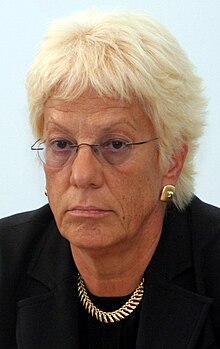
Former Hague Tribunal Chief Prosecutor Carla del Ponte says the EU mission in Kosovo, EULEX, is not capable of conducting an objective investigation into allegations of organ trafficking in Kosovo and Albania.

Radio Belgrade, B92...more...

read more: balkan insight

Κυριακή 19 Δεκεμβρίου 2010

Bulgaria Corruption Case Shows Progress, but Underlines Work to Be Done


wall street journal
December 15, 2010, 9:31 AM ET

By Joe Parkinson
In many countries across New Europe and beyond, school children daydream of growing up to be a professional footballer, an actress, or maybe an astronaut.
But in Bulgaria, being the boss of a “state-owned heating plant” is also on youngsters’ wish lists…
Not really. But it wouldn’t be at all surprising if they’d watched the way Valentin Dimitrov, the former head of the country’s biggest steam-heating firm, used to flash the cash.

Mr. Dimitrov was on Tuesday sentenced to three years in prison by a Sofia court for “misusing” 2 million lev ($1.37 million) from the “Toplofikatsiya” heating company, which he spent on various luxury goods. The court detailed that Dimitrov, nicknamed “Valyo The Heating,” by the local press, used funds at the troubled firm for “entertainment purposes,” installing a jacuzzi in his office, spending company money on luxurious holidays and remorselessly indulging his penchant for French cheese. The former boss, who was also alleged to have wired €1.5 million to an Austrian bank account, has vowed to appeal against the sentence, which was commuted from an initial term of 10 years, according to local media.
The juicy details are interesting, of course -– but the trial is important because it’s been closely watched in Brussels as a test of Sofia’s efforts to clamp down on rampant corruption and organized crime. Prime Minister Borisov, himself a former karate black belt who made his name fighting corruption as mayor of Sofia, swept to power in 2009 on an antigraft ticket, and has vowed to confront the country’s endemic corruption head-on.
Analysts say the government has made some strides in the battle with organized crime, but caution that Mr. Dimitrov’s case does not bode well.
“This was an emblematic case at the center of the anti-corruption drive of Prime Minister Borisov… Its not a very encouraging result – this sentence is ridiculously low,” said Ognian Shentov, Chairman of the Center for the study of Democracy, a Sofia-based think-tank.
The government will hope the European Commission take a different view: By showing progress on tackling corruption, Sofia hopes it can access up to €11 billion in structural funds due by 2013 and reinvigorate its efforts to join the EU’s border-free Schengen zone. Brussels suspended €500 million of grants on suspicions of corruption in 2008, some of which were restored in 2009.
The European Commission’s view on the case is not yet known. But this summer Commission President Herman Van Rompuy praised Bulgaria for stepping up its fight against high-level corruption and organized crime, but noted that “too few cases are concluded in the courts” –- a likely reference to weaknesses in the judiciary.

read more: wall street journal

Kosovo elections: wall street journal reports


wall street journal

-Premier's Party Wins Kosovo Vote December 14, 2010 12:01 a.m.
Prime Minister Hashim Thaci's party finished first in Kosovo's parliamentary elections, setting the stage for negotiations aimed at rapprochement between the newly independent Balkan state and Serbia. ...more...
http://online.wsj.com/article/SB10001424052748704681804576017911656136674.html?KEYWORDS=GORDON+FAIRCLOUGH

-Ruling Party Leads Kosovo Vote December 12, 2010 06:32 p.m.
An independent exit poll is showing Prime Minister Hashim Thaci's party leading in the Kosovo election, the first general poll since the country's declaration of independence from Serbia in 2008....more...

-Violence Precedes Kosovo Poll December 11, 2010 12:01 a.m.
Violence flared in Kosovo ahead of weekend elections to choose the fledgling Balkan state's new national government, which will enter contentious negotiations with its former political masters in Serbia. ...more...

read more: wall street journal

Organ Trafficking Charge Hits Kosovo


wall street journal

WORLD NEWS
DECEMBER 16, 2010

By GORDON FAIRCLOUGH
A human-rights investigator for the Council of Europe is calling for an international probe into allegations that former Kosovo guerrilla fighters killed some prisoners in order to sell their internal organs on the black market as chaos engulfed the southern Balkans in 1999.

There is "compelling evidence" that Kosovo Liberation Army members held captives at detention centers in neighboring Albania before singling out "a small, select group" for execution so that their kidneys could be sold, according to a draft report for the council's legislature.
The current Kosovo government, which includes former guerrilla leaders, denied the allegations. Bajram Rexhepi, Kosovo's Interior Minister, said the accusations were "unrealistic and stupid." A spokeswoman for Albania's prime minister declined to comment.
"These allegations should not be left unanswered. They have to be either confirmed or refuted through proper criminal investigation," Thorbjorn Jagland, secretary general of the 47-nation Council of Europe, said Wednesday.
The draft report, which expands on allegations made by former war-crimes prosecutor Carla Del Ponte, of Switzerland, in a book published in 2008, was prepared by Swiss prosecutor-turned-politician Dick Marty, who also investigated for the council the existence of secret prisons in Europe run by the U.S. Central Intelligence Agency.
Mr. Marty's findings—which are to be discussed Thursday by the human-rights committee of the council's Parliamentary Assembly—could cause trouble for the leadership in Kosovo, a newly independent country that is preparing for negotiations next year aimed at improving relations with its former political master, Serbia.
Mr. Marty alleges a wider range of misdeeds, including detainee abuse and score-settling among Kosovo's various Albanian factions. He also says alleged victims include ethnic Albanians and ethnic Serbs.
In his report, Mr. Marty alleges that some Kosovo politicians, including prime minister, Hashim Thaci, whose Democratic Party of Kosovo finished first in parliamentary elections Sunday, have links to organized crime. Kosovo's government dismissed that allegation as "slanderous."
Renewed international attention to the organ-trafficking allegations "could damage Kosovo's image among international stakeholders," said a diplomat based in Kosovo's capital, Pristina, who added that the "timing is worth noting," coming just days after Mr. Thaci's election victory.
Serbian politicians in Belgrade could decide to use the allegations in the report as a reason not to engage in talks with Pristina. Serbia agreed to take part in talks under pressure from the European Union. Serbia's foreign minister, Vuk Jeremic cited Mr. Marty's report during a visit to Moscow Wednesday and said he has "no kind of plans to meet" Mr. Thaci.
Kosovo's interim president, Jakup Krasniqi, said in a statement Wednesday that the council report "is clearly biased" and "represents the efforts of certain circles to compare the just and heroic struggle of the people of Kosovo … with the massacres of the Serbian regime of" Slobodan Milosevic.
The North Atlantic Treaty Organization launched an air war against Serbia in 1999 in an effort to stop reprisals and ethnic cleansing against ethnic Albanians in Kosovo. Kosovo, whose population is more than 90% Albanian, declared its independence from Serbia in 2008 after failed talks aimed at reaching a political settlement between the two sides.
Mr. Marty's draft report is critical of the U.S. and other international backers of Kosovo and its government, saying that they have ignored alleged crimes and other abuses by Kosovo's ethnic Albanian politicians in the interest of maintaining stability and creating a functioning state.
International organizations in Kosovo have "favored a pragmatic political approach, taking the view that they needed to promote short-term stability at any price," Mr. Marty wrote. But, he said: "There cannot and must not be one justice for the winners and another for the losers."
Write to Gordon Fairclough at gordon.fairclough@wsj.com


read more: wall street journal

Turkey report


wall street journal


12/02/10
World News

Turkish Prime Minister Erdoğan said he planned to take legal action against diplomats who reported claims in leaked State... more...


The release of U.S. diplomatic cables could impede American diplomats' ability to engage in one of their most essential functions... more...


12/03/10
World News

In Turkey and beyond, the release of U.S. diplomatic cables on website WikiLeaks has sparked a round of conspiracy theories... more...


12/03/10
World

Turkey, Greece and others came to Israel's aid Friday in combating a deadly forest fire outside of Haifa, sending firefighting... more...


12/08/10
World News

Iran and six global powers agreed after talks in Geneva to hold a second round of negotiations on Tehran's nuclear program... more..


12/16/10
World News

Some two hundred Turkish generals, admirals and other officers crammed into a court room outside Istanbul, charged with attempting... more...


-Turkey has the Potential to Override Hot-Money Risks

AGENDA
DECEMBER 17, 2010

By JOE PARKINSON
China may be grabbing the headlines, but one of the biggest winners of the financial crisis has been Turkey.
Its economy is surging—expanding 9% on the year in the 9 months to October, powered by an industrial sector firing on all cylinders. The auto industry is emerging as an alternative production hub, while free-spending consumers are sucking up easy credit from comfortably capitalized banks, helping to fire the boom. ..more..


read more: wall street journal

Δευτέρα 29 Νοεμβρίου 2010

Naipaul, Turkish Authors Pull Out of Istanbul Event


wall street journal

BOOK, NOVEMBER 25, 2010, 6:02 A.M. ET

By AYLA ALBAYRAK
ISTANBUL—Nobel Prize-winning author Sir V.S. Naipaul has pulled out of a writers' conference in Istanbul that starts Thursday, pressured by religious conservative media in Turkey that objected to statements he has made on Islam.
The move sparked two Turkish authors to pull out of the event, its organizers said Wednesday.
Mr. Naipaul, author of some 30 books, had been due to give the opening speech at the European Parliament of Writers, a literary event organized here to mark Istanbul's status as a European Capital of Culture this year.

For the past week, however, religious conservative Turkish newspapers, including Yeni Safak and Zaman, have been campaigning against the decision to honor Mr. Naipaul, a 78-year-old Trinidadian of Indian origin. While some Turkish authors supported his right to attend the conference, defending him on grounds of free speech, others said they would boycott the event if he attended.
"How can our writers bear to sit by the same table with Naipaul, who has seen Muslims worthy of so many insults?" wrote poet and Zaman columnist Hilmi Yavuz, who initiated the planned boycott last week and described Mr. Naipaul as "an enemy of Islam" and "a colonialist."
The uproar over Mr. Naipaul's participation exposed the continued sensitivity of religion in modern, officially secular Turkey, even as it seeks to join the European Union. Free speech also remains fragile, with hundreds of journalists facing trial over their articles and thousands of websites banned under a 2007 law.
"In these days when it is often said how we are opening up to the world, this case showed how closed we still are," liberal journalist Ece Temelkuran wrote in Haber Turk newspaper.
Mr. Naipaul, through his agency, declined to comment. A statement by the agency confirmed that the writer had decided not to attend due to the strong Turkish reactions, a decision it said was made Tuesday by Mr. Naipaul and the event's organizers.
"The politicization of the conference in the Turkish media in regards to Sir V.S. Naipaul's participation has altered the original conception of the event and [his] contribution to it as a celebrated author," the statement said.
"We feel disturbed about how things came to this point and how meaningless [the debate] has been," said Ahmet Kot, literary director of the Istanbul 2010 European Capital of Culture Agency.
The organizers said that by Wednesday evening in Istanbul, Turkish writers Murat Uyurkulak and Cem Akas, the latter of whom was scheduled to moderate a panel discussion, had withdrawn to protest the cancellation of Mr. Naipaul's visit.
Mr. Akas couldn't immediately be reached for comment. Mr. Uyurkulak said in a telephone interview he made his decision in support of freedom of expression.
"I am not a fan of Naipaul. I don't really like him. But I don't want to take part in a literary event where somebody is being boycotted because of what he says," Mr. Uyurkulak said. "If we cannot host someone who represent opposing views as he pleases, if we cannot listen to them, we have a problem."
The organizers added that all foreign writers were already en route or already in Istanbul, and that none had so far canceled appearances.
Mr. Naipaul's views on Islam, including those in 1981's nonfiction "Among the Believers: An Islamic Journey" and the 1998 "Beyond Belief: Islamic Excursions Among the Converted Peoples," have sparked anger in the Muslim world. Opponents of his visit to Turkey have cited several of his books as offensive and objected to his characterization of Islam as "imperialist."
Islam "has had a calamitous effect on converted people," Mr. Naipaul said in 2001 after a book reading in London. "To be converted you have to destroy your past, destroy your history. You have to stamp on it, you have to say, 'my ancestral culture does not exist—it doesn't matter.'"
The European Writer's Parliament was conceived by Turkey's sole winner of a Nobel Prize for literature, novelist Orhan Pamuk, together with Jose Samarago, the Portuguese Nobel winner, who died in June. The event aims to bring together around 100 writers from around Europe.
Jason Goodwin, author of "The Janissary Tree," had just arrived in his hotel in Istanbul on Wednesday when he heard word of Mr. Naipaul's cancellation.
"I can understand why Turkish writers might be upset" by Mr. Naipaul being an honorary guest, Mr. Goodwin, who has written about the Ottoman empire, said in a telephone interview. "My impression is that he also doesn't know Islam as deeply he should. Personally, I would have wanted to hear Mr. Naipaul speak as he would have been an interesting voice, an interesting person."
Mr. Goodwin also said he understood Mr. Naipaul's decision. "We are all here as guests," he said. "And who wants to be an awkward guest?"

read more: wall street journal

Δευτέρα 15 Νοεμβρίου 2010

EU Agrees to Nuclear Talks With Iran

wall street journal

EUROPE NEWS
NOVEMBER 12, 2010, 1:53 P.M. ET


By MARC CHAMPION
ISTANBUL—Catherine Ashton, the European Union's foreign policy representative, said Friday she had accepted an Iranian proposal to start a new round of talks about the country's nuclear fuel program on Dec. 5 but that she didn't want to hold them in Turkey.
The statement from Ms. Ashton appeared to end more that a week of speculation over when the talks would take place, although the location remains uncertain.
"For the first meeting, Catherine Ashton's preference is that the first meeting take place somewhere else in Europe and has proposed Austria or Switzerland," the statement said. Ms. Ashton proposed Vienna as a venue once before but got no response from Tehran.
Ms. Ashton represents the five members of the United Nations Security Council—the U.S., Russia, China, France and the United Kingdom—plus Germany in the talks. Tehran has been pressing for negotiations to be held in Turkey, but that proposal has met resistance. Ankara voted against the latest round of sanctions in the Security Council in June, causing resentment in Washington and some European capitals.
Iran has been in European Union led talks over its once secret nuclear fuel program since 2003. The U.S. and other major powers believe the program is designed to give Iran a nuclear weapons capability. Tehran says the program is purely civilian and legal under the Nuclear non-Proliferation Treaty, to which it is a signatory.
The U.S. and EU governments want Iran to suspend the program, but they have had little success and in the meantime Iran has developed a uranium enrichment capacity. Trust between the two sides remains at a low level. This week the head of the U.N.'s nuclear watchdog, the Vienna-based International Atomic Energy Agency, told the U.N. General Assembly that Iran had not cooperated sufficiently with the IAEA for its nuclear program to be certified as peaceful, and called for Iran to give international inspectors greater powers and access.
Iranian President Mahmoud Ahmedinejad declined, according to Iran's state broadcaster, saying that would be tantamount to handing over secrets to the U.S.
Turkey has opposed using sanctions against Iran. Together with Brazil, Ankara earlier this year negotiated an agreement under which Tehran would send part of its civilian grade uranium stockpile to Turkey for safekeeping, while higher-grade fuel rods were manufactured abroad and delivered in exchange. The U.S. had backed such a deal, but disagreed with Ankara over whether the deal was sufficient to avert further sanctions.
Write to Marc Champion at marc.champion@wsj.com

wall street journal

Turkey Raises Reserve Requirement


wall street journal

ECONOMY
NOVEMBER 12, 2010, 12:07 P.M. ET


By MARC CHAMPION
Turkey's central bank on Friday landed the second blow in a one-two punch designed to shoo-away hot money and damp a credit boom, as it raised the Turkish lira reserve requirement just a day after it slashed overnight-borrowing rates.
The bank said it was raising the reserve requirement by half a percentage point to 6% in an effort to soak up excess liquidity as the bank gradually withdraws stimulus measures taken during last year's downturn. The measure will extract 2.1 billion lira from the economy, the central bank said in its statement.
On Thursday evening, the bank cut its overnight-borrowing rate to 1.75% from 5.75% as it tried to discourage investors from parking money overnight to take advantage of much higher interest rates than those available in developed economies. The bank kept its main lending rate unchanged at 7%.
The Istanbul Stock Exchange closed slightly down, off 0.76%, while the Turkish lira closed at 1.4280, having weakened to as much as 1.4415 during the day. It had closed on Thursday at 1.4230.
Like other emerging markets, Turkey finds itself in a squeeze that has only been exacerbated by the U.S. Federal Reserve's decision to pump more liquidity into the market. As investors look for better returns, countries such as Turkey find themselves forced to decide between allowing their currencies to appreciate, making their exports less competitive, or cutting interest rates and risk fueling inflation.
"If you look at the amount that foreign investors have been offering to sell the central bank [of Turkey] every morning for the last two weeks, it's around $600 million. That's a pretty good indicator of how much hot money is coming in," said Atillah Yesilada, an Istanbul-based economist at Global Source, an economic consultancy.
The effect of that money injected into the economy has been to bring down real-effective interest rates for Turkish borrowers and at the same time raise the deposit base of banks so that they can increase the quantity of credit available to finance Turkey's consumer boom, Mr. Yesilada said. Turkey's main automobile association predicted this week that the country could hit a record for car sales this year.
The credit boom is sucking imports into the economy and exacerbating Turkey's current account deficit, expected to reach around 5% of gross domestic product this year. That's a potential vulnerability for Turkey's economy that keeps ratings agencies from giving Turkish sovereign debt an investment-grade rating.
The current-account deficit wouldn't be so worrying if it was being financed by foreign-direct investment or longer-term lending, but 75% of Turkey's current-account deficit is financed by lending that has a maturity term of one year or less, said Mr. Yesilada. "This money can pull out at any time," creating a serious shock to the economy, he added.
There was some skepticism among analysts as to whether the central bank's maneuvers would be successful in deterring hot money flows. The move could either trigger foreign investors to buy short-term Turkish government bonds, or leave for other markets, Citigroup said in a research note. "Since the former is probably more likely, given the current state of global liquidity conditions, the effectiveness of the bank's bold move is questionable," Citibank said.
Write to Marc Champion at marc.champion@wsj.com

wall street journal

Turkey: Iran Offers Two Dates for Nuclear Talks


wall street journal

EUROPE NEWS
NOVEMBER 10, 2010, 8:23 A.M. ET

By MARC CHAMPION
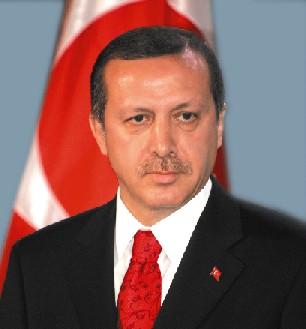
Iran has proposed two dates for fresh nuclear talks with the major powers, Nov. 23 and Dec. 5, Turkey's Prime Minister Recep Tayyip Erdogan said Wednesday.
Mr. Erdogan said in televised remarks that the talks, between Iran and the group known as P5+1—the U.S., China, Russia, France, the U.K. and Germany—wouldn't happen on Nov. 15, as earlier proposed by Iranian officials.

He said no date has yet been agreed to by the parties. The Turkish prime minister was speaking to reporters at Ankara airport on his way to Seoul for a meeting of the leaders of the Group of 20 industrial and developing nations.
Turkey has said it would agree to host the talks if it is asked, but the location remains uncertain.
Ankara angered the U.S. earlier this year when it voted against the latest round of economic sanctions against Iran at the United Nations Security Council.
First the European Union, and then the P5+1, have been in on-and-off talks with Iran since 2003, in an effort to persuade Tehran to abandon a nuclear-fuel program that Western governments, in particular, believe is designed to produce weapons-grade fuel. The talks have had little success.
Iran says the fuel is for civilian purposes only and that the program, though conducted in secret, is legal under the Nuclear Non-Proliferation Treaty.
Turkey and Brazil earlier this year persuaded Tehran to agree to a side deal, under which it would transfer part of its existing stockpile of low-grade enriched uranium for storage in Turkey, in exchange for higher-grade uranium fuel rods for use in a medical reactor. Though the P5+1 originally backed the deal, they refused to delay a new round of sanctions. Iran and the P5+1 have been discussing how to get back to the negotiating table ever since.

wall street journal

http://online.wsj.com/article/SB10001424052748703805004575605972781433594.html?KEYWORDS=MARC+CHAMPION


EU to Slam Turkish Media Curbs


wall street journal

MEDIA & MARKETING
NOVEMBER 8, 2010

By MARC CHAMPION
ISTANBUL—The European Union on Tuesday will criticize Turkey sharply over the rising number of prosecutions against journalists in an annual progress report on the country's bid to join the bloc, said a person familiar with the draft.
The attack on Turkey's press-freedom record is likely to further embarrass the country's Islamic-leaning government, which this week takes over the six-month rotating chair of the Council of Europe, the Continent's top human-rights body. Foreign Minister Ahmet Davutoglu has hailed that development as testament to "the level of democracy in Turkey."

But according to Turkish and international press watchdogs, media freedoms—a key right underpinning democratic systems—are getting significantly worse in Turkey. Reporters without Borders this year ranked Turkey 138th in terms of media freedom, out of 178 countries—down from 98th out of 167 in 2005.
The core problem, press advocates and Turkish journalists said, is the country's penal code, adopted in 2005. The EU's report will describe "the large number of cases initiated against journalists" arising from several articles in the code as a cause for concern that could lead to "self-censorship," said the people familiar with the draft.
Take Mehmet Baransu, an investigative reporter with the Turkish Taraf daily, who faces potential jail sentences totaling just under 400 years from 40 separate prosecutions over articles he has written. Mr. Baransu has played a prominent role in cases against some of Turkey's top generals, on one occasion providing prosecutors with the suitcase of documents and CD-ROMs on which they based their case, which begins in December.
Virtually all of the prosecutions against Mr. Baransu involve either breaching laws on court secrecy, attempting to influence a court or publishing classified documents. One case involved a document suggesting the army knew nine days before a terrorist attack on a border post that the action would take place, but failed to act, he said. Another case concerns a document suggesting the army was tapping phones without authorization, he said.
"What happens in Turkey is that whenever something illegal is done [by a state institution], they classify the document," Mr. Baransu said, adding that any journalist who exposes the wrongdoing is then subject to prosecution. He said he now spends around three days a week in court representing himself in the cases, most of which are still pending.
It isn't just those who report on the military who run afoul of the courts. Mr. Baransu's friend, Ismail Saymaz, is an investigative reporter at the Radikal daily. Of the 10 cases he faces, five stem from reports in which he purported to expose the flimsiness of the evidence against a prosecutor, Ilhan Cihaner, who had been investigating religious sects supportive of the government before he was accused of plotting a coup. Mr. Cihaner's trial is continuing, while Mr. Saymaz faces a potential total of 45 years in jail sentences from the five cases, he said.
"Whenever I wrote anything about Cihaner, I was sued," said Mr. Saymaz. "I think I was just doing my job."
Reporters across the world have to take care not to breach laws designed to ensure people can get a fair trial. But according to Fikret Ilkiz, a prominent Istanbul press lawyer, Turkey is different because the courts apply wide-ranging laws so aggressively, and in an environment where politicians and officials also talk about cases and leak documents.Mr. Ilkiz said tens of journalists are currently in Turkish jails, an improvement on the hundreds incarcerated in the 1990s. Many of these were ethnic Kurds who were convicted under an antiterrorism law that makes propagandizing for terrorists a crime. The concern today, said Mr. Ilkiz, is the sudden explosion since 2005 of new prosecutions against journalists who offend one side or the other in the country's struggle for power between the old secular establishment and a rising religious conservative elite.
"Turkey's democratic problem is being fought out through these lawsuits," and at the expense of press freedom, said Mr. Ilkiz. "This is part of a political struggle."
The Justice Ministry, in written answers to questions, said, "Turkey is a democratic state, governed by the rule of law," in which press freedoms are guaranteed by the constitution. It also said that of 26 journalists currently in jail in Turkey, only two are there because of their work as journalists.
But the ministry acknowledged that the rise in cases was a problem. "At this moment, our ministry is preparing a draft that foresees the amending of some articles concerning the press in the Turkish Penal Code," the Justice Ministry wrote, singling out the articles on secrecy of investigations, personal privacy and the attempt to affect a fair trial.
The ministry also noted that in 2008 it amended the penal code's Article 301, which penalized anyone who publicly denigrated "Turkishness," the military, courts or government. Ethnic Armenian journalist Hrant Dink was prosecuted under Article 301 in 2006, and was assassinated soon afterward. Since 2008, prosecutors need permission from the Justice Ministry to open a case under Article 301, and new prosecutions have come to a near halt as a result.
Turkey's media firms aren't under pressure from the courts alone. An estimated 5,000 Internet sites, including YouTube, have been shut down since the government pushed through new Internet laws in 2007. Meanwhile, the country's largest media group—the government-critical Dogan Yayin Holding SA—is fighting some 4.8 billion Turkish lira ($3.43 billion) of tax fines it describes as political. The government said the fines are purely technical.—Ayla Albayrak contributed to this article.
Write to Marc Champion at marc.champion@wsj.com

wall street journal


Turkey Blocks YouTube Again Over Sex Scandal Video


wall street journal

TECHNOLOGY
NOVEMBER 3, 2010, 4:32 P.M. ET

By MARC CHAMPION
ISTANBUL—Turkey has blocked access to YouTube again, just days after ending a two-and-a-half-year ban, but this time over a sex scandal video, rather than videos insulting to the nation's founder Mustafa Kemal Atatürk, according to a lawyer for the subject of the video.
The lawyer, who represents the leader of the republic's main opposition Republican People's Party, Deniz Baykal—said Wednesday that Turkish authorities had blocked the site as a result of a Tuesday court ruling in the case.
That confirmation came amid confusion, in which access to YouTube was first blocked throughout the day and then opened again late evening, both Tuesday and Wednesday. Officials at Turkey's Telecommunications Transmission Directorate had warned Tuesday that they might shut the site down again in response to the Baykal ruling, but could not be reached for comment either Tuesday or Wednesday. A spokesman for Google Inc., which owns the site, also declined to comment. The two sides are due to meet later in the week for talks.
YouTube was blocked in Turkey in May 2008, when a court ruling demanded the world-wide removal of various videos considered insulting to Atatürk. Google agreed only to block the videos within Turkey.
Last Saturday a Turkish court lifted the ban after a group of self-described "volunteers" working with Turkish authorities succeeded in taking the four offending videos off YouTube.com, using an automated copyright protection system. The move effectively achieved the court order without Google's involvement.
On Monday, however, YouTube said it would reinstate the videos, describing the copyright claim as invalid. In its statement, the company said it hoped Turkey would nevertheless allow the YouTube to remain open; that proved short lived.
On Tuesday, the court hearing Mr. Baykal's case ruled that YouTube should remove a video clip of him dressing with his lover in a hotel room. The secretly recorded video footage forced Mr. Baykal's resignation when it was posted on Turkish websites earlier this year.
Mr. Baykal's lawyer Muzaffer Yilmaz confirmed Wednesday that the court hearing Mr. Baykal's case ordered access to "the obscene and immoral images" to be blocked.
At its root, according to media analysts in Turkey, last weekend's copyright plan sought to circumvent rather than resolve the core dispute between Google and the Turkish government, namely that Google was unwilling to set a precedent for other governments by allowing Turkey to force the company to remove material world-wide, rather than just in Turkey. The ban has proved unpopular at home and damaging to Turkey's reputation abroad.
Media freedom activists note that Turkey has blocked as many as 5,000 websites, of which YouTube is the most prominent, since new laws governing Internet usage were adopted in 2007. —Ayla Albayrak in Istanbul contributed to this article.
Write to Marc Champion at marc.champion@wsj.com.

wall street journal


‘Baraklava’ Still Pleasing Crowds in Turkey


wall street journal

November 3, 2010, 3:40 PM ET


By Marc Champion
Much of the world considered Tuesday’s mid-term U.S. election a stinging rebuke to President Barack Obama. But among many in Turkey, it may only have increased his stature.

At the Karakoy Gulluoglu landmark bakery in Istanbul, the “Baraklava” – giant image of President Obama made in Turkey’s flaky, sweet baklava pastry – is still pleasing the crowds two years after it was made in honor of Mr. Obama’s election, says proprietor Nadir Gullu.
“Maybe the mistakes [that led to the Democrats’ drubbing in midterm elections] weren’t his, but the people around him,” says Mr. Gull. When he pulls out the Baraklava, “even Iraqis and Iranians start smiling and snapping pictures,” he says.
Mr. Obama remains personally more popular in Turkey than his policies or the U.S. itself, a curiosity, given the series of disputes and wrangles the two Cold War allies have had over Armenia, Israel, Iran and other issues since he came to power. But Turks appear to have disassociated Mr. Obama from the U.S. administration as a whole.
“Turks generally believe Obama is sincere, but has not been able to do what he wanted,” says Kerim Balci, a columnist who describes himself as speaking for Turkey’s “religious majority” and is now editor of a recently launched foreign policy magazine, Turkish Review.
According to Mr. Balci, among religious Turks sympathy for Mr. Obama’s stock may even have risen over the past two years. Often called “Black Turks” and excluded for decades from power by a dominant, military-backed secularist elite, religious Turks sympathized with Mr. Obama as the first black American president, he says. They likened his struggles to get things done once in power with similar entrenched resistance that has faced Turkey’s Islamic leaning government.
“They had sympathy for him when he was elected because he was black, and in the view of these religious Turks, now seems even more black,” says Mr. Balci.
In Ankara, Mr. Obama’s sliding popularity is a real concern among policy makers, though. A weak administration could prove more difficult for Turkey in sensitive areas from relations with Israel, to negotiations with Iran, analysts say.
Other politicians are drawing the opposite conclusion, that Mr. Obama will discount the possibility of a second term and carve his own swathe through the last half of his presidency, says Mr. Balci. “They think: now we’ll have ‘our’ Obama, finally,” he says, though he believes that view is “utopian.”
Despite all the disputes the government has had with Washington, the idea is now dawning that Mr. Obama could be a one-term president, says Suat Kiniklioglu, a parliamentarian and foreign affairs spokesman for the ruling Justice and Development party. If that turns out to be true, he said, “both Turkey and Europe might have to grapple with another president from the Republican, Tea Party strain and that would be very hard to deal with, for many of us.”
That kind of president wouldn’t get a baklava at Gulluoglu’s. Asked what would have happened had he made one of former U.S. President George W. Bush, Mr. Gull said: “Some people told me they’d smash my shopfront windows.”

wall street journal

EU Scolds Turkey on Border Issues


wall street journal

EUROPE NEWS
NOVEMBER 10, 2010


By STEPHEN FIDLER in Brussels and MARC CHAMPION in Istanbul
The European Union said two Balkan states were ready to advance their membership efforts, while it admonished Turkey to move faster to settle its border disputes and to normalize relations with Cyprus.
The assessments came Tuesday from the European Commission, the EU's executive arm, in separate reports on the readiness of countries that aspire to join the 27-nation bloc.
The commission said that Croatia's membership negotiations were entering "their final stage" and that Montenegro could now be considered a candidate country.
It added, however, that Croatia needed to do better in making sure its judiciary was independent and efficient, in fighting corruption and organized crime, and in cooperating with the international tribunal investigating war crimes during the break-up of Yugoslavia.
It also said Montenegro's negotiations couldn't start immediately because of concerns over the rule of law.
Turkey was further criticized for shortcomings in free speech and freedom of religion. Negotiations over Turkey's membership, which is opposed by powerful EU states such as France and Germany, have dragged on since 2005.
"No one can be satisfied with the current pace of negotiations," said Stefan Füle, EU commissioner for enlargement.
In Rome, Turkish Foreign Minister Ahmet Davutoglu made it clear that Turkey doesn't have infinite patience to complete the process. Europeans "must think about what the position of Europe will be in 2050," he said. "The EU may become irrelevant in the geopolitical context" with a small share of the global economy and a closed culture.
The assessment said freedom of expression and of the media need "to be strengthened in Turkey both in law and in practice," while "shortcomings remain in the exercise of the freedom of religion."
It said Turkey also needed to step up efforts to resolve disputes with neighbors, including with Armenia—with which it signed a 2009 agreement to normalize relations that hasn't been ratified. The EU also noted the lack of progress in normalizing relations with the Greek-Cypriot half of Cyprus, which has been an EU member since 2004.

Egemen Bagis, Turkey's chief negotiator to the EU, indicated at a dinner in Istanbul Tuesday that Turkey doesn't want EU membership badly enough to make a unilateral gesture to unblock negotiations frozen over Turkey's refusal to meet a pledge to open its ports to the Greek-Cypriot part of Cyprus.
"After all, 17 [negotiating] chapters are blocked. I don't even have a clear date to end the negotiations. I have so many leaders saying Turkey shouldn't join at all. So why should I give up on Cyprus?" he said.
Mr. Bagis, however, also called the report "the most positive and encouraging" Turkey had ever received.
Turkish leaders, including Mr. Bagis, say EU membership remains their top foreign-policy objective, but there is a decline in popular Turkish interest in the EU. Turkish media widely noted Monday that Albanians and Bosnians gained visa-free travel to the EU's borderless Schengen zone, while Turks still are obliged to line up outside embassies—despite Turkey's full customs union with the EU since 1995, and although it is further advanced in the EU membership process.
According to a recent survey by the German Marshall Fund of the United States, a think tank, Turkish support for joining the EU has fallen to 38% from 73% in 2004.
"Perhaps the Turkish public also will say, 'Let's not become a member despite having successfully concluded the negotiations,' " Turkish President Abdullah Gul said in a speech at the Chatham House think tank in London on Monday.—Christopher Emsden in Rome contributed to this article.
Write to Stephen Fidler at stephen.fidler@wsj.com and Marc Champion at marc.champion@wsj.com


wall street journal

Turkey Blocks, Unblocks YouTube


wall street journal

TECHNOLOGY
NOVEMBER 2, 2010, 3:56 P.M. ET


By MARC CHAMPION
ISTANBUL—YouTube was blocked and unblocked again in Turkey on Tuesday, as a dispute continued over the popular video-sharing site's refusal to remove videos deemed illegal by Turkish courts, world-wide.
Just days after a Turkish court lifted a more than two-year ban on YouTube, Turks attempting to directly access YouTube on Tuesday evening again encountered a blank screen with a message informing them that YouTube was blocked as part of a May 2008 court order. That ruling had demanded the company, a unit of Google Inc., should remove various videos considered insulting to the republic's founder, Mustafa Kemal Atatürk, world-wide.
Hours later, however, the site was accessible again. The four videos had been removed from the site two years ago. Officials at Turkey's Telecommunications Transmission Directorate could not be reached for comment. A spokesman for Google also declined to comment. The two sides are due to meet later in the week for talks.
Saturday's court decision came after a group of self-described "volunteers" working with Turkish authorities succeeded in taking the four offending videos off YouTube.com, using an automated copyright protection system. The move effectively achieved the court order without Google's involvement.
On Monday, however, YouTube said it would restore the videos, describing the copyright claim as invalid. The statement appeared to reject what the volunteers had hoped would be a solution to end a ban that is unpopular within Turkey and damaging to its reputation abroad.
At its root, according to media analysts in Turkey, the copyright plan sought to circumvent rather than resolve the core dispute between Google and the Turkish government, namely that Google was unwilling to set a precedent for other governments by allowing Turkey to force the company to remove material world-wide. YouTube had only blocked direct access to the videos within Turkey.
Earlier Tuesday, the directorate, which is responsible for enforcing Turkey's tough Internet laws, appeared to up the stakes in its dispute with Google.
The agency issued a statement warning YouTube that if it did not comply with a recent court ruling that it should remove a video at the heart of a political sex scandal earlier this year, then another order to shut down YouTube would have to be issued, the state news agency Anadolu Ajansi reported.
The video in that case showed Deniz Baykal, the then-leader of the Republican People's Party, Turkey's main opposition party, getting dressed in a hotel room with a lover. The footage, secretly filmed and released inside Turkey, caused Mr. Baykal to resign. Mr. Baykal was not available to comment Tuesday.—Ayla Albayrak in Istanbul contributed to this article.
Write to Marc Champion at marc.champion@wsj.com


wall street journal

Google Reposts Barred Turkish Videos


wall street journal


Internet giant put the four clips back up on YouTube because they weren't copyright infringing

By MARC CHAMPION
ISTANBUL—Google Inc. on Monday appeared to be set for a renewed clash with Turkey's government, when it reposted videos that a court had ruled insulting to the republic's founder Mustafa Kemal Atatürk, effectively rejecting an attempt to end a ban on YouTube in Turkey.
The four videos, which have kept YouTube banned here since May 2008, were taken off the Web late last week by a Turkish group of self-described "volunteers," working closely with the government. The group used Google's automatic copyright protection system to have the clips removed.
Turks were able to access YouTube directly for the first time in more than two years last weekend, after a court on Saturday lifted the ban, noting that the offending clips were now gone. Google, however, said Monday it was restoring the videos, while critics described the volunteers' copyright plan as an enabler for censorship.

"When we looked into this, we found the videos were not, in fact, copyright infringing, so we have put them back up, though they continue to be restricted within Turkey. We hope very much that our users in Turkey can continue to enjoy YouTube," the company said in a statement. A spokesman declined comment further.
The head of Turkey's Telecommunications Transmission Directorate, which is responsible for enforcing Internet bans, said he would meet with YouTube officials "in the coming days." Serhat Ozeren, who heads the semi-independent Internet Board of Turkey, said in an interview that the YouTube statement was being treated as unofficial, but that if it proved correct "it would make it more difficult for our board to defend YouTube" and the ban could easily resume.
Turkish courts blocked access to YouTube in 2008 after Google refused to accept the demand that videos the court ruled illegal should be removed worldwide, and not just in Turkey, fearing the precedent it would set. Google officials appear to have been concerned that it would be seen as tacitly agreeing to that extraterritorial principle if they didn't restore the videos.
YouTube is just one of thousands of websites that have been shut down in Turkey since the government passed a new Internet law in 2007, which enabled entire sites to be banned if any amount of material on them was found to infringe on a range of banned topics, from obscenity to insulting Atatürk. While the number of site closures in Turkey still grows, the YouTube ban in particular has become an embarrassment for the government, increasingly under attack for restricting media freedoms.
The offending videos were removed from YouTube.com after Turkey's state television channel TRT and the nation's parliament commissioned a little-known Turkish-owned company in Germany, International Licensing Service, to enforce their copyright claims, according to Levent Berber, part of a husband-and-wife team of lawyers who advised on the scheme.
Photographs of Atatürk used in the videos came from the two institutions' archives.
Mr. Berber's wife, Leyla Keser Berber, described herself and the two founders of ILS in a blog post as "volunteers" who had constructed a "warning-removals" system to help protect Turks from losing direct access to YouTube again in future. While formally banned, YouTube remains widely used in Turkey via proxy addresses.
"This should be good news for Google…they will be adding 70 million people to their account," said Mr. Berber, adding that freedoms everywhere were subject to legal limitations. He said he could not understand how Google, as a service provider, could assume to judge the validity of a copyright claim.
Google's automatic copyright enforcement system works by matching images provided by copyright owners to images put on YouTube by users. But the system has safeguards to prevent abuse. In this case, the doctored images appear to have fallen squarely under "fair use" exemptions to copyright laws, as they were a form of satire.
Melih Bayram Dede, technology editor for the daily Yeni Safak described the copyright enforcement plan as "extremely artificial and inadequate…that allows the state to "keep removing videos which it does not approve of, so we can say censorship continues."
"As long as the law on crimes committed on the Internet…is not amended or removed, these kind of Internet bans will continue," he said.—Ayla Albayrak contributed to this article.
Write to Marc Champion at marc.champion@wsj.com


wall street journal

PKK Denies Role in Istanbul Attack


wall street journal

EUROPE NEWS
NOVEMBER 1, 2010, 6:26 P.M. ET


By MARC CHAMPION And AYLA ALBAYRAK
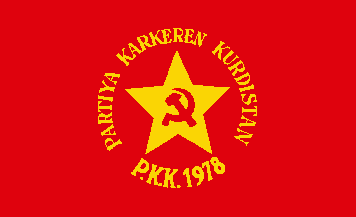
A group representing the Kurdish Workers Party on Monday denied responsibility for a weekend suicide-bomb attack in central Istanbul that wounded 32 people, and said it was extending a unilateral cease-fire until the middle of next year.
Turkish media have fingered the Kurdish Workers Party, or PKK, as a prime suspect for Sunday's bombing, in which the suspected suicide attacker tried to board a police bus in Istanbul's busy Taksim Square and blew himself up next to it when he failed. Fifteen of the wounded were policemen.
But on Monday, the Union of Communities in Kurdistan, a group that shares a common leader with the PKK and often speaks on its behalf, sought to distance itself from the attack, which took place earlier on the day the PKK's four-month unilateral cease-fire had been due to expire.
"On a day when our movement was preparing an historic step to extend our ceasefire decision for peace and a democratic solution, it is impossible for us to have conducted this kind of an action," the statement said. The PKK in recent years has backed away from demanding a separate Kurdish state, focusing instead of obtaining political autonomy and language rights for Turkey's ethnic Kurds. Turkey, the United States and the European Union list the PKK as a terrorist organization.
Turkey's state newswire, Anadolu Ajansi, said Monday that police had determined Sunday's bomb was made from a plastic explosive of Austrian origin that in the past has been used by two radical leftist terror groups in Turkey, as well as by the PKK. Interior Minister Besir Atalay told reporters while visiting the wounded in the hospital that it was too early to draw conclusions about who carried out the bombing.
The statement from the Union of Communities in Kurdistan accused Turkey's government of failing to endorse a democratic solution that would satisfy the country's large ethnic Kurdish minority and end the conflict with the PKK. But it said "the movement" would extend its cease-fire until Turkey's elections, set for June next year.
The statement also set out five demands Turkey's government should fulfill in order to stop the conflict: end military operations against the PKK; release arrested Kurdish politicians; open the way for Abdullah Öcalan, the PKK leader jailed on an island outside Istanbul, to take part in peace negotiations; establish constitutional and truth commissions; and lower the threshold for political parties to enter parliament from the current 10% of votes cast.
So far, the government has shown little sign of meeting those demands. The trial of 151 members of the Union of Communities of Kurdistan, including 12 town mayors and several politicians, arrested on suspicion of working with the PKK among other charges began two weeks ago. The government has been rounding up members of the group since 2009, fearful that it was attempting to set up a parallel state within Turkey. On Monday, Prime Minister Recep Tayyip Erdogan repeated his government's complaint that some European countries aid the PKK by giving them safe harbor.
"Despite all our warnings and demands, and the documents we have issued, some countries continue supporting terror directly or indirectly", he said, speaking to an international audience in Istanbul.
The PKK has been waging a war in Turkey since 1984, with an estimated 40,000 people dying as a result of the conflict on both sides. Up to one-fifth of Turkey's population are ethnic Kurds, with the majority concentrated along the country's eastern borders with Syria, Iraq and Iran.
Write to Marc Champion at marc.champion@wsj.com

wall street journal


Turkey Says It Won't Block NATO Plan


wall street journal

But Foreign Minister Says Missile Shield Should Cover Entire Country, Avoid 'Cold War' Mentality

MIDDLE EAST NEWS
NOVEMBER 1, 2010

By MARC CHAMPION
Turkey's Foreign Minister Ahmet Davutoglu said Sunday it was "out of the question" for Turkey to oppose security measures the North Atlantic Treaty Organization considers necessary, apparently ruling out any move to block a missile shield the U.S. is proposing for the military alliance.

Mr. Davutoglu laid out three principles on which he said NATO member Turkey would base its approach to the missile shield. But in the Turkish government's most detailed comments to date on the proposal, he gave no indication of whether Ankara would agree to host the system's radar sensors.
"NATO can develop defense systems by taking into consideration security risks," and Turkey's opposition to such NATO measures "is out of the question," Mr. Davutoglu told reporters while in Shanghai on a trip to China, according to Anadolu Ajansi, the Turkish state news agency.
Leaders of the 28 NATO member states, including Turkey, are expected to decide at a summit in Portugal on Nov. 19 whether the organization should build the shield. Because all NATO decisions are made by consensus, any alliance member could veto the missile shield plan.
Mr. Davutoglu's remaining principles, however, appeared to amount to conditions that Turkey wants to set for the plan. "NATO is obliged to take into account the security of all allied countries. Accordingly, a system excluding some parts of Turkey is unacceptable," he said, according to Anadolu, confirming that Turkey is demanding the shield cover the entire country. Diplomats say Turkey is the preferred, but not the only, choice to locate the missile shield's radar sensors, because of its border with Iran.
The third and final principle, Mr. Davutoglu said, was that Turkey wouldn't allow itself to become a frontline state for NATO, as it was during the Cold War. "We do not have a perception of threat in our adjacent areas, including Iran, Russia, Syria and the other adjacent countries," Anadolu quoted him as saying. "NATO should exclude any formula that confronts Turkey with a group of countries in its threat definitions and planning. … We do not want a Cold War zone or psychology around us."
The planned missile shield has put Turkey's government in a tough position, according to diplomats and analysts. If Ankara were to refuse to take part in the shield, or block it, Turkey would risk angering the U.S. and NATO allies, these people say. If it joins the shield, however, the government risks angering Iran, a neighbor and major energy supplier.
A White House fact sheet outlining the U.S. administration's missile-defense-shield plan specifically names Iran as the threat the proposed shield is designed to counter. Diplomats familiar with talks between Ankara and Washington over the planned shield say Turkey is asking that any document produced at the NATO summit not mention Iran. Turkey also is concerned that the shield doesn't damage its relations with Moscow—which opposed a previous version of the plan put forward by the administration of former U.S. President George W. Bush—these people say.
Turkey has sought to position itself as a neutral party in the U.S.-led effort to pressure Iran into abandoning its nuclear-fuel program, which the major powers suspect is designed to develop nuclear weapons. Iran says the program, which is legal but remained hidden for nearly two decades before it was exposed and confirmed by international inspectors in 2003, is designed purely to make fuel for civilian reactors.
But the shield has come as a test for Mr. Davutoglu's "zero problems with neighbors" foreign policy. That policy is predicated on the idea that Turkey—which for decades had either closed borders or hostile or cold relations with all its neighbors—now faces no such hostility, and should instead open up its borders as widely as possible for trade and travel.
Turkey's decision, along with Brazil, to vote against a new round of sanctions on Iran at the United Nations Security Council in June was poorly received in Washington. Some policy makers already had begun to ask whether Turkey was turning away from the West under the ruling Justice and Development, or AK, party, which as its roots in political Islam. The Turkish Security Council "no" vote against a U.S. foreign-policy priority added to those concerns.
Mr. Davutoglu and other Turkish leaders have fiercely denied any such shift, saying that their country's top foreign-policy priority remains joining the European Union, and that they are merely pursuing their country's national interests in a way any nation in its geographical location would do.
The NATO missile-defense shield has triggered a lively debate in Turkey's media, however. Religious-conservative newspapers and commentators oppose the plan, describing it as a "trap" set by the U.S. to reverse Turkey's improvement in relations with countries such as Iran and Syria. They also have speculated that the true purpose of the shield is to protect Israel, rather than Europe, Turkey or the U.S. More-secular media and commentators, meanwhile, have warned that refusing to take part in the shield could isolate Turkey within NATO, undermining its most important security relationships.
Write to Marc Champion at marc.champion@wsj.com

wall street journal

Σάββατο 30 Οκτωβρίου 2010

Slovenia Shines as Central Europe’s Least Corrupt, Hungary Gets Warning Signal


October 27, 2010, 9:37 AM ET

By Veronika Gulyas

Slovenia is the least corrupt state in central and southeastern Europe, followed by Poland, not a long time ago plagued with corruption scandals. Hungary plunged most heavily on Transparency International’s latest corruption ranking.
Slovenia with the score of 6.4 and Poland with 5.3, on the scale of 0-10, are closer to the “very clean” end than to “highly corrupt,” according to the 2010 Corruptions Perceptions Index by Transparency International.
Hungary with 4.7 is followed by the Czech Republic (4.6), Slovakia (4.3), Romania (3.7) and Bulgaria (3.6).
Hungary fell four ranks to the 50th place after failing to implement efficient and comprehensive anti-corruption measures, such as transparent campaign financing and procurement regulations, Transparency International Hungary Executive Director Noemi Alexa said at a press conference Tuesday.

wall street journal

Τρίτη 26 Οκτωβρίου 2010

Turkey Faces Delicate Choice on NATO Missile Shield


EUROPE NEWS
OCTOBER 27, 2010
By MARC CHAMPION
ISTANBUL—Turkey's top security body is set to discuss Wednesday whether to back a U.S.-led plan to build a missile-defense shield against rogue states—a moment that could force Ankara to choose between its longstanding westward orientation and its recent courtship of Iran.

The National Security Council, which consists of top military commanders and political leaders, is expected to debate the North Atlantic Treaty Organization's proposal for a defense shield largely built and funded by the U.S. A senior Turkish diplomat said Ankara will have to decide its position before next month's summit of the 28-nation alliance in Lisbon, Portugal, where Turkey and other NATO members are due to decide whether to go ahead with the plan.
For most NATO members, the shield is an insurance policy against a potential missile threat from Iran. It is also a welcome compromise from the much more ambitious plan of the previous Bush administration. That proposal, which would have installed antiballistic missiles in Poland and a forward radar system in the Czech Republic, triggered a fierce backlash from Moscow.
For Turkey, however, the Obama administration's scaled-back plan is proving a major diplomatic headache that risks forcing Ankara to choose between NATO and Iran. It is also triggering a fierce debate inside the country over where Turkey's core interests lie. In recent days, Turkey's religious conservative and pro-government media have argued that siding with NATO against Iran would end Turkey's effort to build an independent foreign policy and damage its credibility in the Middle East.
Both U.S. and Turkish leaders say no decision has yet been made as to which countries will host the system. Bulgaria, Romania and Turkey are in the picture, according to diplomats familiar with the matter. But Turkey, which shares a border with Iran, is the location of choice for the plan's forward radar, according to military analysts and diplomats.
Turkish leaders have so far remained noncommittal and have asked Washington for assurances and technical details. According to diplomats familiar with the matter, Turkey is asking that NATO not name any specific country as the source of a missile-attack threat. It also seeks to ensure that all of Turkey's territory is covered by the system and that Turkey has access to all data and a measure of control over the decision to fire. These people say Ankara also wants guarantees that non-NATO members, specifically Israel, wouldn't gain access to the data.
"No decisions have been made yet," said the senior Turkish diplomat. "We don't know exactly how this system will be formed, what will be the command and control structure, the threat perception and other issues. So that's why our talks are continuing."
Some of the Turkish requests shouldn't be problematic, said one non-Turkish diplomat familiar with the matter. Command and control of the system would have to be at an operational, not political, level, due to the short time frame available to shoot a missile down. Turkey would therefore have a say—and a potential veto—in setting the rules of engagement. Similarly, other countries, as well as Turkey, are concerned that data should be available only to NATO members, the diplomat said.
"If Iran is not mentioned by name and the shield covers Turkey in its entirety then I think [Turkey's government] will go along with it," said Soli Ozel, a prominent newspaper columnist on international affairs and professor at Bilgi University in Istanbul. "If those conditions are fulfilled and the government still refuses, then all these discussions about Turkey's direction will come back with a vengeance."
Turkey's military wants the shield, according to Huseyin Bagci, professor of international relations at the Middle East Technical University in Ankara. "[Iranian] Sahab missiles can reach any part of Turkey," he said, adding that militaries focus on the capabilities of potential foes, not their intentions.
Indeed, Turkey has a plan of its own to purchase a missile system to protect its borders. Raytheon Co., maker of the Patriot missile, is one of the bidders and earlier this month announced a deal to subcontract part of the Patriot system's manufacture to Turkey's largest arms maker, Aselsan Elektronik Sanayi ve Ticaret AS.
The National Security Council, which consists of top military commanders and political leaders, is expected to debate the North Atlantic Treaty Organization's proposal for a defense shield largely built and funded by the U.S. A senior Turkish diplomat said Ankara will have to decide its position before next month's summit of the 28-nation alliance in Lisbon, Portugal, where Turkey and other NATO members are due to decide whether to go ahead with the plan.
For most NATO members, the shield is an insurance policy against a potential missile threat from Iran. It is also a welcome compromise from the much more ambitious plan of the previous Bush administration. That proposal, which would have installed antiballistic missiles in Poland and a forward radar system in the Czech Republic, triggered a fierce backlash from Moscow.
For Turkey, however, the Obama administration's scaled-back plan is proving a major diplomatic headache that risks forcing Ankara to choose between NATO and Iran. It is also triggering a fierce debate inside the country over where Turkey's core interests lie. In recent days, Turkey's religious conservative and pro-government media have argued that siding with NATO against Iran would end Turkey's effort to build an independent foreign policy and damage its credibility in the Middle East.
Both U.S. and Turkish leaders say no decision has yet been made as to which countries will host the system. Bulgaria, Romania and Turkey are in the picture, according to diplomats familiar with the matter. But Turkey, which shares a border with Iran, is the location of choice for the plan's forward radar, according to military analysts and diplomats.
Turkish leaders have so far remained noncommittal and have asked Washington for assurances and technical details. According to diplomats familiar with the matter, Turkey is asking that NATO not name any specific country as the source of a missile-attack threat. It also seeks to ensure that all of Turkey's territory is covered by the system and that Turkey has access to all data and a measure of control over the decision to fire. These people say Ankara also wants guarantees that non-NATO members, specifically Israel, wouldn't gain access to the data.
"No decisions have been made yet," said the senior Turkish diplomat. "We don't know exactly how this system will be formed, what will be the command and control structure, the threat perception and other issues. So that's why our talks are continuing."
Some of the Turkish requests shouldn't be problematic, said one non-Turkish diplomat familiar with the matter. Command and control of the system would have to be at an operational, not political, level, due to the short time frame available to shoot a missile down. Turkey would therefore have a say—and a potential veto—in setting the rules of engagement. Similarly, other countries, as well as Turkey, are concerned that data should be available only to NATO members, the diplomat said.
"If Iran is not mentioned by name and the shield covers Turkey in its entirety then I think [Turkey's government] will go along with it," said Soli Ozel, a prominent newspaper columnist on international affairs and professor at Bilgi University in Istanbul. "If those conditions are fulfilled and the government still refuses, then all these discussions about Turkey's direction will come back with a vengeance."
Turkey's military wants the shield, according to Huseyin Bagci, professor of international relations at the Middle East Technical University in Ankara. "[Iranian] Sahab missiles can reach any part of Turkey," he said, adding that militaries focus on the capabilities of potential foes, not their intentions.
Indeed, Turkey has a plan of its own to purchase a missile system to protect its borders. Raytheon Co., maker of the Patriot missile, is one of the bidders and earlier this month announced a deal to subcontract part of the Patriot system's manufacture to Turkey's largest arms maker, Aselsan Elektronik Sanayi ve Ticaret AS.
Yet Turkish diplomats are concerned that positioning a NATO missile system on Iran's border would infuriate Iran, a country that supplies about a third of Turkey's energy and which Ankara has worked hard to court, presenting itself as a neutral party in the international dispute over Tehran's nuclear fuel program. A NATO shield also would also cut across the grain of Foreign Minister Ahmet Davutoglu's frequent statements that Turkey doesn't believe it is threatened by any of its neighbors.
Write to Marc Champion at marc.champion@wsj.com
wall street journal
http://online.wsj.com/article/SB10001424052702303891804575576233454738208.html