se times
14/07/2011
An unprecedented Roma integration program promises specific results in Macedonia.
By Klaudija Lutovska and Misko Taleski for Southeast European Times in Skopje – 14/07/11
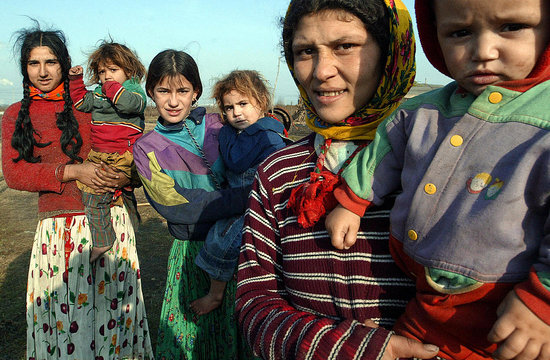
Macedonia assumed chairmanship of the Decade of Roma Inclusion 2005-2015, an international programme involving 12 European countries to improve Roma integration and welfare.
The Decade brings together governments, transnational organisations and NGOs to improve Roma participation in education, employment, housing and healthcare, but also commits governments to address other core issues like discrimination....more....
read more: se times
http://www.setimes.com/cocoon/setimes/xhtml/en_GB/features/setimes/features/2011/07/14/feature-04
Εμφάνιση αναρτήσεων με ετικέτα roma. Εμφάνιση όλων των αναρτήσεων
Σάββατο 16 Ιουλίου 2011
Τετάρτη 13 Ιουλίου 2011
EU Commissioner: Roma Exclusion ‘Getting Worse’
balkan insight
11 JUL 2011 / 11:10
Living conditions for Europe’s Roma are worsening and all European states, including western ones, are responsible for changing that, says László Andor, the EU Commissioner for Employment, Social Affairs and Inclusion.
Compiled by Nikoleta Popkostadinova
László Andor, the EU Commissioner for Employment, Social Affairs and Inclusion believes living conditions for Europe’s Roma are getting worse, rather than improving....more...
read more: balkan insight
http://www.balkaninsight.com/en/article/eu-commissioner-roma-exclusion-getting-worse
11 JUL 2011 / 11:10
Living conditions for Europe’s Roma are worsening and all European states, including western ones, are responsible for changing that, says László Andor, the EU Commissioner for Employment, Social Affairs and Inclusion.
Compiled by Nikoleta Popkostadinova
László Andor, the EU Commissioner for Employment, Social Affairs and Inclusion believes living conditions for Europe’s Roma are getting worse, rather than improving....more...
read more: balkan insight
http://www.balkaninsight.com/en/article/eu-commissioner-roma-exclusion-getting-worse
Ετικέτες
balkan insight,
balkans,
human rights,
politics,
roma
Δευτέρα 4 Ιουλίου 2011
Romanian Plan to Wall Off Roma Stirs Protests
balkan insight
01 JUL 2011 / 10:48
Civic organisations are protesting against plans of authorities in Baia Mare to erect a wall around a Roma neighbourhood to keep down crime.
Marian Chiriac Bucharest
Local authorities in Baia Mare, in northwest Romania, have stirred protests by deciding to erect a concrete wall around a block where a large number of Roma/Gypsy people is living, in order to "stop so many crimes from happening" in the area....more...
read more: balkan insight
http://www.balkaninsight.com/en/article/protests-over-romania-s-mayor-plan-against-gypsy
01 JUL 2011 / 10:48
Civic organisations are protesting against plans of authorities in Baia Mare to erect a wall around a Roma neighbourhood to keep down crime.
Marian Chiriac Bucharest
Local authorities in Baia Mare, in northwest Romania, have stirred protests by deciding to erect a concrete wall around a block where a large number of Roma/Gypsy people is living, in order to "stop so many crimes from happening" in the area....more...
read more: balkan insight
http://www.balkaninsight.com/en/article/protests-over-romania-s-mayor-plan-against-gypsy
Ετικέτες
balkan insight,
human rights,
roma,
romania,
romanian government
Δευτέρα 20 Ιουνίου 2011
Roma refugees returning to Kosovo face few prospects
se times
17/06/2011
Some repatriated Kosovo Roma refugees see no other alternative to returning to prosperous EU countries.
By Muhamet Brajshori for Southeast European Times in Pristina – 17/06/11
It is a life of extreme poverty and unemployment, made all the more challenging by the need to reintegrate back into Kosovo society, say Roma refugees who have been repatriated to Kosovo from Europe in recent months.
Their repatriation is part of the readmission agreements signed between Kosovo and Germany, Switzerland,
the Benelux and other countries in order to develop a visa liberalisation strategy....more...
read more: se times
http://www.setimes.com/cocoon/setimes/xhtml/en_GB/features/setimes/features/2011/06/17/feature-04
17/06/2011
Some repatriated Kosovo Roma refugees see no other alternative to returning to prosperous EU countries.
By Muhamet Brajshori for Southeast European Times in Pristina – 17/06/11
It is a life of extreme poverty and unemployment, made all the more challenging by the need to reintegrate back into Kosovo society, say Roma refugees who have been repatriated to Kosovo from Europe in recent months.
Their repatriation is part of the readmission agreements signed between Kosovo and Germany, Switzerland,
the Benelux and other countries in order to develop a visa liberalisation strategy....more...
read more: se times
http://www.setimes.com/cocoon/setimes/xhtml/en_GB/features/setimes/features/2011/06/17/feature-04
Ετικέτες
human rights,
kosovo,
kosovo government,
politics,
roma,
se times
Τρίτη 17 Μαΐου 2011
Slovenia criticized over “erased” citizens, Roma
b92.net
Region
Friday 13.05.2011
14:49
Source: Tanjug, STA
LJUBLJANA -- Amnesty International criticized Slovenia in its annual report because of its treatment of Roma, and of citizens removed from permanent residence registry....more...
read more: b92.net
http://www.b92.net/eng/news/region-article.php?yyyy=2011&mm=05&dd=13&nav_id=74320
Region
Friday 13.05.2011
14:49
Source: Tanjug, STA
LJUBLJANA -- Amnesty International criticized Slovenia in its annual report because of its treatment of Roma, and of citizens removed from permanent residence registry....more...
read more: b92.net
http://www.b92.net/eng/news/region-article.php?yyyy=2011&mm=05&dd=13&nav_id=74320
Τρίτη 12 Απριλίου 2011
Serbia Marks International Roma Day
balkan insight
08 Apr 2011 / 15:26
Serbia and countries across the Balkans are marking International Roma Day today, as the community continues to struggle with problems of discrimination, housing and poverty.
B92
Participants will gather in downtown Belgrade and folk dance ensembles from several Serbian towns will hold a concert, while a public hearing will present the problems facing the Roma community in Serbia.....more...
read more: balkan insight
Ετικέτες
balkan insight,
politics,
roma,
serbia,
society
Κυριακή 10 Απριλίου 2011
Romania's New Roma Strategy 'Too Vague'
balkan insight
08 Apr 2011 / 09:10
Bucharest government's new strategy to integrate Roma may be well intentioned but is worryingly short on detail, community leaders say.
Marian Chiriac, Bucharest
Pledging to improve the life of Romania's Roma, who number anything from 500,000 to 1.5 million, Bucharest is to address key issues related to education, health, employment and housing for this impoverished community....more...
read more: balkan insight
Ετικέτες
balkan insight,
politics,
roma,
romania,
society
Europe Sets Deadline for Roma Inclusion Strategy
balkan insight
07 Apr 2011 / 15:06
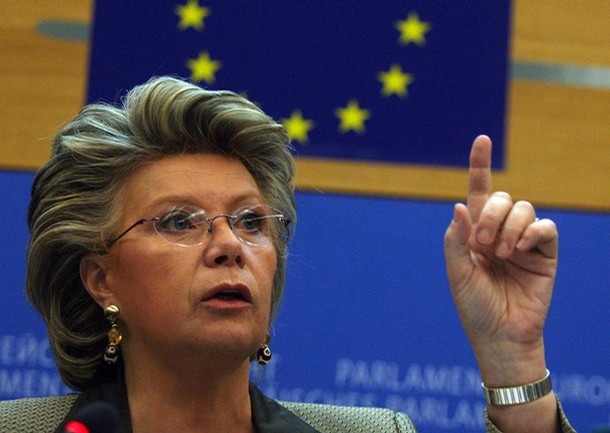
EU Justice Commissioner Viviane Reding has given EU states eight months to draft their national plans within the EU Strategy for Roma integration and inclusion.
BBC, Novinite
Reding told MEPs Wednesday that there will be goals for Roma integration in the workforce, healthcare, housing and schools - such as ensuring that all Roma children attend primary schools, the BBC reported....more...
read more: balkan insight
International Roma Day marked
b92.net Society Friday 8.04.2011 16:11
Source: B92 BELGRADE -- The International Roma Day is marked today with numerous manifestations. Participants and their guests will gather at Republic Square and Kalemegdan and folk dance ensembles from several Serbian towns will hold a concert. ...more...
read more: b92.net
Σάββατο 9 Απριλίου 2011
EU states to draft national Roma inclusion strategies
se times
7/04/2011 The European Commission tells the 27 EU-member states they must submit their plans by the year's end.
All EU member states must develop national strategies for Roma inclusion by the end of 2011, the European Commission (EC) said on Tuesday (April 5th). ...more...
read more: se times
AI to present report on Roma in Serbia
b92.net Society Thursday 7.04.2011 12:55
Source: B92 BELGRADE -- Amnesty International (AI) will present a report on position of Roma in Serbia. AI has also requested adoption of a law that will protect Roma who were evicted from illegal settlements. ...more..
read more: b92.net
Παρασκευή 17 Δεκεμβρίου 2010
Focus on Romania
the economist, independent.co.uk
--Ire of the Ţigan
Dec 8th 2010, 11:16 by R.W-M. BUCHAREST
THE Romanies of Romania will soon be the "Ţigan" of Romania, if the government has its way. A controversial bill before parliament will change the name of Romania's main ethnic minority from "Roma" to "Ţigan" [pronounced tsigan], a word that "is associated in the collective memory of the Roma with the slavery that existed in Romania from 1385 to 1856, and also the forced deportations in WW2", according to a protest letter sent by Romani groups to heads of state at a recent OSCE summit in Kazakhstan....more...
the economist
- Holes and corners
By the standards of its region, Romania is a big country with problems to match
Disappointing Romania
Dec 9th 2010 BUCHAREST from PRINT EDITION
STABILITY is better than crisis and collapse. But what about recovery? After squandering time and cash in a binge that ended in a bust, Romania has sobered up and is trying to cope with its daunting problems. The most pressing is the economy. In the excitement of joining the European Union in 2007, Romania enjoyed a three-year boom in which annual growth peaked at a stonking 8%. Where a prudent government would have hit the brakes, Romania’s stamped on the accelerator, running a big budget deficit. The crash in 2009 forced the country to seek a €20 billion ($26 billion) IMF bail-out in 2009. ...more...
the economist
-Drop in for a bite with Vlad Ţepeș
Dec 16th 2010, 10:40 by E..L. SNAGOV, ROMANIA
NOT one person in a million outside Romania will have heard of Vlad Ţepeș (pronounced Tsepesh). They may have heard vaguely of him under the name of "Vlad the impaler" but are most likely to confuse that real-life figure, a scourge of the Turks in 15th-century Romania, with the entirely fictional Dracula created in Bram Stoker's novel. Starring in countless films, comic strips and other works since then, the blood-sucking count is probably the most famous Romanian of all time. ...more...
the economist
-Independent Appeal: How Ceausescu's orphans were given a new start in life
A charity founded by Anita Roddick is honouring her memory with its work in Romania. Cahal Milmo reports from Iasi
Saturday, 11 December 2010
A charity founded by Anita Roddick is honouring her memory with its work in Romania. Cahal Milmo reports from Iasi
Saturday, 11 December 2010
When British volunteers arrived at Orphanage One in Halaucesti 20 years ago, they were greeted with a scene of Dickensian squalor.
Shaven-headed toddlers were tied to their urine-soaked beds by supervisors who patrolled the corridors with sticks up their sleeves ready to beat their charges. Even when it came to feeding time, babies were not picked up; their bottles were pushed through the bars of their cots. ...more...
independent
read more: the economist, independent.co.uk
Ετικέτες
economy,
independent,
politics,
roma,
romania,
the economist
Τρίτη 30 Νοεμβρίου 2010
Romanian band raps Sarkozy for Roma expulsions
euronews
Music, le mag
25/11 12:36 CET
The controversy over the plight of the Roma people in France has hit the world music scene with Romanian rock band Vama.
Entitled “Sarkozy versus Gypsy”, their hit song is a parody of France’s expulsion of hundreds of Roma people back to Romania and Bulgaria in the summer.
read news: euronews
Σάββατο 20 Νοεμβρίου 2010
French expulsions now aimed at 'Romanians' and 'Bulgarians'
euractiv
Published: 05 November 2010 Updated: 08 November 2010
In the first nine months of the year, France repatriated 6,562 Romanians and 910 Bulgarians, according to French Immigration Minister Eric Besson, who has stopped referring to them as Roma. EurActiv Romania reports.
Apparently, expulsions of Roma by France continue unabated, but noticeably, France has ceased to refer to them by their ethnicity.
Besson announced that the French authorities had repatriated 1,476 Romanians and 227 Bulgarians by force, adding that in addition to those, 5,086 Romanians and 683 Bulgarians had accepted financial assistance to return home.
Paris provides 300 euros per adult and 100 euros per child for families who agree to return to their home countries. The tactic has been denounced by human rights groups as a form of bribe, while others say they merely provide "paid holidays" for Roma and allow them to buy a return ticket to France.
Indeed, as EU citizens, Roma from Bulgaria and Romania are free to travel back to Western Europe and a bus ticket costs about 80 euros.
Overall, 21,384 foreigners – including EU nationals – were expelled from France during the same nine-month period, Besson said. Of these, Bulgarians and Romanians were the most willing to accept financial assistance.
Besson said that 2010 had not marked a major shift in expulsions, but admitted "an acceleration" of expulsions of "Romanian nomads" in irregular situations in August and September.
The change of vocabulary appears to mark a change of tactics after France was strongly criticised by the European Commission for discriminating against Roma in its expulsion policy.
Besson only referred to those expelled by their nationality and the term "nomads", which designates a way of life, not an ethnicity.
A year and a half ago, Italy avoided Commission criticism for discriminating against Roma in a fingerprinting campaign targeted at the ethnic group. The reason for this, explained a Commission spokesperson, was that the Italian administration called the Roma "nomads".
Besson announced that the French authorities had repatriated 1,476 Romanians and 227 Bulgarians by force, adding that in addition to those, 5,086 Romanians and 683 Bulgarians had accepted financial assistance to return home.
Paris provides 300 euros per adult and 100 euros per child for families who agree to return to their home countries. The tactic has been denounced by human rights groups as a form of bribe, while others say they merely provide "paid holidays" for Roma and allow them to buy a return ticket to France.
Indeed, as EU citizens, Roma from Bulgaria and Romania are free to travel back to Western Europe and a bus ticket costs about 80 euros.
Overall, 21,384 foreigners – including EU nationals – were expelled from France during the same nine-month period, Besson said. Of these, Bulgarians and Romanians were the most willing to accept financial assistance.
Besson said that 2010 had not marked a major shift in expulsions, but admitted "an acceleration" of expulsions of "Romanian nomads" in irregular situations in August and September.
The change of vocabulary appears to mark a change of tactics after France was strongly criticised by the European Commission for discriminating against Roma in its expulsion policy.
Besson only referred to those expelled by their nationality and the term "nomads", which designates a way of life, not an ethnicity.
A year and a half ago, Italy avoided Commission criticism for discriminating against Roma in a fingerprinting campaign targeted at the ethnic group. The reason for this, explained a Commission spokesperson, was that the Italian administration called the Roma "nomads".
Background
Many Roma from Eastern Europe moved to the West following the EU's enlargement, creating tensions, particularly in Italy. An estimated 15,000 Roma from Romania and Bulgaria live in France. The French government is expelling large numbers of them in groups.
The European Commission is challenging the legal grounds for the expulsions. France is insisting that its measures are not discriminatory and are intended to protect the security of its citizens and public order.
On 29 September the Commission decided to take France to task regarding its summer crackdown on illegal Roma camps, giving Paris until 15 October to prove that its policies comply with EU laws guaranteeing the free circulation of people.
France abided by the Commission deadline at the last minute by submitting information on how it intends to align its national legislation with EU laws on the free movement of people. But the country remains under scrutiny to determine whether its summer crackdown on illegal Roma camps amounted to discrimination on the basis of ethnicity.
Many Roma from Eastern Europe moved to the West following the EU's enlargement, creating tensions, particularly in Italy. An estimated 15,000 Roma from Romania and Bulgaria live in France. The French government is expelling large numbers of them in groups.
The European Commission is challenging the legal grounds for the expulsions. France is insisting that its measures are not discriminatory and are intended to protect the security of its citizens and public order.
On 29 September the Commission decided to take France to task regarding its summer crackdown on illegal Roma camps, giving Paris until 15 October to prove that its policies comply with EU laws guaranteeing the free circulation of people.
France abided by the Commission deadline at the last minute by submitting information on how it intends to align its national legislation with EU laws on the free movement of people. But the country remains under scrutiny to determine whether its summer crackdown on illegal Roma camps amounted to discrimination on the basis of ethnicity.
euractiv
Πέμπτη 18 Νοεμβρίου 2010
Roma Rights Activist Sues Bosnia - Again
balkan insight
02 Nov 2010 / 08:48
Bosnian Roma Dervo Sejdic has again sued his country for continuing to discriminate against him and other members of minority groups by barring them from top government posts, he told Balkan Insight on Monday.
Sabina ArslanagicSarajevo
Sejdic said he decided to file another complaint before the European Court of Human Rights after being prevented from running for the country’s presidency in the October 3 general elections because of his Roma origin.
“Because the court already established that the Bosnian constitution is discriminatory… this time I decided to also ask for compensation,” Sejdic said.
Sejdic said he demanded compensation equaling four annual salaries of a presidency member. Members of Bosnia's tripartite presidency, which includes seats for one Serb, one Croat, and one Bosniak, are elected for a four-year term.
Acting on an earlier complaint by Sejdic and Bosnian Jew Jakob Finci, the top European human rights court ruled last December that Bosnia’s constitution discriminated against minorities by allowing only Bosniak, Croats and Serbs to run for the presidency and the upper house of the country’s parliament.
The court ordered Bosnia to change the constitution, brought in under the Dayton peace agreement which ended the country’s 1992-95 war, prior to holding general elections in October. However, the ruling Bosniak, Croat and Serb politicians failed to agree on a mechanism to change the document.
After Bosnia’s central electoral commission rejected his candidacy for the October elections as ineligible, Sejdic complained to the country’s Constitutional Court, asking that the elections be delayed until necessary changes were adopted. However, the Court said the issue did not fall within its jurisdiction.
About half a million Bosnians, including Jews and Roma, are believed to be part of the group known as ‘others’ and are as such prevented by the constitution from running for top government posts reserved for Serbs, Croats and Bosniaks.
balkan insight
Ετικέτες
balkan insight,
bosnia,
politics,
roma
Τετάρτη 27 Οκτωβρίου 2010
Poverty Empties Macedonian Roma Settlement
25 Oct 2010 / 10:05
Residents from Macedonia’s biggest Roma settlement continue to leave dirt roads and makeshift homes behind in search of jobs and prosperity in the EU.
Sinisa Jakov Marusic
Valijant, a 34-year-old Roma cab driver from the Roma Shuto Orizari settlement, is planning to sell his rusty old Soviet era Lada and its faulty windshield, which has been cracked for two years but requires “a small fortune” to fix.
Residents from Macedonia’s biggest Roma settlement continue to leave dirt roads and makeshift homes behind in search of jobs and prosperity in the EU.
Sinisa Jakov Marusic
Valijant, a 34-year-old Roma cab driver from the Roma Shuto Orizari settlement, is planning to sell his rusty old Soviet era Lada and its faulty windshield, which has been cracked for two years but requires “a small fortune” to fix.
“I will use the money to go to France where I have a brother. I do not plan to return unless I have to. I will work there doing whatever I can for as long as I can,” Valijant says.
He hopes to start a better life in western Europe. But even if he gets caught by the French authorities for working without a permit, he says he hopes to earn enough to buy himself a new car.
Every day of the week a bus full of people leaves Shuto and heads to western Europe. People sell their houses and whatever little they own to pay for the trip for themselves and their families. Tickets to this promised land cost some EUR 120 per person.
On Thursday the Belgian minister for migration, Melkior Vatle, visited the municipality for the second time this year to persuade local authorities to somehow stop the influx of immigrants into his country.
Belgium, Sweden, Germany and other EU countries recently raised the alarm for the second time this year, claiming that since the visa wall fell for Macedonia, Serbia and Montenegro in December 2009, they have been swarmed with asylum seekers from the three countries.
Shuto municipality is a one-of-a-kind place. It is the only town in Macedonia with a Roma mayor and a Roma language radio and TV station. But the 20,000 residents living there, 75 per cent of which are ethnic Roma, are some of the poorest in the country.
Large parts of the settlement are in fact little more than a slum, houses are covered with tin roofs, muddy alleys serve as streets and no proper sewage system exists. Only the main road has a “proper” layer of asphalt; its sidewalks are full with improvised stands on which people sell clothing, acessories, and DVDs, almost all of which are pirated.
One DVD vendor, 26-year-old Elvis, says: “I have everything I want here, my family, friends and the girl I married, but I desperately need a job, a proper one to feed my two children, not selling this rubbish here all day.” Elvis says he spent six months in Germany working at a scrap yard before being deported back to Macedonia.
“Many of my friends have left and only a few of them have returned, because they were sent back,” Elvis explains. “They are already planning their next trip.”
Residents point us to the local tourist agency- “Skay Wim Travel”- that organises the trips to western Europe.
The sign hanging on the door reads 'open', but the door to the agency is locked and the lights are off.
The agency officially sells bus tickets for shopping tours in western Europe- Brussels, Vienna, Hamburg, Stuttgart, Malmo, Lyon, Paris are some of the most popular destinations. “But the people like it so much that they decide to stay and extend their shopping,” one local resident says jokingly.
On Friday the Macedonian parliament adopted a declaration pledging to help the Roma and “their integration into society”.
The declaration aimed to persuade Brussels that Skopje is taking the growing number of asylum seekers leaving Macedonia seriously.
But the fancy words mean nothing to Rahipe Muaremova, a mother of four living in the Roma settlement.
“I do not know what this integration means,” she said. “Why don’t you ask me how I live and if I manage to put food on the table each day?”
balkan insight
Ετικέτες
balkan insight,
fyrom,
roma,
society
Roma Lead Camp Closed, But Different Sides Claim Credit
25 Oct 2010 / 17:45
Lead-polluted camps in north Mitrovica, home to Kosovo’s Roma refugees for more than ten years, have finally been closed, with several organisations claiming credit for the move.
Lawrence Marzouk
The nearby Trepca lead mine and smelting works were closed in 2000, but heaps of waste matter were never cleaned up and the surrounding area remains extremely contaminated. Dozens of cases of lead poisoning have been reported over the years in the informal Cesmin Lug settlement.
Human rights and health groups have long expressed concern about the level of pollution in Cesmin Lug, one of three camps opened by UNHCR in 1999 to house hundreds of Roma civilians who had fled to northern Mitrovica after their homes in the city’s south were attacked.
The settlements were only intended to be used temporarily, but until recently the site remained home to hundreds of Roma.
But on October 1, the camps were officially closed and the remaining inhabitants have been resettled in new homes or to another nearby refugee camp, Osterode, which has been made safer from lead poisoning. In a press release on October 8 issued by the UN news agency, it said that the ‘UN had shut the leadcontaminated camp for displaced persons’.
“The United Nations mission in Kosovo (UNMIK) has demolished a controversial settlement inhabited by uprooted members of the Roma community, which was contaminated with lead from a nearby plant,” the release reads.
But a statement issued four days later by the European Commission Liaison Office in Kosovo, ECLO, said that a ‘joint EU and USAID effort had brought Cesmin Lug camp in north Mitrovica to a successful closure’.
“This breakthrough was made possible with the joint efforts of USAID and EU-funded projects in full coordination with other stakeholders,” the statement said.
Fifty RAE – Roma, Ashkali and Egpytian – families were resettled in Roma Mahalla during September 2010 under the USAIDfunded project, and the EU-funded project will ensure resettlement of an additional 90 RAE families currently living in the Osterode camp, the press release revealed.
The projects are implemented by the NGO Mercy Corps on behalf of both USAID and the EU.
But neither rival press release referenced the work of the other international organisation.
When Balkan Insight asked ECLO whether it was the USAID and the EU team which had closed the camps or the UN, Fjolla Ceku, press officer, said her organization had been surprised by the press reports detailing the UN’s involvement.
She added that the camps were shut as part of the USAID-EU project.
She said: “UNMIK Administration in North Mitrovica demolished 4 hard-built structures in Cesmin Lug camp, while UNHCR had two trucks and one van for facilitating the transport of beneficiaries’ belongings from Cesmin Lug to Osterode camp.”
UNMIK, on the other hand, told Balkan Insight: “On October 1, in a coordinated effort of UNHCR, Mercy Corps International (MCI), RAE residents and UNMIK Administration in Mitrovica (UAM), Cesmin Lug camp in the northern part of Mitrovica was closed and the last residents moved to Ostorode camp.
“UAM sealed the camp, while the area remains to be under UNMIK Administration in Mitrovica (UAM) custody and KP protection. The remaining 22 families have voluntarily moved to the nearby Osterode camp.”
Lead-polluted camps in north Mitrovica, home to Kosovo’s Roma refugees for more than ten years, have finally been closed, with several organisations claiming credit for the move.
Lawrence Marzouk
The nearby Trepca lead mine and smelting works were closed in 2000, but heaps of waste matter were never cleaned up and the surrounding area remains extremely contaminated. Dozens of cases of lead poisoning have been reported over the years in the informal Cesmin Lug settlement.
Human rights and health groups have long expressed concern about the level of pollution in Cesmin Lug, one of three camps opened by UNHCR in 1999 to house hundreds of Roma civilians who had fled to northern Mitrovica after their homes in the city’s south were attacked.
The settlements were only intended to be used temporarily, but until recently the site remained home to hundreds of Roma.
But on October 1, the camps were officially closed and the remaining inhabitants have been resettled in new homes or to another nearby refugee camp, Osterode, which has been made safer from lead poisoning. In a press release on October 8 issued by the UN news agency, it said that the ‘UN had shut the leadcontaminated camp for displaced persons’.
“The United Nations mission in Kosovo (UNMIK) has demolished a controversial settlement inhabited by uprooted members of the Roma community, which was contaminated with lead from a nearby plant,” the release reads.
But a statement issued four days later by the European Commission Liaison Office in Kosovo, ECLO, said that a ‘joint EU and USAID effort had brought Cesmin Lug camp in north Mitrovica to a successful closure’.
“This breakthrough was made possible with the joint efforts of USAID and EU-funded projects in full coordination with other stakeholders,” the statement said.
Fifty RAE – Roma, Ashkali and Egpytian – families were resettled in Roma Mahalla during September 2010 under the USAIDfunded project, and the EU-funded project will ensure resettlement of an additional 90 RAE families currently living in the Osterode camp, the press release revealed.
The projects are implemented by the NGO Mercy Corps on behalf of both USAID and the EU.
But neither rival press release referenced the work of the other international organisation.
When Balkan Insight asked ECLO whether it was the USAID and the EU team which had closed the camps or the UN, Fjolla Ceku, press officer, said her organization had been surprised by the press reports detailing the UN’s involvement.
She added that the camps were shut as part of the USAID-EU project.
She said: “UNMIK Administration in North Mitrovica demolished 4 hard-built structures in Cesmin Lug camp, while UNHCR had two trucks and one van for facilitating the transport of beneficiaries’ belongings from Cesmin Lug to Osterode camp.”
UNMIK, on the other hand, told Balkan Insight: “On October 1, in a coordinated effort of UNHCR, Mercy Corps International (MCI), RAE residents and UNMIK Administration in Mitrovica (UAM), Cesmin Lug camp in the northern part of Mitrovica was closed and the last residents moved to Ostorode camp.
“UAM sealed the camp, while the area remains to be under UNMIK Administration in Mitrovica (UAM) custody and KP protection. The remaining 22 families have voluntarily moved to the nearby Osterode camp.”
balkan insight
Ετικέτες
balkan insight,
kosovo,
roma
Κυριακή 24 Οκτωβρίου 2010
Experts to be trained to help Roma integrate
By Constant Brand
21.10.2010 / 10:44 CET
EU and Council of Europe to train mediators and legal experts.
The European Union and the Council of Europe have announced plans to train mediators and legal experts to help Roma better integrate into society.
Viviane Reding, the European commissioner for justice, said in Strasbourg yesterday (20 October) that she would ask EU member states to help pay for the training of lawyers and mediators to ensure Europe's 10-12 million Roma can take advantage of better housing, education and employment opportunities.
“All our member states will take this up, help to train and utilise...these capacities to make progress,” Reding said.
Thorbjørn Jagland, secretary general of the Council of Europe, said he had the approval of his institution's 47 member states to go ahead with training up to 1,400 mediators and 100 lawyers over the next few years. They will help Roma populations take advantage of their rights, said Jagland.
He said the EU and the Council of Europe would also work “to create a network of local and regional authorities” to spread good practices on integration of Roma.
The initiative was announced during a conference on Roma hosted by the Council of Europe in Strasbourg.
Reding said the measures will be part of a so-called European framework that the EU will put together over the coming months in which member states will have to draft national strategies to address integration problems faced by Roma.
She reiterated that EU member states will also be able to tap into billions of euros of EU regional and social aid money to fund specific projects for Roma.
Pierre Lellouche, France's European affairs minister, who also attended Wednesday's talks, said the EU had to ensure all member states did more on integration.
Lellouche, whose country has come under heavy criticism over its expulsions of thousands of Roma this summer, said countries such as Romania and Bulgaria had to do more to use EU funds to help integrate Roma. “In the EU there are rules and everyone has to assume their responsibilities,” he said.
France this week escaped legal action over its expulsions of Roma after it agreed to implement changes to its immigration laws to ensure they fell in line with EU free movement rules.
Reding had criticised France for violating the rules during the expulsions, saying Roma were not afforded their full rights under the EU rules to appeal the expulsions.
The European Union and the Council of Europe have announced plans to train mediators and legal experts to help Roma better integrate into society.
Viviane Reding, the European commissioner for justice, said in Strasbourg yesterday (20 October) that she would ask EU member states to help pay for the training of lawyers and mediators to ensure Europe's 10-12 million Roma can take advantage of better housing, education and employment opportunities.
“All our member states will take this up, help to train and utilise...these capacities to make progress,” Reding said.
Thorbjørn Jagland, secretary general of the Council of Europe, said he had the approval of his institution's 47 member states to go ahead with training up to 1,400 mediators and 100 lawyers over the next few years. They will help Roma populations take advantage of their rights, said Jagland.
He said the EU and the Council of Europe would also work “to create a network of local and regional authorities” to spread good practices on integration of Roma.
The initiative was announced during a conference on Roma hosted by the Council of Europe in Strasbourg.
Reding said the measures will be part of a so-called European framework that the EU will put together over the coming months in which member states will have to draft national strategies to address integration problems faced by Roma.
She reiterated that EU member states will also be able to tap into billions of euros of EU regional and social aid money to fund specific projects for Roma.
Pierre Lellouche, France's European affairs minister, who also attended Wednesday's talks, said the EU had to ensure all member states did more on integration.
Lellouche, whose country has come under heavy criticism over its expulsions of thousands of Roma this summer, said countries such as Romania and Bulgaria had to do more to use EU funds to help integrate Roma. “In the EU there are rules and everyone has to assume their responsibilities,” he said.
France this week escaped legal action over its expulsions of Roma after it agreed to implement changes to its immigration laws to ensure they fell in line with EU free movement rules.
Reding had criticised France for violating the rules during the expulsions, saying Roma were not afforded their full rights under the EU rules to appeal the expulsions.
european voice
Ετικέτες
eu,
european voice,
politics,
roma
Τρίτη 19 Οκτωβρίου 2010
The Roma's Struggle to Find a Home
Postcard from Rome
By Stephan Faris Thursday, Sep. 23, 2010
Another day, and another ram-shackle encampment where Roma once lived is gone. The scrap-wood shelters have been pushed to the ground. The tents, collapsed. The inhabitants, scattered. In Rome, the eviction of the Roma — a European minority sometimes referred to as Gypsies — is taking place with the full force of the law: military police, bulldozers, German shepherds. But, in contrast to the international firestorm over such evictions in France, Italy's have attracted little attention.
Even as French President Nicolas Sarkozy tussled with the European Union over the repatriation of dozens of Roma to Romania (despite the name, Roma don't historically come from the country, although many live there), the mayor of Rome announced the demolition of his city's 200 illegal squatter camps, at a rate of three or four a week. This means another wave of expulsions for the Roma, who have faced similar efforts all over the country. Meanwhile, Italy's Interior Minister, Roberto Maroni, took to the airwaves and declared the country's Roma problem — and many here see it as a problem — "practically resolved." He added, "The controversy around Sarkozy's decision made me smile a little. For us, it's a movie we've already seen." (See pictures of France cracking down on migrants.)
The Roma and their camps have been present in Italy since the Middle Ages. But a steep rise in their numbers after Romania's entry into the E.U. raised tensions in a country where bigotry runs deep: in Italian, to call somebody a Gypsy is to call him a thief and a liar. At its height, Italy's Roma population more than doubled to somewhere around 160,000, many of them living in unregistered squats without running water, electricity or sanitation. And they are not welcome. In 2008, after a teenage Roma girl was caught in a Naples apartment allegedly trying to steal a baby, a mob burned down the nearest camp. The government declared a state of emergency and announced it would fingerprint the country's Roma and expel those who were there illegally. Objections from the E.U. halted the fingerprinting, but the censure stopped there.
If Italy managed to avoid the opprobrium being heaped on France, it's not because it treats its Roma any better. The criticism leveled at France accuses Sarkozy's government of singling out a specific ethnicity. Italy's campaign came in a context of broad xenophobia: discrimination against the Roma is not much stronger than that against, say, Romanians in general (indeed, many Italians don't make a distinction between the two). (See pictures of immigration in Europe.)
Italy's politicians insist they aren't performing mass expulsions, but simply enforcing the law, closing camps and arresting criminals. But to many Roma, it all amounts to much the same thing. Frequent evictions, widespread discrimination and the risk of vigilante violence create constant pressure to go. Rebecca Covaciu, a 14-year-old immigrant from Romania, spent two years on the move, enduring police raids, beatings by thugs and a close brush with a mob in Naples before finally settling with her family in an apartment in Milan. "My family has had a terrible time finding work," she says. "When they see that we're Roma, they tell us, 'We don't need anyone.' And then you walk out, and there's 'Help Wanted' on the door."
In theory, evicted Roma are to be resettled, but so great is the mistrust that when Rome started destroying camps in September, the inhabitants — alerted by the arrival of journalists — dispersed before the police and social services could arrive. Evictions continue, even though a dozen new settlements the city has planned won't be completed for several months. Other municipalities are following suit. As a result, say activists, most of Italy's immigrant Roma have already left — to Spain, Switzerland, France and beyond. (Read: Spain's Tolerance of Gypsies: A Model for Europe?)
Indeed, as more countries follow Italy's and France's leads, the pattern of rousting risks being replicated on a European scale. Italy's politicians have seized on the current uproar to up the ante, proposing laws that would allow the country to expel and bar entry to E.U. citizens who breach the conditions of their stay — just in case the Roma pushed out of France head their way.
Even as French President Nicolas Sarkozy tussled with the European Union over the repatriation of dozens of Roma to Romania (despite the name, Roma don't historically come from the country, although many live there), the mayor of Rome announced the demolition of his city's 200 illegal squatter camps, at a rate of three or four a week. This means another wave of expulsions for the Roma, who have faced similar efforts all over the country. Meanwhile, Italy's Interior Minister, Roberto Maroni, took to the airwaves and declared the country's Roma problem — and many here see it as a problem — "practically resolved." He added, "The controversy around Sarkozy's decision made me smile a little. For us, it's a movie we've already seen." (See pictures of France cracking down on migrants.)
The Roma and their camps have been present in Italy since the Middle Ages. But a steep rise in their numbers after Romania's entry into the E.U. raised tensions in a country where bigotry runs deep: in Italian, to call somebody a Gypsy is to call him a thief and a liar. At its height, Italy's Roma population more than doubled to somewhere around 160,000, many of them living in unregistered squats without running water, electricity or sanitation. And they are not welcome. In 2008, after a teenage Roma girl was caught in a Naples apartment allegedly trying to steal a baby, a mob burned down the nearest camp. The government declared a state of emergency and announced it would fingerprint the country's Roma and expel those who were there illegally. Objections from the E.U. halted the fingerprinting, but the censure stopped there.
If Italy managed to avoid the opprobrium being heaped on France, it's not because it treats its Roma any better. The criticism leveled at France accuses Sarkozy's government of singling out a specific ethnicity. Italy's campaign came in a context of broad xenophobia: discrimination against the Roma is not much stronger than that against, say, Romanians in general (indeed, many Italians don't make a distinction between the two). (See pictures of immigration in Europe.)
Italy's politicians insist they aren't performing mass expulsions, but simply enforcing the law, closing camps and arresting criminals. But to many Roma, it all amounts to much the same thing. Frequent evictions, widespread discrimination and the risk of vigilante violence create constant pressure to go. Rebecca Covaciu, a 14-year-old immigrant from Romania, spent two years on the move, enduring police raids, beatings by thugs and a close brush with a mob in Naples before finally settling with her family in an apartment in Milan. "My family has had a terrible time finding work," she says. "When they see that we're Roma, they tell us, 'We don't need anyone.' And then you walk out, and there's 'Help Wanted' on the door."
In theory, evicted Roma are to be resettled, but so great is the mistrust that when Rome started destroying camps in September, the inhabitants — alerted by the arrival of journalists — dispersed before the police and social services could arrive. Evictions continue, even though a dozen new settlements the city has planned won't be completed for several months. Other municipalities are following suit. As a result, say activists, most of Italy's immigrant Roma have already left — to Spain, Switzerland, France and beyond. (Read: Spain's Tolerance of Gypsies: A Model for Europe?)
Indeed, as more countries follow Italy's and France's leads, the pattern of rousting risks being replicated on a European scale. Italy's politicians have seized on the current uproar to up the ante, proposing laws that would allow the country to expel and bar entry to E.U. citizens who breach the conditions of their stay — just in case the Roma pushed out of France head their way.
time magazine
Ετικέτες
roma,
time magazine
Τρίτη 12 Οκτωβρίου 2010
Conference in Bucharest Addresses Roma Inclusion
12 Oct 2010 / 03:09
A high level two-day conference has gotten underway today in Bucharest to discuss EU funds for the integration of Roma people and the use of those funds, as well as ways for member states to do more for this vulnerable minority group.
Marian Chiriac
The conference comes in the wake of increasing scrutiny over the treatment of Roma after news of France's deportation of thousands of Roma camped illegally in the country hit the headlines, and discussions were launched on the need for greater inclusion of Roma in Romania and Bulgaria.
EU Employment, Social Affairs and Inclusion Commissioner Laszlo Andor delivered a speech as the conference opened today, stressing that while many of the areas related to improving the situation of Roma in Romanian are the responsibility of local officials, the EU remains ready to provide support.
"It's clear that many of the areas that require action to improve the lives of Roma – like employment, education, housing and health - fall under the responsibility of the Member States. But the EU can, does and will continue to provide vital support," Andor said.
The event aims to promote the use of EU funds to improve the socio-economic situation of the 10 to 12 million Roma living in Europe and improve the effectiveness of the projects that are launched with the help of the funds.
Romanian officials and Roma NGOs are expected to attend the conference, as well as EU Agriculture Commissioner Dacian Ciolos.
“We are expecting European countries to implement more programmes to improve the situation of the Roma people,” a representative of the Civic Alliance of Roma People told Balkan Insight before the start of the conference.
European Union member states have been given access to large amounts of EU funds to improve Roma inclusion but, as the Commission said previously: "they need to spend them faster".
Romania, for example, used only about one percent of the EUR 2.25 billion made available by the European Social Fund for the period 2007 to 2013 to improve the situation of vulnerable groups.
The Roma community in Romania numbers about 535,000 people, according to the national census. NGOs, however, say the figure is probably between 1.5 - 2 million, as many do not declare themselves as Roma amid fears of being discriminated.
The minority is extremely marginalised, they say, as most live in poor conditions, suffer widespread discrimination and racism and have difficulties finding work.
The two-day conference in Bucharest will be followed by two regional events, the first on October 14 in the Romanian city of Cluj, and the second on October 20 in the city of Iasi.
The conference comes in the wake of increasing scrutiny over the treatment of Roma after news of France's deportation of thousands of Roma camped illegally in the country hit the headlines, and discussions were launched on the need for greater inclusion of Roma in Romania and Bulgaria.
EU Employment, Social Affairs and Inclusion Commissioner Laszlo Andor delivered a speech as the conference opened today, stressing that while many of the areas related to improving the situation of Roma in Romanian are the responsibility of local officials, the EU remains ready to provide support.
"It's clear that many of the areas that require action to improve the lives of Roma – like employment, education, housing and health - fall under the responsibility of the Member States. But the EU can, does and will continue to provide vital support," Andor said.
The event aims to promote the use of EU funds to improve the socio-economic situation of the 10 to 12 million Roma living in Europe and improve the effectiveness of the projects that are launched with the help of the funds.
Romanian officials and Roma NGOs are expected to attend the conference, as well as EU Agriculture Commissioner Dacian Ciolos.
“We are expecting European countries to implement more programmes to improve the situation of the Roma people,” a representative of the Civic Alliance of Roma People told Balkan Insight before the start of the conference.
European Union member states have been given access to large amounts of EU funds to improve Roma inclusion but, as the Commission said previously: "they need to spend them faster".
Romania, for example, used only about one percent of the EUR 2.25 billion made available by the European Social Fund for the period 2007 to 2013 to improve the situation of vulnerable groups.
The Roma community in Romania numbers about 535,000 people, according to the national census. NGOs, however, say the figure is probably between 1.5 - 2 million, as many do not declare themselves as Roma amid fears of being discriminated.
The minority is extremely marginalised, they say, as most live in poor conditions, suffer widespread discrimination and racism and have difficulties finding work.
The two-day conference in Bucharest will be followed by two regional events, the first on October 14 in the Romanian city of Cluj, and the second on October 20 in the city of Iasi.
balkan insight
Ετικέτες
balkan insight,
roma,
romania
Εγγραφή σε:
Αναρτήσεις (Atom)