Εμφάνιση αναρτήσεων με ετικέτα russia today. Εμφάνιση όλων των αναρτήσεων

Παρασκευή 12 Αυγούστου 2011

Fear and exodus: ethnic Serbs squeezed out of Kosovo -video-

russia today
Published: 11 August, 2011, 09:21

Ethnic Serbs in Kosovo are living in fear of losing their land and property as the situation in the region remains precarious.

Lyubica Kovacevic, 82, lives in a Serbian enclave in Kosovo. Every evening she hopes the night will be trouble free.
“It won’t stop them. If they want to steal they’ll do it anyway, as they have many times, but I feel better if I do this,” she explains as she fastens her tractor with a chain....more...
read more: russia today
http://rt.com/news/fear-ethnic-serbs-kosovo/

Παρασκευή 5 Αυγούστου 2011

NATO reinforces contingent in North Kosovo -video-

russia today
Published: 02 August, 2011, 22:49

NATO has sent more troops into Kosovo after a week of violence between ethnic Albanians and Serbs in an attempt to stop an escalation of the conflict.


Serbian-Canadian film director Boris Malagursky believes this shows how deeply the alliance is concerned about the situation in the Balkans....more...
read more: russia today
http://rt.com/news/nato-kosovo-troops-serbs/

Παρασκευή 3 Δεκεμβρίου 2010

Romania and Moldova "to merge," with Transdniester clinging to Russia


russia today

Published: 01 December, 2010, 15:12

In the future, Romania and Moldova may unite - without the Transdniester Region - within the European Union, Romanian President Traian Basescu believes.
The unification may take place after Chisinau’s accession to the EU during the next 25 years, Basescu told Romania Libera newspaper on Tuesday. He added, however, that the unification will depend on “the will of the people.”
In case of the unification, the EU border would go along the Dniester River, the Romania president presumed. He added that Bucharest is stepping up the process of “naturalization” of Moldovan citizens. About 70,000 Moldovans got Romanian passports in 2010, he said, cited by Itar-Tass. Many government officials in Moldova already have Romanian citizenship.
Basescu also spoke against the presence of Russia’s troops in Moldova’s breakaway Transdniester Region. Russian servicemen guard Soviet-era weapons stockpiles and are seen by many as a factor of stability in the region. The mostly Russian-speaking Transdniester proclaimed its independence in 1990. Russian servicemen prevented a large-scale armed conflict in the region after Moldova sent troops to the region.
Although the Romania-Moldova unification has been discussed for a long time, some observers described Basescu’s interview as “unprecedented.” It may influence the political situation in Moldova. The parties that made it to the parliament after Sunday’s elections are now busy trying to form a coalition.
The interview of the Romanian president shows “what path of development” Bucharest may offer for Moldova, Vesti FM radio said. The Alliance for European Integration, which unites all the parliamentary parties except the Communists, “actively supports” the unification. Bucharest is certain that the alliance will continue to rule the country, and the Communists will remain in opposition.
The Moldovan Liberal-Democratic Party is ready to make a proposal on setting up a coalition, its leader Vlad Filat said on Wednesday. He stressed that the ruling coalition should not include the Communist Party.
Filat recognized, however, that no coalition will have enough votes to elect a president. The leadership of the Transdniester Moldovan Republic cites political instability in Chisinau as one of the reasons for the region’s independence.
No agreements concerning the future of the region are possible without consultations with Transdniester Republic, its Foreign Ministry has said. It called on the participants of the summit of the Organization for Security and Co-operation in Europe, opened in Astana, Kazakhstan, on Wednesday, “to show responsibility and objectivity.”
Transdniestr is not represented at the OSCE forum. Meanwhile, Moldova's Deputy Prime Minister Viktor Osipov said, addressing the summit on Wednesday that Chisinau wants Russian military property and troops to be “fully, quickly and transparently removed from Transdniester.
Vladimir Yastrebchak, Transdniestrian Foreign Minister, on Tuesday called on European diplomats “to study in detail the experience of the peacekeeping operation” in the region. Security is “mutual for all,” he said, stressing the importance of Russia’s peacekeeping mission in the republic.

read more: russia today

Πέμπτη 2 Δεκεμβρίου 2010

Clinton apologizes to Turkey for cables published by WikiLeaks


russia today

Published: 30 November, 2010, 13:09

US Secretary of State has begun work to repair political damage caused by WikiLeaks’ publication of secret diplomatic documents.
Hillary Clinton apologized to Ankara for the leak of secret documents, Turkish Foreign Minister Ahmet Davutoglu said after a meeting in Washington on Monday.
Clinton expressed regret and apologized to Turkey and Prime Minister Recep Tayyip Erdogan, Davutoglu said. According to him, the disclosure affects the interests of Ankara and Washington. But this misunderstanding is unlikely to harm ties between the two countries, he noted.
The materials published by WikiLeaks will not change Turkey’s attitude towards the US, the Turkish minister stressed. Ankara is not afraid even if “all world states open archives,” he noted. “Our policy is clear and transparent, we have no other standpoint,” Itar-Tass quoted Davutoglu as saying.
The name of Turkish Prime Minister Erdogan was mentioned in classified cables of US diplomats published by WikiLeaks on Sunday. They alleged that he was surrounded by “incompetent advisors” and Turkey was on its path to “an Islamist future” outside the European Union.
Diplomats’ analyses are not always absolute and such reports do not “reflect the stance of political leaders,” Clinton said, according to Davutoglu. After the meeting with the Turkish FM, she said the US “deeply regrets the disclosure of any information that was intended to be confidential.”
Many predict it will take the US State Department some time to minimize the diplomatic embarrassment caused by the leak.
The WikiLeaks publication of 250,000 classified documents “has disclosed the lack of confidentiality of American diplomacy,” a high-ranking Russian diplomat said. This “unprecedented and regrettable” event means the US government is“incapable of providing confidentiality in its own diplomacy,” he noted.
However, the revealed documents “bring no problem for Russia,” the diplomat said. Moscow is aware of current views of Russia widespread among the US political, military and intelligence establishment, he added.
Meanwhile, a high-ranking source in Russia’s Security Council said on Tuesday that the documents published by WikiLeaks “must not be trusted." All the materials should be checked and analyzed, “but it is really impossible to do it,” RIA Novosti quoted him as saying. This work requires a lot of time and resources, he added.
“Disinformation” could be easily included in the published documents, the source warned. He described the activities of WikiLeaks as “an element of the information war” and assumed that “the US special services or Pentagon could be behind it.” The publication has shown everyone that in the modern world, any real facts or disinformation “can be thrown on to the Internet,” he said.

read more: russia today

Δευτέρα 22 Νοεμβρίου 2010

Dialogue can bring solution – Serbian president


russia today

(video)

Published: 22 November, 2010, 10:56Edited: 22 November, 2010, 16:17


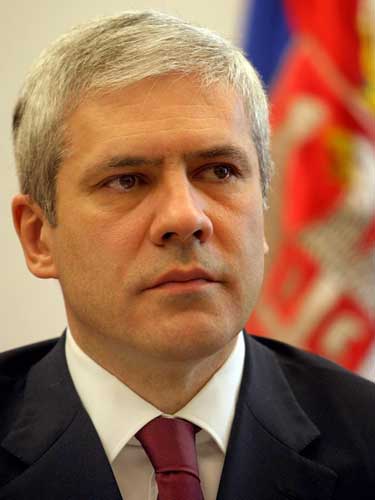
RT's Sophie Shevardnadze has spoken to Serbian President Boris Tadic about his country’s passage to the European Union and the challenges the nation faces.
RT: Mister President, thank you so much for being with us today.
Boris Tadic: Thanks a lot.
RT: Mr. President, it’s been two years since Kosovo’s independence was recognized. Back then, there was a lot of talk about the domino effect, about the threat of destabilization in the region, and then none of it happened. Do you think it was right to make such a fuss in the first place, in the beginning?
BT: No, the domino effect is still existing [sic] as a threat for everybody, not only in the region of south-east Europe, bit also everywhere. For that reason, I have real concerns. But taking into consideration how we reacted on unilateral declaration of independence, I think we’re trying to prevent problems.
Serbia has a consistent policy that means we’re totally against partition of all countries that are member states of the UN. That means we’re against partition of the countries existing in the region. In that respect, we’re fully supporting, for example, Bosnian integrity and integrity of other countries. And in that respect, we’re contributing to the stability even though we’re very much affected because of the unilateral declaration of independence.
RT: Just recently, Kosovo’s prime minister suggested starting relations from scratch with Belgrade. Is that possible? What would it take for Serbia to actually agree to a dialogue?
BT: I think that dialogue is very important. Dialogue can bring some solution. We have a confrontation between Serbs and Albanians, not between Serbia and Kosovo, because we don’t recognize Kosovo’s independence.
We’ve had a confrontation between Serbs and Albanians for almost 150 years, and in the end of the day we have to solve that kind of conflict. Conflicts are blocking not only Serbs and Albanians but also the whole region on terms of progress and development. Only through dialogue we can achieve some solution that can be acceptable for both Pristina and Belgrade.
RT: British Foreign Minister William Hague said that Serbia is actually putting its chances of joining EU under threat by refusing to cooperate with Kosovo. And you’re facing a really tough choice. What’s your priority, Kosovo or the EU membership?
BT: I’m not making that kind of difference. I’ve participated in the elections last time; and the first time when I was elected as president of Serbia having in mind two main strategic goals: to become a member state of the EU and to defend territorial integrity and sovereignty of my country. I’m going to continue my efforts in that direction.
RT: In 2008, in every single one of your interviews, you said that 70 per cent of your people, of Serbs thought that Kosovo was the main problem, the major problem in the country. A year later, this number dropped to 6 per cent. Why is that?
BT: If you’re talking about people that are mentioning Kosovo as the main problem of the country, there were different opinion polls in the last few years. You have to know that Serbia is very much affected because of the economic crisis. In that respect, all Serbian people and citizens are thinking that the economic crisis, unemployment and this kind of problems are on top of our agenda.
And this is absolutely true: without strong a economy and real development, you cannot defend your state and national interests. And that is why we’re trying to solve these problems, like all other countries around the world. But people aren’t thinking that Kosovo isn’t a problem anymore. Kosovo is existing, and the problem is not only between Serbs and Albanians, but also in the regional policy, globally thinking, having in mind the real possible precedent that can create much turmoil around the world.
RT: You’re absolutely right. The International Court of Justice in The Hague recognized the legitimacy of Kosovo’s independence, and this is the first precedent. In relation to that, that do you think of the consequences for some other European countries?
BT: The decision of the International Court of Justice has been legitimizing the unilateral declaration of independence, not independence of Kosovo. Having in mind that the group of people that declared the unilateral independence didn’t have the rights to take into consideration all the legal framework which was adopted in Kosovo before.
That is a very controversial decision, but we’re not going to interfere in decisions of the International Court of Justice. We accept that, and we’re going to continue our efforts in this direction to defend territorial integrity and sovereignty of Serbia. But that cannot be really achieved without a dialogue between Serbs and Albanians, between Pristina and Belgrade. We have to have some kind of compromise at the end of the day. Solution is not that one side, meaning Kosovo’s Albanians, is getting everything, and Serbian people are losing everything. I’m totally sure that we have to have some compromise at the end of the day.
RT: Despite the urging of the European Parliament to recognize Kosovo’s independence, there’s Spain, Greece, Romania – they refuse to do so. Do you think it’s more because of their apprehensions of their own intentions, or is it just solidarity with Serbia?
BT: No, all governments all over the world are defending their own interests; and not only those three countries, but also Cyprus and Greece. And I appreciate very much that kind of approach because it was very helpful regarding Serbian position.
But those governments are defending interests of their citizens and their national interests, and we understand it very well; we understand it perfectly.
RT: You have always strongly promoted the pro-American image of your government. And when the Kosovo issue emerged, when it came down to it, it turned out Russia was your only true ally. How did that happen?
BT: I’m a pro-Serbian president. This government is always going to be pro-Serbian, if I’m to stay as the leader of this country, and I’m sure I’m going to continue my work. We want to have the best possible relations with the US, even though we’re facing a real challenge, especially because of Kosovo. This is a crucially important achievement in my talks with Vice-President Biden and Madam Clinton. She came to Belgrade, and we agreed that we disagree on the Kosovo issue. And this is not very easy to achieve that kind of relations in the very difficult circumstances in which we are living.
Second, we do not want to become a member state of the US, we want to become a member state of the EU. We’re living in Southeast Europe and we’re going to continue our efforts in that direction. But no one can make very strange and artificial conditions in terms of recognizing Kosovo because of our intention to become a member state of the EU. I appreciate that approach of EU countries very much.
Taking into consideration our close relations with Russia, our historical and cultural relations, no one can make any problems in that respect. This is an unchangeable policy, and be sure that Serbia is going to be a very close partner of Russia through future, and future history.
RT: So for you today in 2010 the Serbian-Russian brotherhood exists?
BT: Of course. And this is not changeable.
RT: We should continue to have special relations?
BT: Of course. I have extremely close relations with your president and your prime minister. We have a very good conversation. We agreed on many issues and we are going to continue our efforts in that direction.
RT: This is a quote from your interview: “Balkan integration into the EU is the only way to settle disputes. We should all be integrated into Europe and look for pragmatic ways out simultaneously.” Why do you think it’s possible to settle the issue that one country couldn’t solve on its own within EU boundaries?
BT: Only true dialogue can solve the problem, which is not affecting only Serbs and Albanians, not only Serbia but the whole region. I think that is becoming an extremely important issue, globally.
That is the reason that only 60 countries recognize Kosovo’s independence until today. We have more than 190 countries in the United Nations. This is also a fact that we have to take into consideration.
RT: The ultra-right movements are gathering pace in Europe. Under these conditions, how do you see the settlement of the problem of living side by side with Muslims in your country?
BT: The religious issue is a very important issue. Muslims are Bosnian people who have a Muslim religion and been living in Serbia for centuries. They are friends. They are citizens of this country. Not only of Serbia but also of other regional cultures. I appreciate very much the achievements of the Muslim and Bosnian culture in my country and in regional policy. In that respect, we are fully respecting all right for all religious communities for all national minorities, and we are going to continue this kind of policy.
Europe is facing a problem, a challenge: how to define themselves in terms of influence of the Muslim culture on the European continent. That is a dialogue between Turkey and Europe. We are not a very strong country and we cannot decide what Europe’s policy in that direction is to be. Europe has to decide where the borders of the European Union are and how to handle the many existing differences between Christians and Muslims. But if you want my opinion, I’m more insisting on extreme religious groups that we have in all religions now: not only among Muslims but also among the Christians.
As Serbian president, I face radicals that very often insist on their Christian identity. Very strong and extreme religious organizations are becoming problems everywhere on the globe.
RT: The Serbian government did its utmost to hand Karadzic to The Hague. What’s your assessment of that process?
BT: We have to continue that process. First of all, this is in accordance with our legislation. We are respecting our laws. Otherwise we would be in a very difficult situation. Secondly, in terms of reconciliation, everyone who is accused has to be in The Hague tribunal. I am not talking about Serbs, Croats, Bosnians, Albanians. But because of war and the terrible consequences we are facing, the only was towards reconciliation is for people accused of participating in war crimes during the 1990s to face justice in the Hague Tribunal.
RT: Two years ago when Ramush Haradinaj was acquitted on all charges, you said The Hague Tribunal’s decision was a major blow to the whole international justice system and to the hopes of the Balkans for reconciliation. Does that mean you considered it biased and incompetent?
BT: That was a very tough moment for Serbs and Serbia and for me as the Serbian president. Fortunately, there is a continuation of that process against Mr. Haradinaj right now and right now he is in the Hague Tribunal once again.
RT: The Human Rights Watch has demanded you put pressure on Serbia to make the search for Goran Hadzic and Ratko Mladic more effective. What do you say to that?
BT: I am not changing my approach. Everyone who is in the ICTY has to be in The Hague Tribunal.
RT: Thank you very much.
BT: Thank you.

russia today

Serbs’ expectations over EU accession diminished


russia today
(video)
Published: 22 November, 2010, 07:12

Serbia’s enthusiasm to enter the EU has lessened, according to the latest Gallup poll. As the EU has opened a path for Belgrade to join the organization, some fear it will bring more economic problems to those trapped in the crisis region.
Within the week, Serbia will be presented with a questionnaire by the EU commission in what is seen as an important step forward in Serbia’s bid to join the EU. So the eyes of the government in Belgrade are now firmly on the West.
“For our citizens, as was the case for the rest of the continent, being part of the EU brings a certainty for peace and stability – a normal life,” announced Bozidar Djelic, Serbia’s Deputy Prime Minister for European Integration.
But head away from the pro-EU political rhetoric and the mood among the public in Serbia is vastly different.
In fact, a recent report found that more than half the respondents now view the EU accession negatively.
Serbian citizen Dragoljub Dingarac told RT, “You listen to the politicians and they’re so focused on joining the EU. But the EU gives all these ultimatums and it seems that our government is being dictated to and controlled by the EU.”
In post-crisis Europe many EU countries are now facing their own large struggles and there are some important questions being posed – such as just how will the EU accession help Serbia’s economy? How will the multicultural institutions built after a decade of war be sustained at a time when leading European politicians are heard saying that multiculturalism is dead?
And when unemployment in Serbia is so high, will the promises of a better future translate into actual benefits?
“In the past I joined many groups to bring down the Milosovic regime, but now we don’t see any changes,” acknowledged Bozidar, son of Dragoljub Dingarac.
The government has also come under heavy criticism from opposition parties for the poorly monitored selling of state assets in the privatization boom of the last decade
“For ten years the Serbian government has been supporting the EU with promises of a better future. But free cheese is only offered in a mousetrap,” politician Dragan Todorović, vice president and active leader of Serbian Radical Party, says. “Now there’s not even fresh milk in our shops because the government sold all the milk businesses to partners in the European Union.”
Also, industry monopolies have crippled many small businesses, such as dairy farms.
From cow to cup the dairy industry in Serbia is now no longer profitable and until the situation changes consumers aren’t going to be getting a drop of the real thing.
Farmer Dragana Jovanovic says, “The prices set were ridiculous and so farmers simply refused to accept it. Now it’s hard to find fresh milk in the shops and we have to sell our cows for meat.”
The public has been told that the milk monopoly is just the tip of the iceberg when it comes to business corruption in Serbia, with rich businessman profiting from a government not strong enough or unwilling to oppose private interests.
Also, investigative documents shown to RT reveal the state lost around €20 million from the alleged undervaluing of land sales, money that should have belonged to taxpayers.
“Of course, there are certain issues that we need to deal with in the near future, and that’s corruption as well as the whole bureaucracy that exists here,” Aleksandar Miloradovic from the Serbian Investment Agency. ‘It’s a fertile soil for phenomena like corruption.’
Some people in Serbia no longer feel like EU membership will be the answer to all the country’s problems – pro-EU rhetoric holds no sway when continuing economic instability is affecting the lives of the population.

russia today

In search of a mission, NATO has to change - Slovenian President


russia today
(video)
Published: 17 November, 2010, 11:04

With the NATO Summit just around the corner, one of its participants, Slovenian President Danilo Turk says a Russian partnership could play a big role in the alliance's future.
He also discusses with RT his country's battle with the financial crisis and whether or not he regrets joining the EU.
RT: Now, the NATO summit is coming up in a couple of days, and you have played an active role in promoting closer ties between Russia and NATO. How much do you think NATO had to change in order to recognize the value of Russian partnership?
Danilo Turk: NATO has to change, and NATO is in a search for a mission for a long time. After the end of the Cold War, the legitimate question was whether NATO was necessary at all. But the mission was never completely defined, and I think that it cannot be completely defined without a true partnership with Russia. We don’t have the Cold War anymore, and we have to figure out what this new partnership means. And I think in Lisbon, in the coming days, we’ll come closer to that definition.
RT: Mr. President, President Medvedev has proposed European Security Treaty. Do you think it actually energized the NATO leadership into a concept review?
DT: President Medvedev’s proposal was an excellent beginning, and that it generated a lot of creative thinking in NATO. And I think that it indirectly contributed to the new strategic concept of NATO which is much more open and which is much more appropriate for a real partnership between NATO and Russia. Here I’m talking about the assessment of security threats, commitment to the Charter of the UN and also on the possibility to establish partnership with regard to missile defense.
RT: What do you expect to see in NATO’s new strategic concept announcement, something that you do not expect to see?
DT: I think that we shall see a meaningful step towards partnership with others. And I think that that’s the key in the new strategic concept. The platform which the new strategic concept offers will be appropriate for reaching an agreement on security threats, on missiles, and on nuclear weapons. I think these are security challenged which have to be addressed through a strategic concept.
RT: If we talk a little bit more about EU and Slovenia and its concept. Does Slovenia’s dependence on EU cohesion worry you, especially now that the commitment to its rules is under review by the big euro powerhouses?
DT: The EU has been affected very badly by the current financial and economic crisis. And that has had an impact on the system of euro, the common currency to which many EU members, but not all, belong. And now we’re in a situation where we have to find a proper financial stability mechanism which would be appropriate for management of financial crisis of the future.
RT: Slovenia’s gross domestic product dropped the most among the 16 nations sharing the euro; plus the unemployment that has hit through the 100,000 mark. Do you ever regret joining the currency? What are the main pros and cons?
DT: Almost three yeas after the introduction of the euro, people have totally accepted the euro as the currency in the country. They know obviously that the lack of monetary sovereignty and inability to devalue a national currency is a problem when markets are low. The solution is seen in a better adjustment to the euro zone in general, improvement in our competitiveness and necessary changes in our economic and social model which will allow competitiveness to grow and also social stability to continue.
RT: Angela Merkel’s push against the Lisbon Treaty budgetary criteria: do you see this as a power shift from Brussels to Berlin?
DT: There has always been a division of power, so to speak. And I think that we should not forget the EU is not a state; the EU is a system of sovereign states. And in that context, Germany as the major contributor of funds to the EU and a major economic powerhouse of the EU has a legitimate role. We do not deny that, it is a leading role. But it has to be exercised in a manner which allows solutions to be in the interests of the entire EU.
RT: Also, the EU has mooted a visa-free regime with Russia, but the details are still thin on the ground. What do you think would be a good first step in this direction?
DT: I think we need political determination first. I think we need to change the political awareness about these things. But in the EU there is still hesitation, and I think this hesitation has to be overcome. Freedom of movement is a human right; we should never forget that.
RT: Do you see Russia as a part of Europe?
DT: Certainly, in a cultural sense, in a political sense, yes. But I certainly see Russia as a part of the European space; it has been so for centuries.
RT: Previously you’ve called for a multilateral framework to consolidate energy supplies to the EU markets. Today not much has been done in that perspective. How do you assure of the EU consumer security?
DT: I think we need a much wider multilateral outlook, because energy security depends on a multitude of players. Russia is always there, Russia is a key player, a key supplier, a key partner, and most of us in Europe have an extremely good experience with Russia. We have been buying Russian gas in Slovenia for 32 years by now and it has always worked perfectly. So there is no reason why we should be in any way uncomfortable with that. We need Russia in that multilateral framework. But we need others as well, both consumers and suppliers. That has not been done because we have worked on specific projects – Nord Stream, South Stream, Nabucco and other projects. But I think the time has come to look at the whole picture and work out a co-operative arrangement for the future.
RT: You’ve touched on South Stream. How would the development of South Stream change the energy sector in Slovenia? What exactly do you expect from it?
DT: We see the multiplying effect of the gas pipeline, because the gas pipeline brings not only gas, it brings other economic activities. It brings gas-based electricity plants which we need and others need in the region. And we can develop that to produce electric energy. And secondly, there are also other elements in the pipeline like for example optic cables, communication networks that can also be developed in that context. This is an opportunity. It’s really a basic opportunity. Let’s look at these opportunities in a co-operative framework with more confidence than we were used to before.
RT: You speak about the multilateral framework in terms of consumer and supplier, but on a different occasion you told RT that one should connect with where the energy is, and energy is in Russia. Why are you so persistent about Nabucco?
DT: Well, I am not persistent. Slovenia is not a part of Nabucco project.
RT: But you are a part of the EU.
DT: Yes, we are part of the EU. We would like to see the totality. We do not see these as mutually exclusive projects. We believe in South Stream. And we would like South Stream to progress rapidly. Nabucco is a separate project, but not the one that excludes the South Stream project. I’d like to see a meeting where both would be discussed. As I’ve said we have to improve the level of confidence of these discussions.
RT: Mr. President, Slovenia was one of the countries to be consumed both by Fascism and Communism during the World War II.
DT: Yes.
RT: You actually stressed on importance of the Red Army and its role in liberating Europe from fascism. But as it seems today, Europe is still under threat, especially during the recession. What do you think you should do to tackle the raising fascism?
DT: I am not sure whether the extremist movements that we see today are fascist movements in the sense of the first half of the twentieth century. These are different movements. What we now have is an outburst of dissatisfaction among people which is turned against immigrants in particular. So we see elements of xenophobia, elements of racism, elements of chauvinism coagulating, being brought together into a sui generis movement of our time. And we have seen this in all parts of Europe. That’s very worrying. We see this from south to north. And even in Sweden these kinds of policies have made progress in the past months. We need obviously a conservative Christian democrat element which has to be strong and which has to respond to the part of the population which is attached to the traditional Christian values. We need left liberal socially-minded political actors as well. They have been somewhat in decline in the past years or so. But they have to figure out what are the priorities of our time are; where does one really improve the condition of working people and how does one improve solidarity in society.
RT: Sir, persecutions for political ideals is also a part of your country’s history. And now Russia and Poland are trying to reinvestigate the Katyn horrors. What advice would you give to those who are actually seeking to recover peace from their past?
DT: Well, that is a very difficult question. And I can tell you that we in Slovenia have also our part of difficult past and we have not been able to overcome it. We have constant discussions about this and constant reflections on the tragedy – not only tragedy, but also crimes that were committed. And these wounds are healing very slowly. In our country, in Slovenia, and elsewhere, we should first of all condemn all crimes irrespective of who committed them. We have to bury all the dead, and bury them with dignity. We have to commemorate the tragedy of all who died. And that’s not always easy to do, because there are many that would say: well, why should we return to the past? And I agree, we should not be enslaved, we should not be prisoners of our past. We have to find the right measure of ethical attitude towards the dead.

russia today


Alleged organ traffickers charged in Kosovo


russia today

Published: 13 November, 2010, 21:39Edited: 15 November, 2010, 18:25

The indictment of a group accused of organ trafficking in Kosovo has revived sinister allegations made against the region's soldiers during the war.
In the latest case, seven people have been charged, with one suspect linked to the Kosovo Liberation Army which is alleged to have harvested organs of the captured Serbs during the 90s conflict.
The people charged are doctors and there is also a high level health official. They are suspected of being part of an organized crime group.
There are now growing concerns that with political instability and a weak justice system, Kosovo could become a breeding ground for criminal activity.
“Organ trafficking is unfortunately a big business. People who do it don’t do it on an ethnic basis. They do it because there is a lot of money in it and the opportunity to set it up in a lawless environment which has existed in Kosovo for pretty much the last ten years is of course something that they would welcome,” says Serbian political analyst Misha Gavrilovic.
The allegations focus on the Medicus center and first surfaced two years ago – forcing that center to close.
But some specialists named on the indictment have continued to work in other medical centers.
The indictments have put organized crime in Kosovo under a strong spotlight. Its government and Western countries are accused of turning a blind eye to the lawlessness that has been growing since it declared independence from Serbia nearly three years ago.
There are also many who accuse the ruling authorities of miscarriages of justice that date back to the war.
Links have been drawn between Medicus and the 'yellow house' case – the alleged murder and harvesting of the organs of Serbian war prisoners by members of the Kosovo Liberation Army. But there was insufficient evidence to bring that case to court.
The families of kidnapped and killed people in Kosovo have been fighting red tape in the UN Mission in Kosovo and NGOs for a long time, but so far without any results.
The biggest problem is that those accused of the killings and kidnappings have changed their soldiers’ uniforms for the suits of MPs. They gained power in Kosovo overnight with the help of international institutions.
But the focus is now falling on whether the territory is up to fighting organized crime when so many can still so clearly recall the abuses of the past.

video

russia today