Εμφάνιση αναρτήσεων με ετικέτα europe's world. Εμφάνιση όλων των αναρτήσεων

Πέμπτη 30 Ιουνίου 2011

On the European Union – Turkey Customs Union

europe's world
24/06/2011

Author : CASE - Center for Social and Economic Research

The paper studies the European Union - Turkey Customs Union of 1995.

Read more in CASE Network Studies and Analyses No. 426: On the European Union – Turkey Customs Union by Sübidey Togan.

read more: europe's world
http://www.europesworld.org/NewEnglish/Home_old/PartnerPosts/tabid/671/PostID/2606/OntheEuropeanUnionTurkeyCustomsUnion.aspx
http://www.case-research.eu/upload/publikacja_plik/34294916_CNSA_2011_426.pdf

Τρίτη 14 Ιουνίου 2011

VIEWS FROM THE CAPITALS – LJUBLJANA: A euro storm in Slovenia’s tea-cup stirs up old communist divisions

europe's world
30.05.2011
Author: Cirila Toplak
The Bank of Slovenia sparked a political storm when it decided earlier this year to issue a commemorative euro coin featuring Franc Rozman Stane, the commander-in-chief of the country’s partisan army during World War II.

Conservative politicians objected to a well-known communist adorning the €2 coins, even though he died during the war and is regarded as a national hero in Slovenia. Right-wing politicians also protested about the accompanying Red Star, which is a symbol of Slovenia’s anti-Fascist resistance as well as international communism. They feared the coin sent the wrong message to fellow ex-communist EU member states, some of which have banned the Red Star from public life.....more....
read more: europe's world
http://www.europesworld.org/NewEnglish/Home_old/CommunityPosts/tabid/809/PostID/2543/VIEWSFROMTHECAPITALSLJUBLJANAAeurostorminSloveniasteacupstirsupoldcommunistdivisions.aspx

Albania’s political crisis, a deadlock in the way of European integration

europe's world
 02/06/2011
Author: Alba Cela
Recommendations for EU involvement in Albania

Introduction
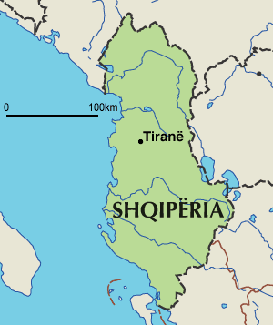
On May 10th the observing mission of OSCE/ODHIR called the local elections process of May 8th in Albania “competitive, transparent”[1] and admitted that the Election Day was relatively calm. However they emphasized once again the aggressive climate of the electoral campaign which marked the process and influenced some of its problems. Few could believe that after one of the most violent and incident prone campaign that Albania has seen in roughly twenty years of democracy, a normal election day would follow. However that did not turn out to be good news either since A very slow counting process followed raising political tensions especially in the two largest cities, Tirana and Durres. The final decision of who is going to be Tirana’a mayor stands now on the hands of the Electoral College, the highest authority to decide on electoral issues, since the Central Election Committee reversed the first results which gave Edi Rama, current opposition leader and mayor, a thin victory of plus ten votes. In a disputed process contested by the opposition members at the CEC, part of the votes cast in the capital were recounted and gave a preliminary victory to the other contender, Lulzim Basha. Protesters including MPs camped outside the CEC gates for days and the tensions have brought Albania as the Economist argues “on the brink of a return to violence.”[2] With the rationale that given the ongoing situation there can be no fruitful discussions about Albania’s EU integration, President of the EU Commission Jose Manuel Barroso and Enlargement Commissioner Stefan Fule cancelled their scheduled visits to Tirana.....more....
read more: europe's world
http://www.europesworld.org/NewEnglish/Home_old/CommunityPosts/tabid/809/PostID/2558/AlbaniaspoliticalcrisisadeadlockinthewayofEuropeanintegration.aspx

Τετάρτη 13 Απριλίου 2011

Why should Turkey play by western rules?


europe's world

06/04/2011 Author : CIDOB (Spain)

Notes internacionals CIDOB, no. 26 Turkey has re-emerged as a confident regional power in areas of vital interest to the European Union and the United States. It is no longer the pliant supplicant that the Europe and the United States West imagined it would forever remain. It is economically vibrant and politically self confident. It has outgrown the role allotted to it by the West. This is one reading of Turkey’s new found confidence. A second very fashionable one is that Turkey is seeking to reclaim leadership in the lands of the former Ottoman Empire, a reading which is comforted by the Turkish foreign minister Ahmet Davutoglu’s goal ofPax Ottomana. The rift with Israel over Gaza and the angry rhetoric of the Prime Minister Recep Tayyip Erdogan carry dangerous undertones for some observers in Europe and for those in Turkey committed to the secularist political settlement of modern Turkey’s founder Mustafa Kemal Ataturk. Whatever the truth, the contrast is palpable between Turkey’s new regional status and the disdain shown by France’s Nicolas Sarkozy and Germany’s Angela Merkel....more...

read more: europe's world

Τρίτη 29 Μαρτίου 2011

Context Analysis & Chronology of Security Sector Reform in Albania 1991-2009


europe's world


The study analyzes the context in which the Security Sector Reform (SSR) has taken place in Albania since the fall of the communist regime. It is the first assessment report ever prepared on security reform covering Albania’s two decades of transition. It has been conceptualized in three main periods, based on the social, political and economic perspectives that featured each phase during the process of Security Sector Reform.


read more: europe's world


Τετάρτη 22 Δεκεμβρίου 2010

Kosovo makes progress despite the difficulties


europe's world, CIDOB (Spain)

22/12/2010
Author : CIDOB (Spain)
CIDOB Opinion # 95
"Kosovo makes progress despite the difficulties"
Jordi Vaquer i Fanés,Director of CIDOB
17 December 2010 / Opinión CIDOB 95


In the space of three days Kosovo, Europe’s youngest country, has once again hit the headlines. This time it has not been so much a result of the just-held first elections since independence as of the appearance of a report that accuses the winner, outgoing Prime Minister Hashim Thaci, of very serious crimes.
The ballot of Sunday 12 was not exempt of controversy, in particular in the two districts where Thaci’s Democratic Party of Kosovo (PDK) has strong support and where reports of electoral manipulation have proliferated, fuelled by numerous observations of fraud and incredibly high turnout percentages (Kosovo’s emigration figures are astronomical so there are many more people in the census than those who can actually vote, which is why the figures of a 94% turnout registered for the municipality of Skenderaj and 86% for that of Gllogovc look so implausible). Again, the Vetevendosje (Self-determination) movement which, inter alia, campaigns for unification with Albania, has made a forceful entry into parliament. As if all this were not enough, in the northern zone, under Belgrade’s control, the turnout of the Serbian population was close to zero.(...)

read more: europe's world, CIDOB (Spain)


Δευτέρα 20 Δεκεμβρίου 2010

Turkish politics and the fading magic of EU enlargement


europe's world


14/12/2010
Author : Centre for Economics and Foreign Policy Studies (EDAM - Turkey)

by Sinan Ulgen EDAM Policy Brief 2/2010 In previous EU accessions, the Union’s credible commitment to enlarge and the candidate’s commitment to reform reinforced each other. But in Turkey’s case, European prevarications over whether the country should become a full member have undermined the Turkish government’s determination to push through the changes needed for membership. The accession process is heading for a vicious circle of Turkish disillusionment and EU reluctance. While mixed messages from EU leaders have undermined support for accession in Turkey, there are also country-specific reasons why Turkey’s pro-EU consensus has unravelled quite so quickly: Turkey’s political system is deeply polarised, its accession process is too politicised, and the expectations of many Turks about what EU accession could deliver were simply too high. At the grassroots level, plenty of Turks still support joining the EU. A pro-EU, pro-reform consensus could quickly be rekindled if the government reached out to the opposition, and if the opposition gave up its eurosceptic rhetoric. The EU can help to restore momentum to the Turkish accession process by redoubling its efforts to resolve the Cyprus stalemate, which is one of the main obstacles to progress in the accession talks....more...


read more: europe's world

Unites States and Turkey: Can they agree to disagree?


europe's world


01/12/2010
Author : Centre for Economics and Foreign Policy Studies (EDAM - Turkey)

by Joshua Walker
In a new EDAM discussion paper titled “The United States and Turkey: Can They Agree to Disagree?” by Joshua J. Walker, recent condition of Turkey-US relations is analyzed. The concept of “model partnership” suggested by President Obama in his Turkey visit, and also his first overseas visit after becoming the president, is explored in the light of changing domestic dynamics of Turkey and the United States. Besides laying out the differences between American and Turkish administrations on foreign policy matters such as Israil or Iran, the paper also underlines the opportunites that both sides could benefit from better engagement with each other. ...more...
http://www.edam.org.tr/index.php?option=com_content&task=view&id=241&Itemid=132

read more: europe's world

Europe's world articles

europe's world
-The European Union and the Balkans: between Symbiosis and Integration?
16/12/2010
Author : The European Institute of Romania

by Kyriakos D. Kentrotis Romanian Journal of European Affairs, vol 10, no3, 2010 The European Union continues to constitute an incomplete economic-political entity at intergovernmental and supranational level. The EU is seeking to establish appropriate functional superstructures extending beyond the narrow confines of trade, the economy and free market rules to accommodate its integral progress as a new force for prosperity, democracy and peace in the world. On the map of the Balkans, the local political actors continue to define their choices in line with their historic experience and stereotypes, especially as regards their neighbours and the Great Powers of the moment. The Balkan countries, which in any case are still seeking to consolidate their conventional state structures, need much more time to find their place within this unfinished supranational European structure. In both cases the actors involved, whether in the EU or in the Balkans, are grappling with the challenges of global politics from their different starting-points, but it is not easy to overcome the boundaries of their national sovereignty....more...
-Western Balkans’ accession to the EU: a need for (re)tailoring of the EU assistance instruments
07/12/2010
Author : Silvana Mojsovska
The EU accession has enjoyed continuous political consensus in the Western Balkans for over a decade. Despite many clashes, wars and economic turmoil in the region, the general support to the EU remained strong....more...
-Have the problems encountered by Bulgaria and Romania had any influence on the accession policies of the western Balkan EU candidates?
07/12/2010
Author : Gordana Djurovic
As the accession of Romania and Bulgaria have paved the way for the expantion of the EU to the Balkans, Gordana Djurovic examines how this precedence has effected the other Baltic countries aspiring to membership and the issues and conflicts that have to be addressed before further enlargement in this problematic region...more...
-Balkan EU hopefuls may find it better to travel than to arrive
07/12/2010
Author : Remzi Lani

EU officialdom’s well-intentioned enlargement efforts could do with a re-think, says Remzi Lani, who is concerned that “pro-European populists” could become as distasteful as their nationalistic predecessors...more...
-How Serbia is exchanging leadership for partnership
07/12/2010
Author : Bozidar Djelic
Serbia has emerged from the global crisis in better shape than many of its neighbours. Deputy Prime Minister Bozidar Djelic explains why, and points to Belgrade's increased emphasis on regional co-operation....more...
-Macedonia is moving closer to the EU, but needs to make a clean cut with the past in order to make democracy and the rule of law permanent
03/12/2010
Author : Henri Bohnet

Two decades after the fall of the Berlin wall became the symbol of failed communist authoritarianism and the democratic transition of Eastern Europe began, Macedonia has started to push its democratization process one decisive step further....more...
-Defining the ‘collective security’ of the western Balkans
07/12/2010
Author : Goran Svilanovic
Any analysis of possible future policies for the Balkans, means putting all outdated strategies behind us. The changing values in Balkan states’ own foreign policy agendas and those of countries around the world illustrates the point. Human rights were the supreme legitimising factor for more than half of a century with states and international organisations making pivotal decisions in favour of these rights. But today’s list of key factors now includes energy security, climate change and anti-terrorism efforts. This shift in the global agenda will marginalise many issues we’ve long thought of as major in the Balkans as elsewhere....more...
read more: europe's world

Δευτέρα 29 Νοεμβρίου 2010

High expectations, limited resources: The bottlenecks of EU civilian crisis management in Kosovo


europe's world

24/11/2010
Author : The Finnish Institute of International Affairs
By Tanja Tamminen


Summary
The EU Rule of Law Mission, EULEX Kosovo, is the biggest and the most expensive operation ever conducted under the CSDP. It was warmly welcomed by the Kosovo population in 2008, but it has proved difficult for the EU to live up to the high expectations.EULEX suffers from a number of political constraints, as not all EU member states have recognized the independence of Kosovo. International coordination in Kosovo is particularly complicated as the international actors live in parallel realities when it comes to the status of Kosovo: some recognize its independence, some do not, and others are status neutral. EULEX also suffers from slow procurement procedures, as well as from inadequate recruitment policies.Constant evaluation shows that the Kosovo rule of law institutions are steadily developing under EULEX monitoring and mentoring, but in key areas such as the judiciary and the fight against organized crime the progress is slow.


read more: europe's world


the finnish institute of international affairs


"A very special relationship. Why Turkey's EU accession process will continue"


europe's world

22th November 2010 / Opinión CIDOB núm 91

The widespread sense among observers that the Turkish EU accession process might be headed for imminent failure has been present from its very outset. Contrary to the conventional wisdom, however, the risk of a “train crash” in the accession talks is minimal. The reason for this is reassuringly self-evident: it is neither in Turkey’s interest, nor the EU’s, to derail the accession train.
We predict that even ten years from now, unless Turkey will have joined the EU as a full member, the accession process will be ongoing. Today’s relationship between Turkey and the EU is like a Catholic marriage: divorce is not an option for either side. The only question then is whether the couple will be happy or not and the only special partnership that is acceptable to Turkey and to the vast majority of EU members is one they have today – an open-ended accession process.
There are only two ways for the current accession talks to end or be suspended: one is for Turkey to give up and walk away from the negotiating table; the other is for the EU member states to decide on a suspension. The first of these scenarios would require a major policy shift inside Turkey, which is very unlikely. Imagining a scenario whereby the opponents of Turkish accession inside the EU succeed in suspending the negotiations is just as difficult – not only because it is not in their interests, but also because it is not in their power. The combined votes of Germany, France, Greece, Cyprus, the Netherlands and Austria (to name some of the countries where skepticism about Turkey’s EU membership has been an important part of the domestic debate) would fall far short of the 255 needed to suspend the negotiating process. Barring a return to the pattern of human rights abuses of the 1990s, a reintroduction of the death penalty or a military takeover in Turkey, the EU cannot unilaterally stop a process to which it has committed itself under the Negotiating Framework. Here, all the cards are in the hands of Turkey’s politicians.
There is a perception among many in Turkey that the EU has consistently discriminated against their country. Yet since 1999 Turkey has often been given the benefit of the doubt. In 1999 it was given candidate status despite failing to meet the EU’s Human Rights criteria. In 2004, despite only “sufficiently” meeting the Copenhagen political criteria, it was allowed to open accession talks – the only candidate country to be allowed such leeway. It was a policy of positive encouragement, and it worked well and in the European interest.
At the same time, any objective assessment would conclude that Turkey remains some way from meeting the conditions for accession. Turkey’s human rights record – though vastly improved over the past decade – remains dismal by European standards. Restrictions on free speech, the number of minors in prison (2,460 as of July 2010) and the situation of women (Turkey ranked 101st out of 110 countries in the UN’s 2009 Gender Empowerment Measure and 126th out of 134 in the 2010 Global Gender Gap Index) are all matters of serious concern. The EU is also worried about the security and economic situation in South East Anatolia, by far the poorest region in Europe.
One area where the EU has discriminated against Turkey has been in the field of visa-free travel. This suggests an obvious way to show that EU conditionality vis-à-vis Turkey remains “strict but fair”: to offer Ankara a visa roadmap similar to that which has been given to Western Balkan countries. Once the roadmap requirements are met, Turkish citizens should be able to travel to the EU without a visa. Visa-free travel to the EU is a right enjoyed by Central Europeans (since the early 1990s) and by most people living in the Western Balkans (since 2009). The EU already promised it to Turkey under the 1963 Association Agreement. A credible visa liberalization process would provide tangible evidence to ordinary citizens that the EU remains committed to a future integration perspective. It would also be a useful tool to advance the implementation of non-discrimination policies and promote further improvements in Turkey’s Human Rights record, bringing down still high rates of asylum requests granted to Turkish citizens in EU member states. Such a reform process would be a win-win proposition for the EU and Turkey and a big shot in the arm for the accession process.

read more: europe's world, Barcelona Centre for International Affairs


Τετάρτη 27 Οκτωβρίου 2010

"Bosnia has voted. Now what? "

25/10/2010
Montserrat Radigales,journalist
18 September 2010 / Opinión CIDOB núm 87
As was to be expected, after the presidential, legislative and cantonal elections in Bosnia and Herzegovina on 3 October, the United States and European leaders have hastened to intone a jingle that, while it may be repeated to saturation point, remains both sensible at first sight and yet misleading: the newly-elected leaders must push for the necessary reforms so that the republic, formerly part of Yugoslavia, can move ahead along the path of future integration with the European Union and NATO. A few days after the elections Hillary Clinton, the US Secretary of State, said so in Sarajevo, just after that Stefan Füle, the Commissioner for EU Enlargement and European Neighbourhood Policy, repeated it, once again in the Bosnian capital, and Catherine Ashton, the EU Representative for Foreign Affairs, reiterated it in Brussels.
The question, however, is much more complex than that. Beyond the stumbling blocks that will be faced in forming the new Government of Bosnia, which may take months to happen, it would wise to learn some lessons from what has occurred with the ballot because the results have once again brought out the nature of the underlying predicament. The problem is not who wins or who loses. The problem is that the constitutional and institutional structure designed in the Dayton Agreement (1995) with which the war that began in 1992 came to an end (although what really ended the war was NATO’s tardy military intervention) is inadequate and unsustainable. The Dayton Agreement has created a dysfunctional state, perpetuating the ethnic division and multiplying the organs of power to an extent that is beyond reasonable so that, in a country with less than four million inhabitants, there are fourteen governments with their respective parliamentary assemblies. A decade and a half after the end of the war, Bosnia remains under international tutelage and without prospects of being able to cease being a protectorate, even though the US and the EU have been trying to achieve this for some years.
None of this can be understood without putting it into context. When Yugoslavia fell apart in the early 1990s, Bosnia and Herzegovina, the most multiethnic of the republics in the federation, fell victim to Serbian and Croatian nationalism and paid the highest price. Instead of resolutely backing the model of multiethnic coexistence that had characterised the republic and that was very visible in Sarajevo and other cities of the country, the stance of Europe and the United States was one of resignation and they ended up accepting the fait accompli. Thus, while formally conserving the country’s integrity, the Dayton Agreement divided Bosnia into two entities, the Republic of Srpska (Serbia) and the Federation of Bosnia and Herzegovina (Croatian-Muslim). In doing so, it in good measure rubber-stamped the political product of “ethnic cleansing”. Although some positive reforms have been introduced since then, the State continues to be weak and the two entities monopolise most of the powers. Indeed, the Republic of Srpska has always acted as a state within the State and the Serbian leaders have frequently obstructed the normal functioning of the central organs. Worst of all is the fact that, once this reality is institutionalised and hence consolidated, it is very difficult to change it, as international representatives have very reluctantly confirmed on numerous occasions. If, at the start, any criticism of the Dayton Agreement was almost taboo, the US and the EU have, in recent years, encouraged several attempts to reform the Constitution (which is the essential part of the Agreement) since they are aware that the present situation is leading nowhere.
Christian Schwarz-Schilling, an Austrian who was formerly the High Representative of the International Community (head of the protectorate) in Bosnia, was spot on when he stated the day after the elections that it was unjust to blame the Bosnians for the country’s political paralysis. “We will have a disaster in the future as long as Europe and the United States are not connecting on Bosnia”, he warned. “What you had was an armistice, not a peace”, he added. It is not usual for someone in such a position of international responsibility to speak so frankly. Yet, anyone who has a good knowledge of the reality of Bosnia does not find it very difficult to conclude that the day the guns fell silent, the old combatants continued pursuing through political means the same objectives they had sought to attain during the war.
Let us look now at what happened in the elections. Three facts stand out. First, was the unexpected defeat of the until-then Bosnian (Muslim) member of the state-level Tri-Presidency, Haris Silajdzic, by Bakir Izetbegovic, son of the emblematic, now deceased president of Bosnia during the war, Alija Izetbegovic. Second, was the victory of the Social Democratic Party (SDP) in the state legislative elections with regard to the number of seats won within the Muslim-Croat federation (but not those won in the Republic of Srpska). Third, was the overwhelming victory of the Republic of Srpska strong man, Milorad Dodik, former prime minister of the entity and now its president. These three facts call for some comment.
1) The international representatives responded with hope – one might almost say jubilance – to Silajdzic’s defeat by Izetbegovic. Nonetheless, this fact in itself is illustrative of the point to which perversion has set in. It happens that Izetbegovic, who is now accepted as a moderate, was the candidate of the, until a few days ago, much-criticised (as Muslim nationalist) Party of Democratic Action (SDA), the prevailing Muslim party during and after the war. The radical Silajdzic is taken is such because his sharp tongue and personal and political animosity towards Dodik make him an uncomfortable personage. Yet Silajdzic is no Muslim nationalist. If anything, he is a Bosnian nationalist, a convinced supporter of European unity who intimately experienced as betrayal Europe’s abandonment of Bosnia during the genocide. Prime Minister at the time, Silajdzic, was one of the negotiators and signatories of the Dayton Agreement – “At gunpoint”, he once told me, if I may include a personal anecdote here, although he also made it clear that he had no regrets about signing as there was no alternative. At bottom, Silajdzic, who sees the Republic of Srpska as the spoils of genocide, never accepted the ethnic division of the country and has publicly spoken out in favour of abolishing the two entities. In 2006, he blocked an attempt at constitutional reform pushed by the US and EU since he considered it insufficient and also because it conserved the “ethnic vote”. Now that he is removed from power, the international leaders believe that a new attempt at reform will perhaps bear fruit.
2) The winning by the multiethnic and non-nationalist SDP of the majority of seats for the State Parliament elected within the Federation has precedents and, when this occurred in the past, things did not change much either. The party chairman, Zlatko Lagumdzija governed – to be sure, in coalition with Silajdzic’s party – between 2000 and 2002. Naturally, this in itself does not modify in the least the deep-rooted issues previously described because the problem is always the same. While the multiethnic parties have some prestige within the Federation, in the Republic of Srpska they are marginal and irrelevant. In fact, before the elections both Lagumdzija and Dodik ruled out any coalition between their respective parties.
3) Dodik’s incontrovertible leadership in the Republic of Srpska leaves very little room for doubt as to the political reality of the entity. Seen in other times as moderate simply because he was among the opposition to the Serbian Democratic Party (SDS) founded by Radovan Karadzic, Dodik has thenceforth repeatedly defied the international representatives and resists any reform that seeks to turn the State into something worthy of the name. Emboldened by the ruling of the International Court of Justice on the legality of Kosovo’s independence, Dodik has threatened to hold a referendum on the secession of the Republic of Srpska – something which is fortunately unthinkable while there is a reformist and pro-European government such as that presently installed in Belgrade – if so much as a comma of the prerogatives enjoyed by Serbian entity is modified. The leader of Bosnia’s Serbs no longer even takes the trouble to dissemble. Two days after the elections, he asserted, “Bosnia is impossible as a state. It was never a state and it will never be one.” As I remarked above: the same objective as in the war but sought by political means.
The present head of the international protectorate, Valentin Inzko, has stated in stark terms what this secession would mean: “It would be a posthumous triumph for Slobodan Milosevic”.
Barcelona centre for international affairs (CIDOB)
europe's world

http://www.europesworld.org/NewEnglish/Home_old/PartnerPosts/tabid/671/PostID/1942/BosniahasvotedNowwhat.aspx

Κυριακή 24 Οκτωβρίου 2010

Historical evolution of the Europeanization process of Turkey


Historical evolution of the Europeanization process of Turkey
21/10/2010
Author : Portuguese Institute of International Relations and Security (IPRIS)

By Sezer Özcan Portuguese Journal of International Affairs N° 3 Spring/Summer 2010


The concept of Europeanization has become a widespread political phenomenon since the beginning of the European integration process of Central and Eastern European states during the 1990s. Even though there is an increasing academic interest in the concept, most theoreticians argue that it has not been clearly defined yet, and that its meaning is ambiguous. This concept is mostly used as the European Union’s main tool for analyzing the impact on member states and candidate states. As the European Union (EU ) keeps enlarging its borders by integrating new member states and expanding its authority over national governments, arguments concerning the nature and future of the European Union are understandably becoming more profuse. Also, the widening and deepening of the EU bring about the question of adaptation to European laws, regulations, norms and values. This process of adaptation to European standards by both member states and candidate states is basically defined as ‘Europeanization’. Because the central argument of this article is that there is a strong link between Turkey’s Europeanization process and the country’s European vocation in accordance with European standards and procedures, it is fair to analyze the relationship betweenTurkey and the EC /EU in a historical perspective, paying close attention to the main events impacting Turkey’s goal of EU membership.


read more....


europe's world

Κυριακή 10 Οκτωβρίου 2010

Southeastern Europe: 20 years later

03/09/2010
Author : Robert Mulej


It used to be a place of stagnation, but in the last 20 years no other region on Earth has grown as fast as Southeastern Europe. Yet people there remain surprisingly pessimistic

Which part of the world grew the most since 1990? The Far East? Wrong. Believe it or not, it was Southeastern Europe. According to IMF figures, the ten transitional economies of Southeastern Europe increased their combined GDP by no less than 681 percent – more than Developing Asia (544%) or the transitional economies of Central Europe (561%). Of course, one can argue that these figures are distorted by the abnormally low levels of GDP measured in the late eighties and early nineties. But no matter how we crunch the figures, we can’t deny that the region underwent enormous changes, and not just in economic but also of course in political and social terms.

For a foreigner sipping a cappuccino nowadays in one of Southeastern Europe’s cozy bars, it can be hard to imagine what life in this part of the world was like just 20 years ago. It was a decidedly backward place: underdeveloped, poor, run by whacky dictators and terrorized by the secret police. In many ways life in Southeastern Europe resembled North Korea more than the rest of the continent. Romanian dictator Nikolae Ceausescu destroyed hundreds of villages and towns and forced their inhabitants to live in grim concrete apartment complexes, a chance to exhibit a “collective spirit.” While he built one of the three largest buildings on the planet as a palace for his family, the population froze and starved. Albanians under Enver Hoxha constantly built concrete bunkers to face an invasion that never came. Living conditions in Albania were closer to the Middle Ages than the modern world. Yugoslavia may have once been the most democratic, market-oriented state in the region, but by the late eighties it was apparent that it was living in an illusion. As the economic system began to crumble, the idea of “brotherhood and unity” quickly faded. The country fell apart and its political crisis resulted in the only European war of the second half of the 20th century.

The scars of the past are deep and still visible throughout Southeastern Europe. Yet change is obvious. Its most striking external sign is the advance of Western-style consumerism with its ubiquitous billboards, large shopping malls and fancy boutiques. Modern cars have all but replaced the rusty old Dacias and Zastavas. But that's just the superficial part.

The economies of the 10 SEE nations are much different than they used to be. These countries have largely moved from agricultural to industrial and service-oriented economies. The share of agriculture in their GDP’s have dropped below 10 percent in all countries with the exception of highly agricultural Moldova. The importance of heavy industry is also lower, while the share of services has shot up. In Albania, for example, the share of services in the GDP went up from 16 to 59 percent since 1990 and in Romania from 34 to 61 percent.

ECONOMY: ALMOST A MIRACLE

These systemic and structural changes brought growth. No matter which indicator we use, it’s obvious that the 10 SEE nations have much increased their wealth in the last 20 years. The gap between the world's richest nations and Southeastern Europe is still huge, yet it’s closing. In 1990 Romania's per capita GDP reached 15 percent of the US. Now it is slightly below 20 percent of the gross domestic product per US citizen. While the gap is still enormous, progress has been made in all the countries in the region with no exceptions.

As elsewhere, the extra fast growth of the region in the last decade was to a certain extent inflated. Still, it reflected changes on the political and administrative levels. The nineties was a decade of political turmoil: the transition here was in many aspects much more difficult than in the economies of Central Europe and its results much less predictable. In countries affected by war (like Bosnia and Moldova) or by political insecurity (like Albania and Romania) the first years of the transition actually led to less wealth. The net result of the two decades since 1990 is nevertheless extremely positive.

In political terms all these countries enjoy true democracy – with the only exception to some extent being Moldova. While their institutions may not run as smoothly as those in the old western democracies, they are still democratic institutions. The possibility that these countries could ever return to undemocratic populist regimes is ever more remote. The latest economic crisis may have resulted in significant shifts in voter preferences – yet democracy itself will very likely remain stable.

The silent machinery behind these democratic institutions and the free market – the legal system and administrative procedures – also significantly improved. According to a recent World Bank Doing Business study, bold reformers are constantly improving business related legislation and administrative practices in the SEE nations. In most of these elements the 10 SEE nations still lag behind west European standards. Yet improvements are constant and measurable.

NEVER ENDING WINTER OF DISCONTENT

It seems that there's only one aspect which hasn't dramatically improved in the last two decades: survey data reveals that the people of the region are mostly no happier than they used to be. Often they’re even gloomier than in socialist times, when despite the all-pervasive propaganda a bright future was nowhere in sight.

Despite the hard evidence, many people in the region think they are worse off than they used to be. “My father fiercely opposed the communist regime,” said one Bucharest intellectual. “Now he often stresses we used to live better then.” From Skopje taxi drivers to Sarajevo professors, it's the same story: the crimes and injustices of prior regimes are largely forgotten and socialism is remembered with bittersweet nostalgia. Last November's Gallup Balkan Monitor was the largest public opinion survey ever carried out in the region. It showed that most of citizens of Western Balkan countries are dissatisfied both with their politics and their standard of living. An astonishing 84 percent of Croatians are convinced that their country is going in a bad direction. The Croats are “unhappy and bitter on all fronts,” according to the Gallup report.

Clearly, money doesn’t buy happiness. The Croatian per capita GDP shot from $2,500 in 1992 to $15,633 in 2008. This reflects the same level of wealth as that of Estonia or Hungary, and is above that of Poland. Only the Slovenians are better off than the Croat in Southeastern Europe. Despite this, 57 percent of Croats are dissatisfied with their standard of living, which is 16 percent more than in 2006. Compare this to the 67 percent of Kosovars who feel that they live well. According to the hard data, Kosovo is the second poorest part of Europe – only the Moldovans are poorer. Albanians, only marginally better off, are also optimistic and satisfied with their lives. So what’s the reason behind Croatia’s bitterness? The long wait at the EU’s still closed doors? Unhealed war wounds? Whatever the reason, it’s clear that we can’t jump to easy conclusions when interpreting the Balkan Monitor’s data.

The Gallup survey covers only the Western Balkans – countries still outside the European Union. Eurobarometer, the EU’s semi-official public opinion survey, poses similar questions to the EU citizens and also some candidate countries. Again the survey shows less satisfaction with life in Southeastern European countries than in the rest of EU. The Bulgarians as the least satisfied of all. Only 28 percent think that their standard of living is satisfactory compared to the EU27 average of 75 percent. Interestingly, however, the Eurobarometer data shows much more optimism and satisfaction among Croatians than the Gallup survey.

And although when it comes to Slovenia Eurobarometer surveys show a relatively high level of satisfaction among the population, dissent and nostalgia are almost as present in this peaceful and prosperous Alpine republic as anywhere else in the region. This dissatisfaction led to massive strikes in late 2009 and early 2010, in which trade unions demanded that the government raised the minimum wage from 600 to 855 Euros – a whopping 42 percent increase. Employers responded by saying that economic conditions are hard enough as it is, with Slovenian industry hit particularly hard by the recession. Further, no jump in productivity, they said, allows for such an increase. While the situation hasn’t been resolved yet, the trade union claims seem based on the assumptions that only the rich – company managers and owners – have profited from two decades of steady economic growth. This idea is widespread throughout Southeastern Europe: the only result of economic growth is supposedly that the rich are richer and the poor poorer.

WAS LIFE IN SOCIALISM TRULY BETTER?

It’s clear that the GDP as such is a very limited tool to measure the successful development of nations and mankind in general. There is no universal developmental measure. The closest effort to create a universal meter which could cover the essential aspects of human life is the Human Development Index (HDI) created by Indian economist and 1998 Nobel prize winner Amartya Sen. This index has been used by the United Nations since 1990 and combines economic indicators with measurements related to life expectancy and education. The HDI is based on hard data and includes a wide set of measurements, including those of gender equality and poverty.

The latest Human Development Report from October 2009 clearly indicates that life in Southeastern Europe has improved in all measured aspects in the last 20 years. While it’s true that growth in the quality of life lags behind GDP growth, it is very probable that life in Southeastern Europe is better now than it was at any time in history.

The average HDI index for SEE countries is higher than the overall index for Eastern Europe (including the ex-Soviet Union). Most of these countries belong to the group of nations with High Development. Both life expectancy and education indices show levels of development comparable to the rest of Europe. The share of the various governments’ budgets directed to health and education is similar to those in the developed industrial nations. So in general life in the region isn’t bad. It’s mostly the level of economic wealth that prevents SEE countries from being completely comparable to the developed nations.

What about the claim that most people in the region don’t profit from economic growth and that the differences between the poor and the rich has grown beyond any reasonable proportion? In fact the poorest 10 percent control between 3 and 4 percent of the total income in most SEE countries – typical values for Europe and much better than in the rest of the world. The richest 10 percent control on average 26 percent of the wealth. Both figures are close to that in egalitarian Scandinavia. In “socialist” Venezuela the poor control 1.9 and the rich 32.7 percent of the income. The shares in nominally communist China are 2.4 versus 31.4 percent.

Another technique often used in measuring inequality is the Gini coefficient, a statistical measure of dispersion. Again, the Gini coefficients for the Southeastern European nations are among the lowest in the world – far below the double digit figures typical for countries outside Europe, including the US, Russia and China. Yes, the occasional shiny black SUV owned by this or that tycoon may stand out and provoke lots of attention. But hard data simply doesn’t confirm the idea that the inequality is truly a problem in Southeastern Europe.

And the general level of poverty? Yes, in the poorest countries, for example Moldova and Albania, poverty is a serious problem. The natural poverty line in Moldova lies at 48.5 percent – meaning that almost half the population is considered poor. 28.9 percent of Moldovans live with less than $2 per day and 8.1 percent live with less than $1.25, that is below the border line of absolute poverty in global terms.

Apart from Moldova it would be a gross exaggeration to claim that poverty is widespread throughout the region. In most of the SEE countries the number of the people living in absolute poverty is very low. Or to put it in other way, there’s less poverty in most of these countries than in ultra competitive Singapore.

True, life in Southeastern Europe isn’t easy: it never has been. Despite the tremendous progress made in the last 20 years, many issues remain unresolved. The governments aren’t among the most stable, the level of governance leaves much to be desired, administrations and legal authorities could be more efficient, and corruption is still widespread. And the region’s economies still lag behind the rest of Europe. It can’t be denied that Southeastern Europe is still the poorest part of the continent.

Yet the nations in the region are closing the gap and closing it fast. The improvements made in the last decade are simply outstanding. Even if we relativize the fast economic growth, these nations have improved in practically all of life’s measurable elements. As for the idea that life in socialism was better – that the standard of living was higher, and poverty lower – the HDI and Gini coefficient data make it a definitively busted myth.

europe's world

http://www.europesworld.org/NewEnglish/Home_old/PartnerPosts/tabid/671/PostID/1765/language/en-US/Default.aspx