se times
05/11/2010
Serbia's president apologises for one of the most infamous events of the Balkan conflict, saying the time has come to move forward.
By Natasa Radic and Bojana Milovanovic for Southeast European Times in Zagreb and Belgrade -- 05/11/10
Serbia's president apologises for one of the most infamous events of the Balkan conflict, saying the time has come to move forward.
By Natasa Radic and Bojana Milovanovic for Southeast European Times in Zagreb and Belgrade -- 05/11/10
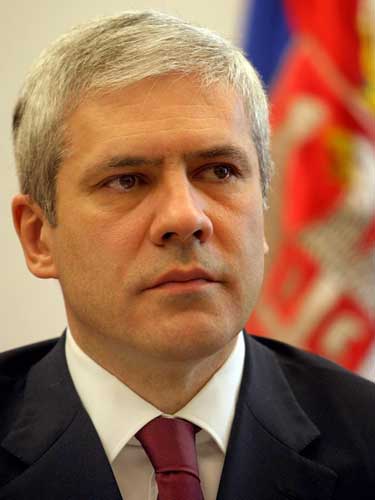
In an historic act of reconciliation, Serbian President Boris Tadic paid a visit to Vukovar on Thursday (November 4th), the first Serbian head of state to visit the town, which for Croatians is a symbol of the suffering and war crimes that occurred during the Balkan conflict.
Tadic arrived via the Danube, on a riverboat bearing the name "The Dove". Accompanied by Croatian President Ivo Josipovic, he went to the Ovcara memorial site, which commemorates more than 200 people who were gunned down by Serb forces and buried in a mass grave.
He brought with him documentation concerning the evacuation of Vukovar's hospital following the Serb takeover. Men at the hospital, which had served as a shelter during the siege of the city, were taken to nearby Ovcara and slaughtered en masse.
The documents should help families of missing persons find out the truth about the fate of their loved ones. "I am here to pay my respects to the victims and say the words of apology and regret. I am at the Ovcara site today to remember and honour all those Croatians who were victims of crimes in Croatia," said Tadic, who also met with Prime Minister Jadranka Kosor.
In addition to Ovcara, he and Josipovic visited the village of Paulin Dvor, where Croatian forces killed 18 Serbs in December 1991.
It is time to complete the process of reconciliation, Josipovic said, declaring that "Croatia and Serbia should be two friendly countries, two neighbours."
Reactions within both Serbia and Croatia have been mixed. Branko Borkovic, a prominent Croatian war veteran who participated in the defence of Vukovar, told state television that putting the crimes at Paulin Dvor on the same level as those at Vukovar was "disgusting".
Nineteen-year-old student Marko Bjelinski, meanwhile, told SETimes that Tadic's gesture was too little, too late.
"I don't think that an apology after 19 years is really worth much," he said. In Serbia, some praised Tadic's visit as a step forward.
"It's high time the president visited Vukovar: no more mistakes from the past putting a strain on the present. Hatred will not make things better for either us or the Croats," Milomir Penev, 53, told SETimes.
Tijana Grujic, 34, disagrees. "Tadic is always running ahead of everyone and apologising to everyone, while we have not gotten any sincere apologies for our victims," she says.
Tadic arrived via the Danube, on a riverboat bearing the name "The Dove". Accompanied by Croatian President Ivo Josipovic, he went to the Ovcara memorial site, which commemorates more than 200 people who were gunned down by Serb forces and buried in a mass grave.
He brought with him documentation concerning the evacuation of Vukovar's hospital following the Serb takeover. Men at the hospital, which had served as a shelter during the siege of the city, were taken to nearby Ovcara and slaughtered en masse.
The documents should help families of missing persons find out the truth about the fate of their loved ones. "I am here to pay my respects to the victims and say the words of apology and regret. I am at the Ovcara site today to remember and honour all those Croatians who were victims of crimes in Croatia," said Tadic, who also met with Prime Minister Jadranka Kosor.
In addition to Ovcara, he and Josipovic visited the village of Paulin Dvor, where Croatian forces killed 18 Serbs in December 1991.
It is time to complete the process of reconciliation, Josipovic said, declaring that "Croatia and Serbia should be two friendly countries, two neighbours."
Reactions within both Serbia and Croatia have been mixed. Branko Borkovic, a prominent Croatian war veteran who participated in the defence of Vukovar, told state television that putting the crimes at Paulin Dvor on the same level as those at Vukovar was "disgusting".
Nineteen-year-old student Marko Bjelinski, meanwhile, told SETimes that Tadic's gesture was too little, too late.
"I don't think that an apology after 19 years is really worth much," he said. In Serbia, some praised Tadic's visit as a step forward.
"It's high time the president visited Vukovar: no more mistakes from the past putting a strain on the present. Hatred will not make things better for either us or the Croats," Milomir Penev, 53, told SETimes.
Tijana Grujic, 34, disagrees. "Tadic is always running ahead of everyone and apologising to everyone, while we have not gotten any sincere apologies for our victims," she says.
A spokeswoman for Tadic's Democratic Party, Jelena Trivan, said the visit would bring closure to the past and pave the way for future co-operation. "Serbia has clearly demonstrated its openness to good neighbourly relations, its readiness for reconciliation in the region, and asks that its neighbours treat Serb victims in the same manner," she said.
Petar Petkovic, of the opposition Democratic Party of Serbia, says his party also advocates good neighbourly relations but wants to see a "two-way policy of reciprocity".
"Croatia should show readiness to condemn crimes against Serbs, just as Serbia has done with the crimes committed in its name," he told SETimes.
Petkovic said the return and reintegration of exiled ethnic Serbs still requires a resolution. "Only then can we talk about honest joint reconciliation," he said.
This content was commissioned for SETimes.com.
Petar Petkovic, of the opposition Democratic Party of Serbia, says his party also advocates good neighbourly relations but wants to see a "two-way policy of reciprocity".
"Croatia should show readiness to condemn crimes against Serbs, just as Serbia has done with the crimes committed in its name," he told SETimes.
Petkovic said the return and reintegration of exiled ethnic Serbs still requires a resolution. "Only then can we talk about honest joint reconciliation," he said.
This content was commissioned for SETimes.com.

Δεν υπάρχουν σχόλια:
Δημοσίευση σχολίου