Δευτέρα 3 Ιανουαρίου 2011

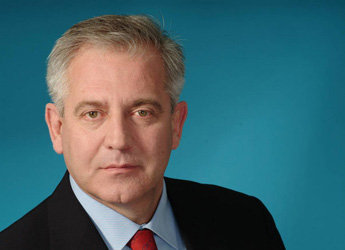
Sanader drama enthrals Croatian public, media


se times

30/12/2010
If Croatia's Ivo Sanader craved a return to the spotlight, it likely wasn't in this way.
By Natasa Radic for Southeast European Times in Zagreb -- 30/12/10


Following the arrest and detention of former Prime Minister Ivo Sanader in Salzburg, the Croatian public has developed a seemingly insatiable appetite for information about the case.
The country's media outlets are happy to serve up any details -- corroborated or not – that they can find. These include Sanader's alleged role in the Hypo Alpe Adria Bank scandal, the police search of his house in Zagreb, and the confiscation of his art collection.
Croatian bloggers, too, are weighing in on the case. Few show any sympathy for the embattled politician.
The media's obsession with the intricacies of Sanader's life goes back a long way, writes columnist Srecko Horvat, and is rooted in the image he cultivated of himself as a leader.
"Do you remember how he was [portrayed as] 'tanned and in high spirits' last year while spending a holiday on an 18m yacht, or how he was 'sun-tanned and in top shape' last October when he landed at the Zagreb airport?"
Given such fawning, Horvat writes, it's no surprise that the public is now being inundated with reports about "what his cell looks like, which toilet he goes to and how often he takes a shower".
Zriha believes that whatever malfeasance may have taken place, it was hardly limited to the prime minister. "Sanader should have been arrested four years ago, and the entire government should have been dismissed because of the decisions made by Sanader and his allies, who are still holding high-ranking positions," she writes.

On a similar note, Horvatinkoln criticises former allies who have since gone out of their way to distance themselves from Sanader. The whole saga is worthy of Hollywood, he suggests.
"A man has to be really vain and frustrated to surround himself with such a number of amateurs and geeks that he could manipulate," writes TV anchor/editor Zoran Sprajc.
Finally, Sanader's ex-colleague and former head of the Justice Ministry Vesna Skare Ozbolt says she paid a high political price for questioning the way Sanader was handling state issues.
"Back in 2006, I was drawing attention to the strange way in which Sanader was behaving and governing. I criticised him while the others were applauding," she writes. "When I did this, he carried out my political euthanasia."
This content was commissioned for SETimes.com.
read more: se times

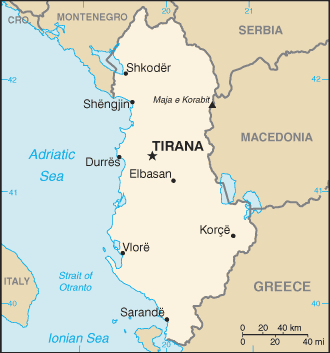
Holidays in Albania: Full bellies, empty pocketbooks


se times

30/12/2010
The cost of celebrating the holidays the traditional way has been going up every year. Are distributors raising them unfairly?
By Linda Karadaku for Southeast European Times -- 10\30\2010


Mimoza, a hairdresser, is getting ready for the traditional holiday dinner. In addition to food, she has bought toys for her two children, Marko (7) and Lisena (3).
"It's difficult," she says. "With these prices, there's not much you can get."
Lidra, proprietor of a small food store in the middle of Tirana, acknowledges that nearly everything she sells becomes more expensive over the holidays. She says shopkeepers have no choice – the distributors charge more, and to stay in business, she has to pass the extra costs along to the consumer.
"Every time at the end of year, in December, it's the same story," she says.
She keeps a notebook in which she records the names of people and how much they have bought on a promise to pay, without putting any money down.
"They say they will pay. Then when they get some money, salaries, pensions or when their children send them money from abroad, they come and pay."
Her list contains from 300 to 500 names now. Every year it gets longer.

Not only do things become costlier as the holidays approach, but year-on-year prices are on the rise as well. "We could sell cooking oil at 180 leks per litre at the end of last year and we sell it with 230 leks per litre now. Sugar was 100 leks per package last year, it became 140 leks per package this year … milk was 100 leks per litre, it became 120 Leks per litre…prices of all products, including cigarettes and alcoholic drinks went up, from food to toilet paper…" Lidra recounts.
Many factors account for the trend, shopkeepers say – the economic crisis in Europe, the increased value of the euro compared to the lek. And then there's an unknown element at play, they add: "who knows what", as Lidra puts it.
Mimoza has decided to calculate carefully what she will buy. "It's one night, New Year's night. I will buy the Turkey… and then, only two toys for the children. I will manage," she says.

Turkey, a traditional fixture on the Albanian New Year table, goes for 5,000 leks these days. That makes it a budget-buster for most families -- and yet nearly everyone buys it. It's New Year's, after all.
"There is no New Year without the turkey," Mimoza explains. "Children love to see when I bake it, and then make pershesh," a dish which involves mixing bread with what's left in the pan.
Many suspect food distributors are deliberately pushing up the prices in order to exploit a captive market. According to the Albanian daily Mapo, the Authority of Competition is conducting preliminary inquiries.
"I don't understand why it goes like that in Albania. Everywhere else, as my brothers and my sister say, prices go down for holidays. Here, they go up," Mimoza laments.
This content was commissioned for SETimes.com.

read more: se times
Business: Panasonic to launch facility in Serbia


se times

30/12/2010
Panasonic is starting production in Serbia. Also in business news: Bulgaria plans a wind park and Alpha Bank is honoured in Greece.
101230-WMI-000-ENG

Japanese electronics producer Panasonic, which established a company in Serbia in November, plans to launch operations at the facility before January 10th. About 580,000 euros have been invested in the facility this year.
***
The German wind energy company Innovative Wind Concepts plans to invest around 75m euros in construction of a wind park in northeastern Bulgaria. The park is to become operational in 2013 and will have an annual production capacity of 100 MWh.
***
Croatian Prime Minister Jadranka Kosor and Hungarian Deputy Prime Minister Tibor Navracsics inaugurated a gas link between the two countries on December 23rd. The 395m-euro pipeline will provide another direct source of natural gas deliveries to Croatia, helping to diversify the supply routes and strengthen energy security.
***
Turkey's Foreign Economic Relations Board decided at its general congress in Istanbul on Wednesday (December 29th) to set up new business councils in 13 countries in Africa, South America and Asia. The councils will be active in the fields of logistics, energy, defence and agriculture.
***
The European Commission (EC) has given the green light to a project to build two new nuclear power reactors at Romania's Cerna Voda plant, the economy ministry announced on Monday (December 27th). The two new reactors will have a capacity of 1,400 mW -- two times that of the existing ones, which cover 20% of Romania's energy consumption.
***
The British financial magazine Banker named Alpha Bank as the Greek bank of the year. According to the magazine, the bank's policy flexibility and adequate capital have put it in the best position among financial institutions to overcome the country's current crisis.
***

Serbia will allow free oil and oil derivative imports and liberalised derivatives pricing in the market starting on Saturday (January 1st). The decision will put an end to the Oil Industry of Serbia's (NIS) monopoly on oil derivative imports.
***
Croatia was the world's fourth most successful tourist destination in 2010, the country's tourism ministry announced, citing studies by international organisations and experts. The number of tourists who visited the country this year grew by 7% compared to 2009, the ministry said. The list of top destinations is headed by South Korea, which saw tourism growth of 28%, followed by China (23%) and Germany (11%).
(Various sources -- 18/12/10-30/12/10)
This content was commissioned for SETimes.com.

read more: se times

Turkey detains 10 suspected militants thought to plan New Year attack


telegraph.co.uk

Turkish police have detained 10 suspected al Qaeda militants who they believe were planning an attack ahead of New Year, according to reports.


8:28PM GMT 31 Dec 2010
The suspects, eight of whom were detained in anti-terror raids in the northwestern city of Bursa on Wednesday, were expected to be brought before a court on Friday, according to state media.
A further two people were detained in Istanbul and taken to Bursa. Bursa police said in a statement that eight suspects linked to a terror group had been detained.
Turkish police often arrest suspected Islamist militants and describe them as having links to al Qaeda, though details seldom emerge. Around 120 al Qaeda suspects were rounded up last January in raids mostly carried out in the southeast.
In October, police held five male students suspected of providing support to al Qaeda militants fighting Nato forces in Afghanistan.
One was believed to have been designing computer programmes to jam the flight controls of drone aircraft and the others were involved in fund-raising for militants.


Al Qaeda militants were behind bomb attacks in 2003 that killed some 60 people and wounded hundreds in Istanbul.

read more: telegraph.co.uk

Turkey’s Developing Role in Africa: Interview with Mehmet Ozkan and Birol Akgun


balkan analysis


January 1, 2011
In the following interview, Balkanalysis.com Director Chris Deliso gets the views of Mehmet Ozkan and Birol Akgun, two leading academic experts on Turkey’s burgeoning diplomatic and economic engagement with Africa.
The work of Mr Ozkan, a PhD scholar at Spain’s Sevilla University, focuses on how cultural and religious elements shape foreign policy mentality in South Africa, Turkey and India. Prior to that, he studied at Istanbul University in Turkey, the University of Johannesburg in South Africa and Linkoping University in Sweden. For his part, Birol Akgun is a professor of international relations at Selcuk University in Konya, and has affiliations with the Institute of Strategic Thinking (SDE), an Ankara based think-tank. Professor Akgun concentrates on Turkish domestic and foreign policy and global security issues in general.
Readers interested in learning more about the topic should read an important article co-authored by Ozkan and Akgun, entitled “Turkey’s Opening to Africa” and published in Cambridge University Press’s 2010 Journal of Modern African Studies. References in the following interview are to comments made in that specific article.


Background and Ideologies
Chris Deliso: When did Turkey start to really perceive the value of expanding its diplomatic and economic reach in Africa? In your article, you point to 1998 – four years before the current AKP government took power – as a key date, a year after the EU failed to give Turkey candidate status at its summit. You point to this rejection as one part of the reason why the then-foreign minister, Ismail Cem, created the ‘Opening up to Africa’ policy document. Historically speaking, do we know what were the other motivations or influencing parties behind the creation of this doctrine?
Birol Akgun: As a matter of fact, there were some political initiatives made by Turkey in the 1960s to reach out to the third-world countries, in order to develop political relations with the non-Western world, and for a couple of reasons. To start with, after American President Lyndon Johnson wrote a letter explaining that the US might not be willing to defend Turkey against the Soviet Union in case of Turkey’s use of force in Cyprus, Turkey’s political elite began questioning the value of NATO’s security umbrella for Turkey....more...


read more: balkan analysis

Κυριακή 2 Ιανουαρίου 2011

Trafficking report threatens Kosovo-Serbia talks: Thaci


uk.news.yahoo.com

Thursday, December 30 07:37 pm

AFP Ismet Hajdari

Kosovo Prime Minister Hashim Thaci warned on Thursday that a Council of Europe report linking him to organ trafficking and organised crime could endanger long-awaited EU-brokered talks with Serbia. Skip related content

"It is an attack by Dick Marty against the dialogue (between) Kosovo and Serbia," Thaci told AFP in an interview, referring to the report drawn up by the Council of Europe envoy.
Thaci slammed the report as "racist" and described it as "Goebbels-style propaganda", a reference to Nazi propaganda minister Joseph Goebbels.
Marty's report was released just as Pristina and Belgrade were expected to begin "closing the chapter of darkness and opening the chapter of the future between the two states and two nations", he noted.
But Thaci said he was still committed to taking part in the talks with Serbia.
"I have expressed readiness to meet with (Serbian) President (Boris) Tadic as the two most legitimate leaders of our countries, Kosovo and Serbia," Thaci said.
The dialogue would lead to ending a "century-old conflict between the Albanians and the Serbs", he added.
The report by the Council of Europe alleges that Thaci and other senior commanders of the rebel ethnic Albanian Kosovo Liberation Army (KLA) were involved in organised crime and organ trafficking during and after the 1998-1999 war with Serbia.
Kosovo unilaterally declared independence from Serbia in 2008. Despite Belgrade's fierce opposition, it has so far been recognised by 72 countries, including the United States and all but five members of the European Union.
Although Belgrade and Pristina have agreed to the EU-brokered talks to resolve issues related to Kosovo's declaration of independence, a date has yet to be set for them to start.
Brussels is pushing them to start the talks on basic issues such as communications, transport and energy as soon as possible.
As the dialogue progresses, the parties are expected to move on to more sensitive issues like those who went missing, the return of refugees and property rights.
Marty's report indicates that Thaci headed a KLA faction which controlled secret detention centers in Albania where the organ trafficking was alleged to have taken place in the aftermath of the war.
The parliamentary assembly of the Strasbourg-based Council of Europe is set to adopt Marty's report in late January.
Thaci insisted that the affair had already been investigated by the UN warcrimes tribunal in The Hague, but no case has so far been brought to justice.
"As nowhere else in the region, Kosovo has had a strong international presence and the justice was administered by the international authorities," Thaci said.
"We have nothing to hide," he insisted.
After the end of the conflict in June 1999, Kosovo was administered by the United Nations. Following the declaration of independence, a European Union police and justice mission in Kosovo (EULEX) was established in order to assist in rule of law issues.
It also has a mandate to try cases that the Kosovo judiciary cannot or will not handle because of their sensitive nature, like war crimes and corruption claims.
Thaci said he had "confidence in the justice system", adding that "planted fabrications" from Marty's report will come to nothing.
But Pristina officials were concerned the report, if adopted by the top European rights body, would affect further international recognitions of Kosovo's independence.
In 2010 only eight more countries have recognised Kosovo.
read more: uk.news.yahoo.com

Croatia PM Kosor reshuffles cabinet


reuters


ZAGREB Mon Dec 27, 2010 7:16am EST
ZAGREB Dec 27 (Reuters) - Croatian Prime Minister Jadranka Kosor announced a reshuffle of her centre-right government on Monday before elections due in late 2011.
"The main idea is to strengthen the part of our team who will carry the biggest burden, to implement economic recovery and conclude the European Union accession talks," Kosor told a news conference.
Kosor said she would replace four ministers from the cabinet she inherited from ex-prime minister Ivo Sanader, who stepped down suddenly in July 2009 and is now being investigated for corruption in Austria and Croatia. [ID:nLDE6BL1K4] (Reporting by Zoran Radosavljevic, Editing by Aleksandar Vasovic and Angus MacSwan)

read more: reuters